Host Juliet Clark joins international best-selling author Patrick Snow at a Mary West Network event to explore scalable strategies for building an author platform. Many writers publish books without an established audience, often resulting in stagnant sales. Since relying solely on print royalties is rarely sustainable, true success requires a multi-layered marketing approach—utilizing lead magnets and custom funnels to transition readers into high-ticket programs. In this episode, you will learn how to navigate algorithm shifts, leverage advanced reader copies, and secure prestigious book awards. Establishing these sustainable assets ensures long-term authority for every author’s career.
—
Watch the episode here
Listen to the podcast here
Platform Building, Book Awards, And Marketing That Works
This episode is from an event that I spoke at with the Mary West Network. It’s all about book marketing, fiction, nonfiction, and also awards, validation, and what you can do to take your book marketing into your own hands. Stay tuned.
‐‐‐
This is Patrick Snow, host of The Patrick and Mary Unstoppable Author Interview Series, where we interview authors, speakers, coaches, and consultants from all over the world to help us get what we all want, which is more time, more money, more freedom, more health, more love, and more happiness in life.
We have a special guest all the way from the state of Utah in the Salt Lake City area. Her name is Juliet Clark. If you want to follow along online, you can visit her on the internet at PerfectReaderPlaybook.com, JulietDillonClark.com, and also PRPFree.com to download some free items that she’s going to share later on.
I’m going to read you her bio, but more importantly than the bio, she’s a great friend. I was in Utah, and we hung out a little bit, so it’s so great to welcome you to our show. Julia Clark is a six-time best-selling author, professional keynote speaker, and seasoned and successful podcaster who has spent more than twenty years helping authors, speakers, coaches, consultants, entrepreneurs, and small business owners build expert audiences and boost their following. She began as a mystery novelist and is best known for Dark Granny, Farmhouse Forgotten, Bad Lie, and the Perfect Reader Playbook.
She is the CEO of this amazing publishing company that helps people so much, which is titled Superbrand Publishing. It’s a hybrid publishing company. She’s developed multiple multi-platform release strategies and bestseller campaigns that convert her clients’ books directly to the author’s business, helping them achieve best-seller status quicker than ever before. At 46 years old, Juliet earned a black belt in taekwondo. She’s also an avid hiker in the Wasatch Mountains of Utah. She’s a soon-to-be professional golfer, almost on the LPGA. Without further ado, please join me in welcoming our special guest, Ms. Juliet Clark.
Thank you so much. I look forward to the professional tour in my 90 strokes.
If you can break 100, that’s spectacular. Almost nobody can do that, so good for you.
I can break 100 on a good day. Let’s say that, and there are rarely good days.
Back in 1978, when I was in the 4th grade, I shot a 44 for 9 holes. That was my best round that I ever shot, and then it went south from there. My whole thing is that when I play golf, I’m not a good enough golfer to ever get upset when I hit it in the woods. I love when these guys who are playing hit the ball in the woods, and they’re cussing, swearing, and throwing their clubs. I’m like, “You’re not good enough to be upset with that shot. Be happy to be out here.” I am thrilled to have you here. Before we begin, I want to remember how we got connected. Was it a woman in Canada a few years ago?
I started getting authors who were bringing their books to publish. It was Karie Cassell, The Domino Diet. I started noticing that you had the best books of any developers I was getting, so I reached out and said, “Would you like to do some business together? I’d love for you to send me some more of those people.”
We’ve had a great run together. I value you as a joint venture affiliate, a business associate, and a business partner. I’m thrilled with everything. Your technology skills are off the charts, and mine are under the chart. You’re a good person to have in my corner because I need help with those areas. Before we begin, I want to ask about your childhood. Did you excel in English class? Were you always a great writer as a child?
Talk about your early years. I never read books until 18, 19, or 20, and then I voraciously got into personal growth and development. Before that, I would read the back of the book in grade school, copy that down, turn that book report in, and get a C in all my book reports. Everybody else was bummed with their C, but I was thrilled to get a C without reading the book. I’m not from the actual writing industry. I’m curious if you are, and that’s your background.
For my childhood, I grew up in Paso Robles, California. I wasn’t super great at English, although I tripped into it in the second grade with Mrs. Bailey. I wrote this description of a big storm and the river we had, and she was like, “You are a beautiful writer. You suck at Art and Math.” I was like, “Thank you very much,” which was funny because I took a painting class a few years ago. I painted that. I sold paintings within three months, so I wasn’t that bad at art, either.
I was always a voracious reader. Back in the ‘60s, and I wish they had this now for kids, we used to have contests of who could read the most books. I’m a gold star girl. I’m a pleaser. I was always in the top two. I would read a book a day or every other day. I loved mysteries. I love the Hardy Boys. I loved all of those guys back in the ‘60s. I was a voracious reader. That’s how I got into this.
The Hardy Boys take me back a little bit. Let’s dive in. Later in your adult life, you first drew to writing. How did you make that leap in your mind from, “I’d like to write a book. That would be fun,” to publishing your first one? What was the impetus? What made that happen?
I worked in traditional publishing back in the ‘80s. Right out of college, I worked at Price Stern Sloan. These publishing companies are part of Random House. They went through a couple of transitions. I went from there to Chia/Day Advertising. I not only had a traditional marketing background, but I worked on the Nissan account, which was a billion-dollar ad account. I traveled all over the country, so I had to read a lot again because I was in airports a lot. In 2007, I got a divorce. Things were going badly with that ex-husband. I started writing one day, and I killed him in my first book.
Not in reality, but in the book.
Not in reality, and mainly because I’m super vain, and orange is not my color. I couldn’t have spent the rest of my life in prison in felony orange. I always joke that if it had been royal blue, I might be sitting there in prison. I killed him in the book. We lived in a small town, and everybody knew it was him. It was quite humiliating for him, but very cathartic for me.
Great healing there. You juggle both being an author of several books, a publishing guru, a publishing consultant, and an owner of a publishing company. How do these roles feed each other, both with creativity and professionally?
It’s super easy. As an author, when I’m writing, it means that I’m also book-promoting. I’m always looking for, “Is there a systematic way we can do this? Is there a way I can teach others to do this?” I’m always trying new things. Creatively, I’m looking for what’s next. The biggest thing is I’m not afraid to fail. It’s something that you should do on a regular basis to learn.
I’m always trying new things to incorporate it all in, and that translates from my personal journey as a mystery author into what I can do in the nonfiction world to do that as well. Mostly, we publish nonfiction. It all fuels each other because I love teaching. When I can help people build a better platform, build an audience, and avoid book marketing that’s not going to work, then that’s what I’m always striving for. What can I build that will help other authors?
What’s one experience from your life that readers would be surprised to learn that strongly influenced both your writing and your business?
Killing my husband in my first book. I know that sounds funny. Coming out of traditional publishing, I thought with my first book, which is the one I killed him in, “I’m going to self-publish.” If you all remember, anybody who was back in this business in 2008 or 2010, self-publishing was coming into the limelight, and the traditional publishers were bad-mouthing self-published authors at every turn. They were like, “You’ll never be successful. You don’t have us.” All the while, in the background, they were developing subsidiaries of their own companies to help self-published authors. It was a very hypocritical time period, and I was caught up in that.
With my first experience in publishing with a self-publisher, who was a subsidiary of one of the bigger ones, I noticed they were selling bookmarks. They were selling websites. They were selling, “Here’s a business card to hand somebody, like, ‘I’m an author.’” I’m sitting back, going, “Since you’re doing traditional publishing, that is not how you sell books.”
Don't wait until your book releases to build an audience. Start your author platform early to ensure high sales! Share on XThey were even going to the point where they were selling things that didn’t serve authors to crush the industry. That’s where I started to get into this and start developing new things. It was that personal experience and writing to kill my ex-husband that led me to the rest of this. I’m the accidental publisher because I was a real estate broker until then.
You hit the nail on the head. Back in the day, in New York publishing, traditional was viewed here, and self-publishing was there. You’ve probably seen this as well, but it’s flipped because the New York publishers use that brittle, thin, yellowing newspaper print that’s a twenty-pound paper that would fall apart. The color of the pages turns orange. They don’t do an image wrap on the book cover. They do everything as cheaply as possible. Small print so that you’ve got to get your magnifying glass out.
I love it because I remember those days when New York Publishing was glorified, and self-publishing was poo-pooed. Now, it’s the opposite. The self-published books, in terms of manufacturing, look way better, and the New York-published books look very cheap. It’s funny how tides have turned. How do you balance page-turning suspense with believable procedure in real-world detail in your crime and thriller stories?
Lots of research. Perplexity AI and I are best friends. There’s some of that. There’s a lot of historical research. If you read the books, Dark Granny is a personal story. It’s all based around Paso Robles, California. My grandmother was a hoarder. Part of it is knowing the area that you’re writing about and also having a good imagination and a lot of research. I do a lot of that. My detective, Lindsay Carter, is based on a woman that I met when I was teaching Taekwondo. She was an LA County sheriff who worked in the Malibu area. She used to tell me the most incredible stories about celebrities that escaped because they were celebrities. That’s how I do it. A lot of research.
Without giving any spoilers, what’s one scene or twist from your fiction that you’re especially proud of, and why does it stand out to you as a writer?
I think Dark Granny because it’s historical fiction, in a way, and it’s something ordinary. You’re cleaning out your grandmother’s house when you come from this very dysfunctional family and find out that grandma is not who everybody thinks she is. She had a colorful past.
A colorful, dark past, it sounds like.
She was always a little bit crazy. In her younger days, she was a crime participant.
Let’s transition into your nonfiction teaching and your consulting work. You also write and teach about publishing, platform building, creating a following, becoming a bestseller, and building marketing programs. What problem did you most solve for authors when you started creating that nonfiction work?
Author platform building. I was telling Mary before we jumped on the call that coaches, authors, and speakers quite frequently publish a book, and then they get out there, wave their hand, and say, “Buy my book.” It’s almost like they’re begging you to buy the book. Most of the time, it’s because they didn’t build a platform before and during writing that book.
Building An Author Platform Before Release
What do I mean by that? You need a brand guide. You need content. You have to have content out there so people know who you are. There are all these things that you need to build as an engine, like your email list. People don’t like doing it, so they skip that part, and then they don’t understand why they’re not selling books. That’s why I wrote The Perfect Reader Playbook. It’s very layered marketing. It teaches you step-by-step what you’re supposed to be building and how to get your name out there.
The Limitations Of Low-Cost Book Sales
I know you’ve been speaking for a while, too. We see people out there with a lot of ego who don’t want to do the work. That’s where we get into how you have to establish yourself as an expert with that content. You have to be layering it, so it’s not, “I’m here, and I’m selling this.” Most of the time, it’s not just selling the book. If you’re selling a book, you’re going to make $1 to $3. It’s a lead magnet at best. People always ask me, “What kind of ROI am I going to get from this book publishing package?” More than likely, it’s not going to come directly from that package. It’s going to come from what you’re selling afterwards. Build the platform.
Such as speaking, coaching, and consulting? Those things?
Exactly. You’re not going to make that money back from that $3. Chances are, if you haven’t built a platform, you’re barely going to be able to buy a pizza with that royalty money. If you built something bigger where people are excited not only about that book, but about that $5,000, $10,000, $15,000, or $20,000 program you have, that’s where you’re going to make that money back.
Most of the people that come to me with books will tell me, “I’m doing this so I can sell more coaching programs.” I look at them and say, “If you built the platform, you’d already be selling that. You probably wouldn’t even need that book.”
When I was selling my book to John Wiley & Sons in New York, they were like, “We don’t even care if the book’s any good. We don’t care what the title of the book is or what the content of the book is. All we care about is that the author has built a platform. We’re tired of these quiet, shy, and introverted authors. We lose so much money on them. Everything is about the platform.” You have a freebie that you give away. Can you share quickly about this platform freebie?
Yes. If you go over to PRPFree.com, I’m giving away my Perfect Reader Playbook book. It won an award. It won The BookFest Award for Best Business Marketing Book at The BookFest event. I’m giving it away for free because I want every author to read it and understand what they’re looking at before they start writing and saying, “I have to build all these things.” We have a program, too, that we sell. We ask you 8 questions, and we will give you a 20-page comprehensive layered marketing plan that speaks specifically to what you do. It’s very customized, and it goes right along with the book. This is the content you should be producing in the unaware stage.
Navigating The Unaware Audience Stage
The unaware stage is where you start. It’s the one you’re going to be in the longest because it’s twofold. Nobody knows who the heck you are, and nobody knows what you’re an expert at. You’ve got a little bit of work there to make people aware of who you are. You start with problems, go into the solution, get people ready for the free sale, and then start selling books. There are five stages that will help you, long-term, sell everything.
Many authors, especially brand-new authors, are overwhelmed. How do you define an author platform in simple, practical terms that someone brand-new to this space could understand?
Build your website, your email list, and your content. If you do all of that, you’re ready for the digital marketing that it’s going to take. I tell people to start 12 to 18 months out because technology is difficult to learn. You have to establish yourself on social media. You need a lead magnet. You’ve got to have that site built. There are all these pieces that fit together that you have to learn how to build.
My sense is there are people out there who will say, “I’m going to hire a company to build that for me.” My thought about that is when you ask a company to build it for you, you’re disconnected from that platform. You need to be intimately involved with it because it is your build. You’re going to be the one selling the products on that platform, so it has to be authentic, and it has to be run by you at the beginning. The thing that bothers me about when you outsource it is that somebody else is building it for you. They can’t come across like you. Only you can be you. You have to get in there and learn all of these skills.
You work with a lot of tools like Facebook ads, email lists, and funnels. What are authors getting wrong most often about their book marketing at this present time? What are they doing wrong?
They’re going out and buying promotions that are one-offs. They’re like, “I love this big thing that I’m going to buy,” and it doesn’t give them visibility of their readers. If you’re doing advanced reader copies, if you are building those funnels and capturing and building that email list, all of those things are your audience. You guys have been around for quite a while, like me. Facebook, every 2 or 3 years, changes its algorithm and has something new.
Safeguarding Your Email List From Algorithm Shifts
If you don’t have those people in your list, you could lose visibility of your audience. I watched one of our colleagues do that back in 2016. She lost complete visibility of her Facebook page when Meta, Facebook, or whatever it’s going by changed from Facebook pages to Communities. She lost the visibility of all those people. She had thousands of people.
The even bigger example that I have is back before Facebook came out, who remembers MySpace? She had 300,000 people following her on MySpace that were grabbing her monthly magazine. Then, Facebook became the big thing. She never built a list. She was making her money off endorsements. She was running ads and making her money off that.
In the unaware stage, prospective readers don't know who you are yet. Focus on solving their immediate problems first. Share on XWhen people switched from that platform to Facebook, she lost her entire audience. If she had built her list, she could have sent out a big blast and said, “We’re over on Facebook now,” but that didn’t happen. We all face that every day because we don’t own social media. One algorithm change could wipe out all your work for years, so it’s important to build those assets.
Can you share a success story of one of your clients that illustrates how the right strategy can change the author’s trajectory and their success in their career?
Yes. I have some clients who spent over $250,000 on publishing books and book marketing, and they barely sold any books. We got them in. We have been working on how to sell those books. I have them entering book awards. They’ve already won awards for their books. I have them working with BookFunnel and Facebook ads that bring more people into their list.
They put their content together. They’re launching their podcast. They’ve got content rocked. They’ve got an email list that’s building. They can announce not only that podcast, but we’ve been sending out blasts, like, “There are 2 books or 1 book at The BookFest Awards.” We’re slowly building that so for their next book release, they will have an actual audience that they can release to.
We also have something for them where they’ve been working on advanced reader copies, which we’re doing through NetGalley and BookFunnel. They have advanced readers that are going over to Goodreads and writing pre-release reviews. When they release, they’ll have those reviews over on Amazon as well. It’s all of the pre-work. I haven’t run a bestseller campaign again because Amazon changed all of their algorithms, and bestseller campaigns don’t work anymore. You either have to do the platform work, or your book probably is not going to sell.
Our guest is Juliet Clark. She is a multiple-book bestselling author and award-winning author. She’s the Founder and CEO of Superbrand Publishing. She’s also the author of a brand-new book that’s off the press, which has already won an award in 2026, The Perfect Reader Playbook. If you want to learn more about her, follow her online at PerfectReaderPlaybook.com. I want to talk about the craft, the process, and the productivity of writing. Whether you’re coaching your clients or whether you’re writing yourself, walk us through a typical writing day for you. How do you divide your time between drafting, editing, marketing, and client work?
I do not help people write their books. That is a skill. I don’t know why, but I don’t feel like I’m good at it. Most authors will say that. I leave that to Patrick. For me, the balance is that I usually take two hours at the end of the day, and I will either work on outlining or I work on the research for the outline. I always start with a very detailed outline when I work. I used to do this when I first started, where I would write the story as it went along. I don’t do one of those word count things. I don’t do anything like that.
Streamlining The Drafting And Editing Workflow
I take the outline, and I go chapter by chapter. I get the entire book written. I call it the barf draft. The whole thing goes out. I don’t go back and check it. I don’t micromanage it. This is where I found Perplexity is a great tool for me. I put the book back through Perplexity.ai, and I will say, “Point out all the inconsistencies.” If you’re a mystery writer and you’ve got 300 or 400 pages, chances are, you’ve got some inconsistencies in there. Mystery readers are very smart. They pick up on every darn inconsistency.
I have Perplexity pull out those inconsistencies, and then I go back and start my rewrite. I do that until all of the inconsistencies are solved. Then, I go back through grammar and spelling. I have Perplexity do it. They don’t do a great job, so then I put it back through Microsoft. Microsoft doesn’t do a very good job with it either, but it does get it cleaned up to a certain extent. Microsoft is made more for business, and they don’t tell you that. When you’re editing something like a book, there’s usually a lot of slang and things like that. I clean it up as much as I can, and then I send it off to my editor, who is Tyler Tischler. I let him go through it, and we go back and forth until we feel the manuscript is perfect.
You’re often managing multiple books at different stages. What system habits help you keep everything moving without burning out?
That’s a great question because sometimes, I do feel a little crispy on this end. The first thing I do is when I have an idea, that’s when I sit down and get the entire detailed outline. Even if I’m in the middle of another book, I don’t want to lose that idea. If you guys have ever read Elizabeth Gilbert’s Big Magic, I take from that one big thing that if you have an idea you don’t act on, the universe, God, or whoever you believe in is going to move it to somebody else. That’s the first thing I do when I have a new idea. I sit down and outline it in detail. I open a file for it on my computer, put it away, and then work on the next book or the book that I was working on.
Where it gets a little bit hairy is when I’m writing one book, I have another book in editing, and I may have another book in formatting. I’m getting out 4 books in 4 months. That’s been a little bit crazy, but I already have everything outlined for 2027. I have the book that’s coming out in November 2027 written. It needs a little bit of work before it goes to Tyler, but I slowed that down into one release a quarter in 2027 so I’m not so crazy.
How do you approach revisions, changes, and additions? What does your editing process look like from messy first draft to publication-ready manuscript?
A lot of work. I don’t know if you see this, but I see this a lot with people. I’ll say, “Have you had this edited when they bring it to me for publishing? I have a check mark when you publish with me, but you need to tell me upfront. Did you hire a professional editor?” That is part of the process. I keep revising it until I think it’s as perfect as I personally can get it, and then I pass it on to the editor who finds all sorts of messy stuff in there that I couldn’t.
I work with him a lot. He leaves me notes like, “What does this mean?” It’s funny because a lot of times, he doesn’t know what the slang means, so I have to explain it to him. We go back and forth until I feel it’s perfect. What I love about Tyler is Tyler stays with you through formatting. A lot of times, a formatter will make errors. When I get a book back that’s formatted, I run it through Perplexity again. I say, “Tell me where the formatting inconsistencies are.”
I’m working on fixing what Tyler has, and I’m working on why this is not perfectly set up to my satisfaction. My poor formatter. I will send it back 3 or 4 times, which I do with my publishing clients as well. It goes back and forth a lot. The reason that you need a professional editor on this is that there is nothing more frustrating, and publishers will charge you for this, if you get that first draft back of the format and it’s got 500 corrections.
We believe that if you had edited it properly with a professional to begin with, that should never happen. You should have a few things here and there, like, “I missed a comma or we spelled this the British way instead of the English way.” You should not have more than probably 10 to 12 manuscript corrections in formatting if you’ve used a professional.
Are there business books, mentors, or resources that had a particularly big impact on how you write and publish? If so, who are some of those people?
I don’t read publishing books. I know everybody’s like, “Is that a bad thing?” I don’t read them because I don’t think in this day and age that you can learn how to publish from a book. The reason is that publishing changes. You know this from what you do. It changes all the time. I don’t read books. As far as mentors, Tracy Hazzard with my content has been a huge mentor for me.
She’s also a business partner on some future ventures we’re doing for authors that we’re releasing soon. She’s probably the biggest factor in what I’ve done and working through the systems that I do. I’m constantly buying things out there that I want to see, “How does that author do it? How does it work?” Can I mention something negatively that I see in the market?
Absolutely.
I’m on Instagram a lot, and I’m seeing so many things on Instagram that are scams. I’m having an agent on my show because I’m seeing all these ads saying, “Let us agent you.” That’s not how a book agency works. You’re more than likely to get your manuscripts stolen. The other thing I see is all of these people saying, “Let us optimize this. Let us optimize that.”
You have probably seen the Gmail book scams. If someone sends you, “Let us optimize your book,” or, “We’re a book club, and we want to read your book,” and it comes from Gmail, delete it. They are offshore. They are scams. They will steal your book. I’m seeing so many things out there that are not the way books are sold. One more thing. AI books. That’s the best way to get your book taken off Amazon. Don’t write a book with AI. It’s probably not only boring, but Amazon’s going to take it down.
People are publishing 200 and 300 books a month on Amazon using AI. There are no stories, humor, or connection. They teach, preach, science, and this. I agree 100%.
Amazon, from my understanding, has limited it to three books a month that you can publish, which is sad. The other thing that I’m seeing so much of is people are publishing their own books. They’re not going with companies like mine, which is great, except they’re doing it by asking AI. I’ve gotten half a dozen people I’m working with who self-published a book. They came to me to find out how to sell books.
In the unaware stage, prospective readers don't know who you are yet. Focus on solving their immediate problems first. Share on XI open up the book and say, “Your copyright page is a little bit of a mess. Where did you learn this?” They’ll tell me, “I learned it from AI.” I’ll say, “You filed your copyright, right?” They’re like, “What do you mean that I file it?” They’re not filing copyrights. That’s the best way to get your book stolen. Somebody sent me a client a couple of years ago. That’s how she got her book stolen. She sent it to an offshore editor who stole it. She was trying to save money. She never thought of the copyright. That editor published her book under her name before the author did.
The scams out there drive me crazy. Let’s talk a bit more about your reader connection and the long-term vision of your business and of the industry. How do you like to connect with your readers? Is it email or social media events? What kind of interactions are most meaningful to you? Do you offer a complimentary consultation? How can people get a hold of you? How can they learn more about what your business is? How can they work with you?
Using ARCs And Awards For Authentic Social Proof
We do give a complimentary consultation. You can grab a spot on my calendar at ChatWithJuliet.com. When you jump on, we look at what you have. We do an audit of your platform because we want to see whether you are doing the right things. As far as the business model, I mentioned that Tracy Hazzard is my partner on some upcoming projects. We are pushing people into book awards because being a bestseller means nothing on Amazon. Having your book evaluated and winning a book club award is a validation of your work. What Tracy and I have seen in the marketplace is that if you want to build an audience, you need Advanced Reader Copies or ARCs.
That means you need to give your book out to a trusted group in your audience to read in advance, give you feedback, and be available to write reviews on Goodreads in advance and write reviews on Amazon on release day. We are releasing what’s called the Thrillery. The Thrillery is for mystery authors and readers. You can come and sign up, get approved as one of our ARC readers, and get three books, or you can sign up as an author.
It will be a pay for the authors, not because we’re paying the reviewers, because we cannot pay reviewers, but because we have a lot of work to get you the number of reviews you’re looking for. While I was doing that, Tracy identified a blind spot that we saw by looking at everybody else’s platforms. There is nothing like an ARC reader group out for nonfiction. We are starting the Bingeable Book Club that’s going to be able to do reader ARCs for nonfiction books.
How many Amazon reviews do you recommend an author aim for?
The sweet spot is about 25 to 35. That’s what they’re looking for with this new platform and these new algorithms. They’re looking for consistent buys. That’s why the bestseller campaigns don’t work anymore. They are not honoring those spikes. They’re looking for whether you can sell books consistently every month.
They’re also looking for honest reviews. That’s why we’re starting those different ARC companies. As we build these, we’re going to move into different genres as well. We’re doing honest reviews. If you come back and get a bunch of twos, you may not want to release that book. We also resell at NetGalley. We have a great NetGalley vendor that gets you in front of librarians and the press.
That’s something you should start 90 days out as well. They are very particular about who they take because they only have so many seats available. That’s another place where you can get ARCs done and get some feedback on that book in advance. They critique your cover and your manuscript, so you get a little bit of both. They are tough on the covers.
They need to be because there’s a lot of lousy covers out there. Can you share a memorable message or encounter with a reader that reminded you of exactly why you do this work?
Yes. I had a reader who was an ARC reader for Bad Lie. She came back and said, “There aren’t enough sports books out there, but this looked like a Michael Connelly book.” He is my favorite author, so I was very impressed. I had another reader say, “This reminds me of Tana French books.” I had no idea who Tana French was, which was embarrassing. I went back and read the book, and I was like, “Small town.” She’s an author in Ireland.
I love it when I can relate to another person. When they tell me, “This reminds me of,” and then it’s somebody that I already read. I enjoy that. I read Judge Stone, which is a James Patterson book. I kept looking back because I was like, “This seems like a John Grisham book, not a James Patterson book.” It is nice to have your work relatable to another author that you love.
Looking ahead a few years, what are you most excited about in terms of upcoming books and how you’ll grow the author business?
I’m getting close to retirement age, so I’m hoping that this can be my retirement gig. This is my pro golfing career that’ll never happen. I’m looking forward to building this other element of the business with Tracy Hazzard. I feel like with the self-published authors becoming more prevalent, if we can grab those authors who have great books, provide ARCs for them, and get them out there in a big way, we’re doing a big service to the whole author and reader community.
There are a handful of authors in my genre that do well, but there are a lot of authors that are overlooked because they self-published. We’d like to help get those authors out there in a meaningful way that’s not like, “Let us optimize your Amazon.” That’s not the way you get it out there. If we can truly build audiences that serve them, that’s what we’re most excited about. We found a place in the market that needs us.
For readers who are writers themselves, what’s one piece of tough love advice and one piece of encouragement that you’d like to leave them with?
Don’t quit your day job.
That’s so true.
When I was a real estate broker, I was Rookie of the Year, and I was speaking to the next year’s rookie class. They asked me that question, and I said, “Don’t quit your day job.” I was in the big broker’s office, and they were going, “Why are you telling people that?” I get older people all the time from 60 to 80 who want legacy books. They’re pulling money out of their 401(k).
It’s making me nervous because you have to spend a lot of money to do this. I want people to be happy, but I want them to still have their day jobs so they can adequately fund this if this is a retirement career or something they want to do full-time. Learn your craft and learn it well. Keep up with the market.
Learn the technical skills you need to learn. It’s all a journey. You’re going to save a lot of money on useless promotion if you spend it on the front end and get that platform built and all the things you need. The editing is expensive. Even if you’re self-publishing, you still have to pay for formatting and cover design. Have the resources to do this correctly.
As we wrap it up, you’ve got so many books, so many titles, and different genres. Can you spend about 30 seconds on each book title? Let us know the title of the book, and then give us the elevator pitch. Let us know about the next book, the title, and then the elevator pitch. Conclude all of that at the end with how people can purchase your book, whether it’s your website or Amazon. Go ahead and give us the laundry list of all of the books that you have because I don’t want to butcher any of these titles.
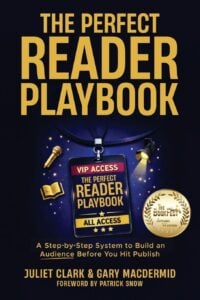
The Perfect Reader Playbook is for every author who wants to know how to properly build the layering and marketing in your platform. I’d love it if you went over to Amazon and bought it, but I’m giving it to you for free. Go to PRPFree.com so you can download it and get everything you need there. Dark Granny is dark and twisty.
Grandma dies. The grandkids are cleaning out her house, and they discover that grandma is not only a hoarder, but she has guns, diamonds, and cash in the freezer. They start following the story all the way through what grandma has been up to. Without giving it away, there’s a reason that their mom is estranged from their grandmother. You will find out at the end what that is. It takes something very ordinary and makes it extraordinary.
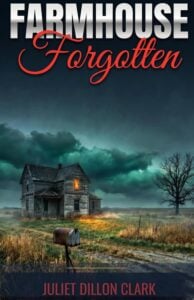
Coming out is Farmhouse Forgotten. It is the story of a family annihilation that takes place in a farmhouse. The daughters are stolen and presumed dead. The parents are killed. There’s a baby in the bathroom who’s left alone. The baby grows up and sees someone that he thinks may be a sister. It weaves through what happened twenty years earlier in that farmhouse, who was responsible, and who buried it. I won’t give away the end, but you’ll be shocked. That is coming out on June 30th, 2026.
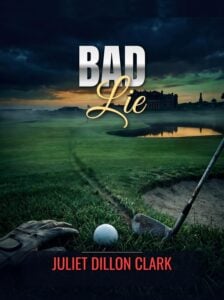
Bad Lie, which I’m super excited about, is a golf mystery. It is Davis Stansbury III, who is a pro golfer and also a backroom gambler. He owes the mob a lot of money. They push him into an endorsement agreement with a big software company, which has tech that is impacting his mind and his golf in a way that is cheating. He wins Augusta. He turns around and wins RBG, but the mob still wants him dead even though he has paid his debt back. A lot of twisty stuff there. It’s the backside of golf. Nobody sees all those big endorsements. It’s like if John Daly gets involved with the mob, if you know anything about golf.
Drafting requires a solid outline, but true magic happens during professional editing. Don't skip the editing stage! Share on XJohn Daly is quite a character. That would be a fantastic book.
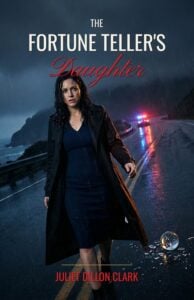
I’m looking forward to that. It’s a new audience because there’s not much sports mystery out there, but a lot of golf enthusiasts. That is coming out on 8/18/26. I have another book called The Fortune Teller’s Daughter. I’m giving that away for free on JulietDillonClark.com. You can go over there and give us your email and download a free copy.
That is a real story about how my sister and I went to a psychic in Newport Beach, and she tried to con me. The deeper I got into investigating who she was, I found the most bizarre stuff about gypsy culture. The gypsy culture is very secretive, but somehow, it spilled out. There was an article in Newsweek about these two clowns down in Newport Beach who were going at it over territory. They sued each other. You can’t make this stuff up.
There was a Black Bob, the head of one family, and a White Bob, the head of the other. I looked at it, and I was like, “I have to write a mystery about this because this is hilarious.” I learned a lot about gypsy culture. I probably spent 6 to 9 months going to different psychics in Los Angeles, trying to figure out what that tell was, like how they con you. As a side story there, one of the people I went to in Manhattan Beach was later indicted for conning a man out of $750,000 with her schemes. That’s it in a nutshell.
There you go. Where’s the best place for them to purchase these books? Is it Amazon? Is it direct from your website?
Amazon is the best place to go. I’d love for you to go buy Bad Lie in pre-sale because we have a big promo push on that. We are trying to get at least 500 to 1,000 buyers in the 1st month. We’ve got a lot of things set up to do that.
The website is PerfectReaderPlaybook.com. If you want to learn more about Juliet Clark, you can reach her on her phone number. Do you also offer a complimentary book marketing consultation? If so, how can people get a hold of you to schedule that time with you?
Yes. You can go over to ChatWithJuliet.com to get on my calendar. I do give a free one-hour session. We go over your goals. We want to see what you’re trying to do with it. Is it business-related? Is it fiction? How can we support your platform?
Best writing advice for someone looking to be a first-time author and write and publish a book. What do you tell them?
Write, rewrite, and rewrite again. Your first draft is not your book. It takes a lot of polishing, then get it over to an editor.
A professional. Once the book is published, what is the best advice that you have for marketing a book and making it successful?
Creating Sustainable Long-Term Book Marketing Systems
Have that audience, and buy the things that will support that are proven to help your book sell. Don’t go for those gimmicky things. You don’t need a bunch of optimizations. The book clubs are fake. You’ve got to get out there and peddle that thing yourself, whether it’s book fairs or ARCs. Whatever you need to do, you need to do it. I know you always say this. It’s not a one-shot deal. You are stuck with this book the rest of your life. They are like your children. You have to constantly discipline, constantly support them, constantly be out there tooting their horns, and constantly helping them grow.

I love it when people tell me they did a 30-day book marketing campaign. I’m like, “What’s the big deal? I need you to do a rest-of-your-life book marketing campaign.” Anything else that we didn’t cover? Anything that we missed? Any other bits of wisdom and brilliance that you want to share? Here’s a question. How can authors and brand-new published authors leverage technology for their benefit? You’re an expert at that, and so few people are.
That’s where your platform building comes in. Learn how to build your list. Learn how to build a lead magnet that resonates with your audience. Learn how to create your own website and do everything. We use GoHighLevel. It has so many possibilities within it. Take the time and learn the technology. You’re not going to learn that overnight. You have no idea how many times I sit here, and I’ll pick something up off my desk and throw it because I’m so frustrated. I’d be like, “Why can’t I do this?”
You have to get through it and learn it. When you get into the monetary side of this, if you’re going to continue to pay people to do this for you, you’re going to go broke. It behooves you to learn how to do it yourself because you can’t delegate unless you know how to do it. It behooves you to learn how to do it. If you’re going to build a website, don’t use Wix.
Our guest is Juliet Clark of Superbrand Publishing. She is an award-winning and best-selling author, speaker, coach, and platform-building brand guru, probably the best in the industry. To learn more about her and schedule a consultation, go to PerfectReaderPlaybook.com. I want to thank you for your time. We’re going to do a quick Q&A, but before we do that, I want to ask you to define the word unstoppable. This program is named after Mary Unstoppable West. How does Juliet Clark define the word unstoppable in this day and age?
Don’t take the word no. Learn. If you’re scared of technology, learn it. Don’t take no for an answer ever on anything. There’s always a way around it. When you’re an author, there are no hard and fast rules. Figure out how you’re going to turn that no into a yes.
Thank you so very much. I appreciate you. You are amazing. This was incredible.
Thank you.
Important Links
- Juliet Dillon Clark
- Schedule a Call with Juliet Clark
- Perfect Reader Playbook
- The Perfect Reader Playbook
- Bad Lie
- Dark Granny
- Farmhouse Forgotten
- The Fortune Teller’s Daughter
- Big Magic
- Judge Stone
- The Domino Diet
- Perplexity
- Tracy Hazzard
About Patrick Snow
 Bestselling Book Developer
Patrick Snow is an international best-selling author, professional keynote speaker, publishing, speaking and book marketing coach. He first discovered his gift for speaking at the age of 17 while giving the pre-game speeches to his high school football team. Since then, Patrick has electrified more than 3,500 audiences on four continents to achieve their individual and organizational destinies.
As a publishing coach, he has mentored more than 1,200 clients throughout the world to successfully publish their books. Many of these clients have also gone on to become speakers, coaches and consultants as well.
About Mary West
 Mary West is a professional networker, Founder of The Mary West Network and Producer of The Patrick and Mary Unstoppable Author Interview Series.
Mary has a passion for connecting business owners. People have called her names. Don’t worry, nice names, such as the queen of networking, The Mary West Network, 6 degrees to Mary West, and the connector.
She has been networking for over twenty years when she started her “in person” groups. They now also have zoom meetings.
Mary and Patrick Snow started their author interview series five years ago and have interviewed amazing authors from all over the world.
She loves seeing the friendships and relationships blossom and members grow their businesses through networking. Mary also has a passion for non-profits. They help several with their Pay It Forward projects in her groups.
She is a contributing author of Your Ultimate Sales Force. Mary is also in the process of writing a book titled: Networking Your Way To Success/BEING UNSTOPPABLE. Mary loves spending time with family, going to the ocean/beach, playing games, church, bible study, traveling, reading inspirational/motivational, business, novels, and mystery books.
She is a wife, mom and grandma!
Mary loves music, she says music makes people happy. Her favorite words are, celebrate and unstoppable!! She encourages everyone to celebrate each day and go out and be unstoppable!
Love the show? Subscribe, rate, review, and share!
Join the Promote, Profit, Publish Community today:
- superbrandpublishing.com
- Promote, Profit, Publish on YouTube
- Follow Juliet on LinkedIn
- Take the Quiz!