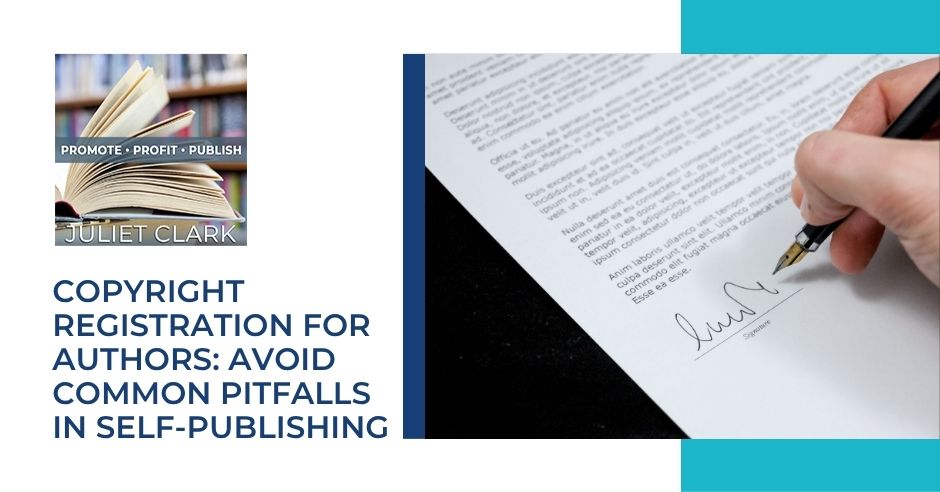
Protecting your intellectual property is essential when self-publishing a book. Host Juliet Clark breaks down why authors must prioritize copyright registration for authors long before distributing their work. Many writers rely on Amazon ISBNs without realizing they don’t provide legal ownership or protection in court. If another party copies your content, an unregistered manuscript leaves you with minimal legal leverage. Registering your work creates an official public record and protects you from potential infringement risks. Learn how to secure your files and keep your publishing assets safe.
—
Watch the episode here
Listen to the podcast here
Copyright Registration For Authors: Avoid Common Pitfalls In Self-Publishing
Understanding The Real Purpose Of Copyright Education
In this episode, I’m going to talk about a problem that I’ve been talking about for a while, and I feel like people keep making the same mistake over and over. I want to make sure you understand before we jump into this. This episode is educational. It’s not legal advice. We’re going to talk about copyrights, and copyright facts are highly fact-specific. Authors dealing with suspected copying, contract rights, derivative works, co-authors, and international distribution should speak with an intellectual property attorney.
The Hidden Risks Of Using Free Amazon ISBNs
With that said, let me jump into what’s going on. As part of our A-plus content and our promotion when we launch books, when we do the marketing for people, I give the book a good look over. The first thing I see is the copyright page. Again, I had a full month of people where we did sixteen A-plus content upgrades for people. Over half of those people didn’t file a copyright and they were using Amazon ISBNs. Now, let me address the first thing with the ISBNs. There’s nothing wrong with an Amazon ISBN.
You need to understand that when you use that, it’s not assigned until you put the book in. Which means you don’t have it on the front page where it belongs on the copyright page. The second thing about that is at some point, if you decide that you want to move your book over to Ingram, and there are a lot of reasons people are doing that. I belong to a Facebook group that’s all about self-publishing, where at least once or twice a day, someone says their whole KDP account got deleted.
They don’t know why. They don’t know how to get it back up. Which means probably they’re going to have to go over and republish that book with Ingram with a different ISBN because the one they got from Amazon is now no good. I want you to keep that in mind. It is better if you buy your own copyright, even though we publish. When we publish books, we put the Kindle very often into Amazon so that people can utilize all of the KDP fun stuff that’s there that can help you sell more books, the Kindle Unlimited and having that A-plus content.
Don't leave your manuscript vulnerable before launch. Secure your copyright early to protect your hard work. Share on XMaintaining Control Over Your Publishing Channels
If you publish with a publisher that’s not traditional, if you go hybrid, chances are that you’re not going to be able to use those tools, especially that A-plus content. They don’t give you access. It is better if you have your own ISBN. That way, if you get into trouble and you need to move it, you can put it back into Ingram and you own your own ISBN. Now, if you use your own ISBN and you get kicked off Kindle, you probably still will have to buy a new one because when you go over to Ingram to put it in, it is going to show that one is used. Whether you’ve been deleted or not, it is going to come up as used at some point.
My recommendation on that would be to put your softcover into Ingram either way. That’s the first thing. Again, the Amazon ISBN, there’s no problem. People use it all the time. They’re trying to save money, but I’m finding that many of you don’t realize that ISBN belongs on the copyright page. If you’re using an Amazon one, you don’t get it until you put the book in. That’s number one. Now, let’s get back to the copyright.
Why Unregistered Manuscripts Lack Legal Leverage
I want to make it clear that your material, if it’s unregistered, like a novel, it’s not in the public domain. It doesn’t mean that if someone steals your work, you can’t fight back. The problem is when you don’t register it, you don’t have the certificate to prove in a court of law that you own the copyright. You can only show it from creation. Failing to register can leave the author with a much weaker practical position when enforcement becomes necessary.
Safeguarding Your Manuscript From Freelancer Risks
What do I mean by that? I want you guys to hear me and why this is so important to do. All of you, unless you’re good at formatting the book. You’re sending your book off to a formatter. You’re sending your book off to an editor. You’re sending your book around to different people. While most of the people are probably very trustworthy, I would recommend that you use one, if you’re in the United States, that’s going to cost more that is US-based. Why do I say that?
A lot of you’re going to Fiverr and Upwork. There’s nothing wrong with those people, but if you haven’t registered that copyright, you may have the potential for somebody along the way to steal your work. I had a client who told me he used an editor on Fiverr. I’m sure that was okay, but what if that person had decided that they liked that book and they wanted to publish it themselves? I’m not saying that they would, but here’s what I would say. It does happen.
One of my book developers sent me a person years ago who sent her book off to an editor and a formatter that she found that was foreign. It was easy. It was cheap, and her book was published. There was nothing we could do about it. Keep in mind that is a possibility. Here’s a situation, and we’ll use some things here that are possibilities. Your manuscript is created, but you never register it with the Copyright Office. As an author, you still own the copyright, but you can’t generally file a US infringement suit unless the registration is obtained. See how much harder it is if somebody steals your work and you didn’t register it?
Another thing that can happen is registration happens after someone copies the book. The author can still pursue a claim after registering, but they may have lost the important remedies, depending on the timing of that. That’s why you need to talk to somebody about an attorney. By the way, good publishers do this. I ran into a publisher in 2025 that I talked to that I worked closely with on some other projects. I had to tell her, “You need to start registering these copyrights.” Mainly, I told her that because of the Anthropic lawsuit.
Leveraging Timely Registration For Maximum Legal Protection
The only people who got any relief on it had an LCCN, which is a pre-registration, and a copyright registration. Anybody who had their book used for AI that didn’t have those didn’t get relief from the lawsuit. The next thing, registration occurs before infringement or for a published work within three months of the publication. The author may still be eligible for statutory damages, attorney’s fees, and cost if successful. How much is it going to cost you to get into a lawsuit? That’s always a factor as well. Do you have the money to defend your work in court? It can get expensive.
Building A Comprehensive Manuscript Security Checklist
Another scenario, registration is made within five years of the publication. The certificate is considered prima facie evidence in court of the validity of the copyright and the facts it contains. What that means is there, again, you’re going to incur court costs here. I’m going to say this in plain and strong English. Registration does not stop a thief from copying your book. What it can do is make the thief more expensive to fight and make you more viable to represent. That registration helps. What if a studio or what if a lot of people say to me, “I have this novel. I see all these novels being published as series now,” which I see a lot of them, too.
It’s fantastic because it’s the only place as far as I can see that Hollywood is getting original material these days. It seems like every time you turn around, there’s a sequel to something or something like that. I love that books are being made in series. A couple of things about that, because people seem concerned about it. They think their story is good enough to be published in that way. Large studios, production companies, agents, and publishers typically have a legal review process and submission policies because claims of copying are serious. I don’t think you have to worry about that as a big concern overall.
If KDP flags your account, an Amazon ISBN won't follow you. Own your ISBN to keep your book available everywhere. Share on XWith that said, proving the infringement can be difficult and expensive. A claim usually needs more than, “My idea was similar.” We’ve seen this in the music world a lot, too. Where artists come back and they say, “So-and-so stole my work.” We saw one with a big artist out there. I think it’s Ed Sheeran. It happens and it can happen with books as well. Authors need evidence of the authorship, which that registration provides. A chronology, which that registration provides. Also, access and protectable similarities.
You can’t just say, “That was my idea and these guys stole it.” Now, there are some companies out there, and I’m not going to name names. I was sitting next to an author many years ago when a publishing company came to her and said, “Someone in Hollywood read your book, and they are interested in you in creating a screenplay for it.” They offered her this service for $20,000. Luckily, I was sitting there because she was so excited about it, and I said, “How many copies did you sell?”
She said, “I sold twelve.” I said, “How many of those were in your family?” She said, “Probably half of them.” I was like, “What are the odds here? Did somebody want that? If they did, why didn’t they contact you? You self-publish. They wouldn’t contact your publisher because that was a self-publisher.” You have to be careful because there are a lot of scams out there like that too. Back then, most of my clientele were from the senior center. I felt like it was elder abuse at that point.
The next thing, a registration creates a public record and a certificate. Version histories and submission records help establish a timeline if your book is stolen. Now, I will say this, and I hope somebody from the copyright office is reading, because I have registered for myself five books in the last six months. I’ve never received a copyright certificate. It says it’s done. It says it was mailed. I’ve never gotten it. Five out of five, that’s not a good track record. I have to go back in and get those because I keep them in a safe deposit box because they don’t reissue them. If you want to keep your work intact, keep it someplace where, God forbid, your house burns down, that they can’t be taken or stolen.
It’s also your evidence package that can matter as much as the manuscript itself. Why do I say that? When you fill out a registration, you upload the manuscript. We don’t always upload it as the final copy. We can go back and do that, but before I send it to the editor, that rough draft is sent there. Why do I do that? I love my editor. He’s a great guy. What if I’m a first-time author and I don’t know who that editor is? What if I’m a first-time author who’s going to self-publish and I decided to send it to somebody on one of those Upwork or Fiverr or one of those places?
There’s nothing to keep it from being stolen. Let me give you an example. I happen to know because I sent a lot of fiction authors to a guy over on Fiverr that one of my clients brought me. I also happen to know that he has a staff. He doesn’t do it himself. He’s one of the pros over there. I’m hesitant with fiction authors because they don’t have a business behind their book to charge them for a hybrid package because it can be very expensive. Chances are you’re not going to recoup that revenue. Think about that as well.
You may be trusting your work to someone that you paid, but do they have a staff that maybe they haven’t vetted thoroughly? I had a situation, I believe it was in 2024, where I had a book brought to me that was in Arabic. My clients had worked with a company that wasn’t getting good service rep. They had been working on this manuscript for a year, trying to get it. They came to me and said, “Can you find this a good formatter in Arabic?” I asked all my people about who they know. One of them said, “I do know this guy. He’s over on Fiverr. He is respected in the industry. He does a great job.”
I reached out to that guy on Fiverr and he said, “I know a guy. I’ll introduce you.” It turned out when he introduced me, that this guy was the guy who was doing a poor job on the manuscript. This company that they had contracted charged them $17,000 to publish a book that they were having set up on Fiverr. I thought it was outrageous. I went back to the guy that introduced me and I told him that. He’s like, “I have no idea.” We ended up finding someone, but think about that. That guy was not doing a good job and several people had touched it. When I talked to them, my clients said, “I don’t think a copyright was ever filed.”
All of these people were touching their manuscripts in a foreign capacity that they didn’t even know if they were covered or not. That’s why I said it’s really important to get all of this done. Again, the other reason we’re talking about this is AI training. There are a lot of people that are subcontracting work. There are a lot of people who are using AI or putting the book into AI exposure. Now, we have a program we use for our bestseller, but it has evolved. Your work is protected. That doesn’t mean it’s with everybody else. Your book may be training AI and that may violate your copyright.
Vetting your editing team is critical. Learn how to protect your manuscript before handing files over to freelancers. Share on XThe other thing that you have to think about here is, “What are the practical things that are happening to my book that I’m not thinking about?” I’m not sure who’s teaching people to do this without a copyright. I know that I tried to find out from AI how to self-publish a book, and the copyright was completely left off. It gave me a page that had a disclosure. It didn’t have an ISBN. It didn’t have a publishing company. It didn’t have anything. You guys need to be careful about this if you value your work, especially if you’re a multiple author.
I have a series of books, so I absolutely want to make sure that they are protected. Here’s a manuscript security checklist for you. Register strategically for a completed US book. Go over to the US Copyright Office for registration at eCO.Copyright.gov. Vet the providers that you’re working with. Review the work samples. Review the verified reviews, completed projects, references when possible, communication quality, and the consistency of the work. I will tell you that when we get your manuscript, we put it through our program, and I find tons of formatting errors.
A lot of times, if we’re working with you on a bestseller campaign, I will lay it out for you and I’ll say, “This is what I see. Even though I’m not your publisher, I would encourage you to go back and correct these mistakes.” Use a written agreement. One of the things that happens when you go over to a Fiverr or an Upwork. You not only know if there are subcontractors working for them, but you don’t have a written agreement with them. When you work with a publisher or a good formatter in the US, you will have a written agreement.
State the copyright notice in the manuscript. Include the author’s name, the year, and all rights reserved. This does not replace registration. That’s what we are seeing over and over. The copyright page is there. All of that is there, but the copyright is not filed. Share only with what is necessary with your formatter, so a cover design, a designer. You don’t need to share your manuscript. All you need to do is tell them the size and the page count. That’s it. They’re probably pulling a template from someplace that they’re using to build the full cover.
If they’re a good cover designer, they probably are pulling those templates because the bleeds can be tricky. You don’t need to give that manuscript to them. You need to give it to the formatter. You need to give it to the editor. That’s it. You shouldn’t have to give it to other people. If you have ARC readers, don’t give them the manuscript. Set it up as an ARC in Ingram and then send it out that way with something on the front that says, “Clearly, this is an advanced reader copy.” I just did that. In fact, I’m going to give you guys a little hint here.
I just put my next book, The Survivor’s Name, into Ingram for my art. Why did I do that? It’s because I found that it’s very slow for Amazon to get those advanced reader copies out. Some of them take 2 to 3 weeks. In order to get it, you have to put that book into pre-sale. I don’t want a book that’s bad in pre-sale sitting there for months. I went over and did all of my ARCs through Ingram and had them mailed from there. People are getting them already. I already have my advanced copy because they treat it just like a proof.
Another thing you can do, watermark or identify drafts. Use a footer that says, “Confidential manuscript provided solely for formatting review,” so name, company, and date. Consider individualized copies for a high-risk sharing. That’s another way that you can cover yourself. Maintain version records. Keep original Word files. If you look inside of my book of folders, you’ll see that there is a draft for every day I worked on the book. Now, you’re probably like, why would you do that?
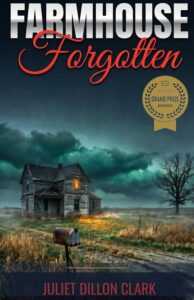
Let me tell you about a big OneDrive failure I had while editing Farmhouse Forgotten. For those of you who were early readers, because I didn’t send out ARCs. There were some horrendous mistakes that I don’t even know how it got into the manuscript because I know how to use contractions. There were multiple contractions in places they didn’t belong. What happened was, OneDrive said it was saving but it wasn’t. I would go through the manuscript, which takes hours with Microsoft. I would go back and I would save it with the date. I’d go back the next day and I’d pull it up and realize that the same errors were still there.
Now, every time I work on a manuscript, I save that date. I have a ton of dates in there to work with. If you’re using Scrivener, keep that. If you have cloud version history, keep that and make sure your OneDrive is working because I don’t know what happened, but I had about five days of OneDrive not saving properly. We couldn’t figure out what was going on. Dated exports, emails, contracts, invoices, payment receipts, and delivery logs, keep all of that in case you have to prove. I will tell you about the problem I had with OneDrive on Farmhouse.
Not only are they saved in OneDrive now, but I have a special drive, external drive that all of my books go into, so I don’t have to rely on OneDrive failure anymore. Use a controlled file for sharing. I was so irritated with one of my clients because he kept giving me this controlled file and I couldn’t download it but we got it all fixed because I had to publish it. We had to have a good copy. If you prefer a share link with restricted permissions over attaching the manuscript repeatedly, do that and then revoke access after delivery.
Protect your writing assets like a true business owner. Always use written deletion agreements with contractors. Share on XProtect account access. Don’t casually give a contractor your Amazon banking, email, ad account, or webmaster password. Anything. The reason I say this is because I’ll give you a great example. When I do plus content, I’m in your Amazon account because your KDT is hooked up to your Amazon. Now, I would never go shopping on your dime, but it can be disconcerting. What’s most disconcerting, your credit card information is in Kindle, but it’s protected. Most of the time, there’s a two-step to get through.
With ADP, I can go right into your Amazon account. I can go right in there and look at your credit card information. It is imperative if you give somebody access that you do it and you turn around as soon as the work is done and you change that password. Maybe even think about changing that credit card if you need to.
Require deletion or return. This is important. Have the contractor confirm in writing that they have deleted your manuscript copies and related source files after final delivery. Except where the parties agree otherwise. That is the way to protect yourself. Authors, I’m going to close up here. I don’t want you to panic, but most collaborators and professionals on most platforms are not out to take your work. Your automatic copyright is real.
Self-publishing is a business and a business protects its most valuable assets before a problem occurs. The last thing I would leave you with is be careful who you contract to do it. I know you’re trying to save money and I know a lot of people do it because they just don’t have the money to have professional people do it. Be careful about who you use because using the wrong person could ruin your whole publishing experience.
Important Links
Love the show? Subscribe, rate, review, and share!
Join the Promote, Profit, Publish Community today:
- superbrandpublishing.com
- Promote, Profit, Publish on YouTube
- Follow Juliet on LinkedIn
- Take the Quiz!