

Juliet Clark sits down with growth strategist Paul Lemberg to diagnose why so many businesses struggle to scale without burning out the founder. If you can’t establish true sales offer clarity, you won’t ever convert prospects who are already drowning in online skepticism. Paul explains why most stalled companies don’t suffer from weak sales tactics, but rather from broken decision structures that trap the owner in every small deal. You’ll discover how shifting your sales conversations from hard closes to honest customer clarity removes all buying friction. He reveals why scaling requires building real value into what buyers receive, rather than resting on years of experience or vanity labels. This frank discussion gives you the exact diagnostic questions you need to identify hidden operational bottlenecks and win in today’s cautious market.
—
Watch the episode here
Listen to the podcast here
How To Fix Sales, Offer Clarity, And Trust Issues In Your Business
My guest is going to be talking about sales and growth. I know a lot of you, when you come to me and you are working on your book, and we’re working on getting your platform. You’ve been mentioning that it’s been hard to grow. Sales are getting harder. I wanted to address that for you guys, because for many of you that work with me, your book is attached to your business. It’s basically that lead magnet, or in some cases, it’s a lead magnet. In other cases, it might be your lead generator. It’s important to get all this right.
Paul Lemberg is a business growth strategist, entrepreneur, author and executive coach who helps founders and business leaders identify and remove the constraints holding back profitable growth. For more than two decades, he’s worked at the intersection of strategy, psychology, sales, and execution, helping clients create stronger, more scalable companies.
His clients have reportedly generated more than $550 million in additional profit. Wouldn’t you like that for your business? I would. Paul began his entrepreneurial career after working as a software programmer, launching his first company with a partner and $3,000 in credit card debt. He sold that company three years later to a publicly traded software firm for just under $9 million and later sold a second company to a large German bank.
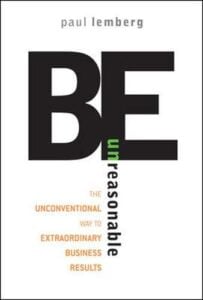
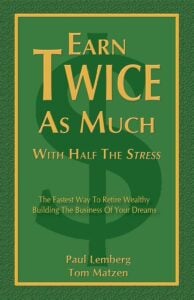
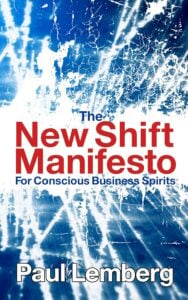
He’s the author of four books. If you like this interview, you can go over and grab one of his books and find out more about him, including one of those books is a McGraw-Hill bestseller, Be Unreasonable, as well as Faster Than the Speed of Change, Earn Twice as Much with Half the Stress, and The New Shift Manifesto. Paul holds an MBA from NYU Stern School of Business and a BFA from the University of Buffalo. Stay tuned for my interview with Paul.
—
Paul, welcome to the show.
Thank you, Juliet. Thank you for having me.
I’m excited to have you because we had this conversation. Many of the coaches I work with come to me and they tell me that they’re scaling their business. I look at their business and I’m like, what you said, “What are you scaling”? I hope this will be a fruitful conversation for some of those coaches that have not done the work that they’re supposed to yet. You are often described as a business growth strategist, but you also have a strong sales training background. How would you describe what you do? What is the core of what you do when you work with a new client?
The Universal Structure Of Scalable Companies
When people hire me now for my advisory work, it’s about how to grow their business. It can be pretty much any business at all. I say that because all businesses function the same way. Everybody thinks their business is different. When I do workshops or events, I’ll always ask, “Whose business is different?” Everybody raises their hand. Everybody thinks their business is different. The fact is, they’re all the same. They have the same requirements. They have marketing to make people aware of their business and get them to raise their hands.
They have sales to close the business and turn those raised hands into money. They have a production environment where they have to deliver whatever. I think of sales as making promises and production as delivering on those promises. We have a production department and then there’s operations and whatever things make the business flow in the background. Every business has those things. Anybody who thinks their business is different is just looking at two fine details and not looking at the big pieces of it. I work with the business to make the business function better.
You go in and first, you analyze. I have to tell you. I get people and I find out they don’t have a business entity. They don’t have accounting. They don’t have anything. I’m still like, “You’re scaling?”
Ditching The Hollow Founder Title
I used to spend a lot of time at CEO Space. CEO Space, for those who don’t know, CEO Space was an organization that brought together small to mid-level CEOs and brought in a lot of trainers, and allowed for a lot of networking. A lot of businesses got scaled by being part of CEO Space. I was on the faculty, and part of the faculty’s job was to have free consultations with the members. People would come to me, and I’d look at their business card, and it would say CEO. I say, “I’m not being rude, but what are you CEO of exactly? How many people do you have on your team?” They’d say, “It’s just me.”
I said, “I’d stop calling myself CEO because you’re not a CEO of anything.” It’s interesting because over the years, the term art has become the founder. That seems to be the new hip thing to call yourself, “I’m a founder.” It’s funny because I was speaking to a friend of mine who was a high-level coach and extremely well connected. He’s doing his first-ever business that’s not a coaching business. I asked, “What’s your job? Like, what do you do?” He says, “I’m a founder.”
I thought it was so funny because he was like, “You’re just fitting right into that language du jour,” which is, “I’m out.” I had a French business partner once at one of my software companies. Bruno used to say, “In a small company, even the owners do the toilets.” That was his statement about everything. It’s like, even the owners have to do the toilets. If you’re a CEO of a 1-person company or a 5 or a 10-person company, you’re still doing the toilets. It’s a funny thing as to who’s doing what.
That is so true. I was right out of college. I was the CFO for a company and same thing. The owner wasn’t around. I was it. Toilets, leaks, and employee stuff. It’s a lot of work. It is. By the way, CEO Space. How did I miss you? I was part of CEO Space. We must have crossed paths there someplace.
Every business shares the same basic engines: marketing, sales, production, and ops. Master the fundamentals, and you'll scale with ease. Share on XI was on the faculty for 7 or 8 years. I pretty much moved to Florida. When I moved to Florida, I stopped going.
You did? I used to go to Florida all the time. That’s where I met Tracy Hazzard, who introduced us. You say that many business owners don’t have a sales problem. They have a clarity process and decision-making process or problem. Explain that a little bit because I do agree with that, but there’s a mindset in there too when it comes to sales a lot of times.
Unclogging The Founder Decision Bottleneck
This speaks to my new book, How to See in the Dark. What the dark is is not knowing what’s holding to being back. A business may have an actual sales problem. They are making sales. The reason they’re not making sales has nothing to do with their sales process. It has to do with who’s making decisions. When I say there’s a decision-making problem, if you’re the owner or the founder, you probably know more about your business than anybody else there. I say probably just to hedge my bets.
For the most part, your customers know that, your prospects know that the founder is the one with the real knowledge. Everybody wants the founder to sell them, which in a tiny company works, but in a slightly larger company starts to work less well. That’s not only true for the prospects, it’s true for the people in the company. The people who work at the company, including the salespeople, want the founder involved in the sales process because they know more and they’re better at closing. They’ve been doing it and they have a better relationship with the prospects.
The problem is that if the founder is involved in every sale, that kills the process. If the founder is involved in every pricing decision, that kills the sales process. If the founder is involved in every special deal, and that special deals exist, especially in a growing company. Special deals exist at every level with every prospect. It is the job of the founder to make those decisions. What you have is a decision-making process, not a sales process problem. That’s why I say that.
That’s interesting. You’ve probably run into this a lot, being a sales trainer. A lot of entrepreneurs have a mindset problem when it comes to sales. They don’t want to do it.
They hate it.
Why do you think that is because I’ve never had a problem with sales, because I don’t consider it sales. I consider it problem-solving. To me, that feels like I flipped it. I’m not trying to close you. If I can solve your problem, I can. I will but if I can’t and you don’t think that is your problem, then you’re probably not my person. How do you feel about that? What do you think holds these people back from being able to close?
We could spend hours talking about that. First of all, there’s two kinds of people in the world. There’s salespeople and then there’s people who hate being salespeople. That covers about 100% of everybody. Everybody who’s not a salesperson hates sales. I became a salesperson because my first wife’s father had made a whole batch of money doing a whole batch of things. I looked at Fred, and I said, “How does Fred do all this?” Fred was a great salesperson. At the time, I was a programmer. I was a technology guy. My first career was as a tech support. I started as a tech support person.
I became a programmer. I looked at Fred, and I said, “Fred’s core skill is that he can sell. He’s good at glad-handing. He’s good at making friends with people.” I decided to be that but I wasn’t that at all. I was a geek. It’s like, “How do I do that?” I decided to mirror a guy who I looked at in the company I was working at, General Electric. I looked at this company and I saw this guy. I said, “He’s got the confidence. He can close sales.” I just started to do every single thing he did. I mirrored him.
I mirrored him from the outside. I didn’t mirror inside his head because I didn’t know what was going on in his head. I just took this guy. His name was Joe Jordan, and I did every single thing he did. I cut my hair the way he did. I bought suits that looked like his. They weren’t as expensive, but I bought suits like his. I was a vodka drinker at the time, and I became a scotch drinker because Joe Jordan was a scotch drinker. I did every single thing that I could see that this guy did. I modeled him. The result was I became like him.
Reframing Sales From Closing To Clarity
It was like the perfect example of modeling. I started to love sales. I became somebody who loves sales. When I teach sales workshops, one of my questions for the audience is, what do you think your purpose is during a sales call? Most of them say what you would expect them to say, which is, “My job is to close sales. My job is to bring in money for the company.” I said, “No. Your job is to help the prospect get complete clarity over whether or not this opportunity is for them. If this opportunity is not for them, then just talk them out of it.”
Break it off and talk them out of it. If this opportunity is for them, then your job is to make sure they buy. The real purpose of a salesperson, in my opinion, is to help the prospect gain clarity. Is this for them or is this not for them? That changed the whole relationship that those people had to making sales. The big thing it did is it took the pressure off. Their job wasn’t close. Their job was clarity. That’s a whole different thing. When your job is clear, the pressure’s off. You’re into helping them understand what their needs are and does your offer meet their needs? Once you do that, then sales become easy.
I love that because for me, when I do that, I’m building a relationship. I would say 60% or 70% of the time, those people will come back to me when they’re ready or they will come back to me for advice. I have built an ethical relationship. Not just trying to sell them something for the sake of selling them something.
If you're required for every pricing choice and deal closing, you don't have a sales issue. You have a founder bottleneck. Share on XNavigating The Modern Trust Recession
People are saying they know. I don’t know if you’ve heard this expression, I’ve heard it from several different people that there’s a trust recession.
There is.
Have you heard that expression?
I have heard that a lot. A lot of it has to do with AI and many people using scams for scams out there. Relationship building is more important than ever because they want human connection. What do you think about that? Would you say that’s why or do you have more insight?
I don’t think that’s why, but it’s made it worse. When people say trust recession, I’m like, “Nobody ever trusts anybody.” I think that’s basically true. There’s a lot of difficulty in trust amongst human beings for a whole host of reasons. AI is just one of them, and it’s making it far worse.
There are some people who have AI radars. I have a friend who can read like the first three sentences and know that it’s AI-written or that it was human-written. I use AI for ideation and I use AI for drafts, but I never send out an AI-written thing. I always go through word for word and write it. My AI is pretty well trained. My AI knows me very well. When I ask it a question, having nothing to do with business or anything, it always puts it in the context of Pablo Lemberg.
It knows me that well. I’ve spent a lot of time training it. It writes a lot like me. When I look at it, it sounds like I wrote it but I always go through it word for word. It’s pissing me off that this AI stamp is on everything now. It doesn’t matter what it is. I’m a photographer, and I do some very out-there stuff to my photographs. One of the tools I used is called ON1. ON1 has a lot of AI stuff built into it. It’s not an AI creation of images. It does things like, “AI filters out the noise or AI makes it larger or smaller.”
The AI stamp gets put on there. No matter what I do, all my photographs say that they were made by AI. Now, I’m in the position of having to tell it. It says it’s AI for the following reasons, but I took the photograph and I edited the photograph. It’s another challenge. If you look at twenty years ago, you see these things on Facebook where it says, “If you’ve done these things or all these things, then you must be a certain age.” I’ve always done 100 of them.
I’ve only done 100% of them. I’m old. I’ve seen all these things. I’ve used a dial phone. I’ve had a book box at the beach. I’ve had these things, but things are always changing and AI is one of those things. I remember when I first saw and used a fax machine. We were selling my first company, and the buyers were in a different city. We were doing the contract with our counterparts. The way they did it was I signed my signature. My partner and I signed my side and they signed theirs.
The lawyers put them both in fax machines, and they said, “1, 2, 3, go,” and they both pushed the fax button so that they got the exact time and nobody could cheat and have a signed contract and the other had another. It was so funny. It’s like, “How long ago was that?” That was a while ago. That was in 1983.
My kids always get a kick out of it, because I tell them about when I was in grade school. We didn’t have copy machines. Remember, you used to type onto carbon, and then you did a drum. My kids are like, “No.” I was and that smell of that carbon paper was like the best thing ever. You’re getting high in the third grade.
It’s funny. I remember the internet coming on. I had the very first coach’s website that there was. The internet coming on changed things in unbelievable, unfathomable ways. AI is doing that. AI is a world in unfathomable ways. I don’t even think we’re at the beginning. I don’t see what the trust problem is for AI. If the AI wrote it, the AI wrote it, so what? What does that matter? Yet, people see it as a problem. If people see it as a problem, it’s a problem.
Especially when it comes to the book industry, because so many authors are against using AI, which I agree with, being a mystery novelist. I want my mind to do it, not AI on there.
The AI wrote it just the same way an author wrote it, and then when you read it, your mind has to construct it.
We're living through a real trust recession. The only way forward is transparent, human conversations that solve real problems. Share on XYou have to have the story in mind to tell AI to write it is what it is and I have good AI. Mine does the preliminary rewrites and edits in it. I found a way to use it without losing that creative energy in it. How can someone tell whether their issue is a lack of leads, weak positioning, an unclear offer, poor follow-up, or a sales conversion problem? When you’re in that sales problem, how do you identify what that is that you’re not doing correctly?
Each of those things has a role, has a function. Do you have a lead problem? In other words, do you not have enough leads or are you bad at converting them? That’s not hard to identify. If your offer stinks, then people aren’t looking at it. They’re not listening to it. Each of those different aspects has its own job to do. If that job is not being done well, then you point to that problem.
In How to See in the Dark, I point out that there is typically a global constraint that is holding back everything. I illuminated some of those before where the founder does this and the founder does that. It’s like, if that’s your problem, nothing’s going to work. If you have hidden constraints, and the hidden constraints often have a lot of leverage to them. Not all constraints are founder constraints. Some of them are. The ones that are usually fairly widespread and cover a lot of ground but there are other kinds of constraints.
Defining What The Buyer Actually Receives
You may think you have a lead constraint, but what your real constraint is that your offer stinks. I’m in a rebuild. I’m recreating and rebuilding my company. I came to a very early conclusion, which is that I had to reframe my offer because if your offer is not framed well, you’ve got nothing to build. It doesn’t matter what you do. All these coaches who are trying to scale their business, if they don’t have a clear offer that is unique and distinct from everything else in the marketplace, then the question becomes, why you? What is special about your offer? Say, “I’ve been in business for a longer period of time.”
I couldn’t say that I’ve been in business longer than anybody as far as coaching goes. I started my coaching business around 1996 and I have created hundreds of millions of dollars of profits for my clients. That’s not an offer. Those are facts, and those are proof which back up my offer, but they’re not my offer. A lot of people think that what makes them special is that they’ve been in business for a long time, where they served a whole bunch of clients. Those aren’t things which make you special. They add proof and add veracity to what you’re saying, but they don’t make you special. What makes you special is how you solve their problems and what you give them when you’re done working.
Your offer is, what do they get when they’re working with you? Not how long you’ve been doing it. It means something, but it’s not what they get. They don’t get all that time you’ve been spending. They get all the knowledge that you’ve built, but that’s got to be built into your offer. That has to be explained in their offer. The biggest problem I see that new people try to scale is, they’re not good at communicating what they’re selling.
They’re not good at communicating what people get when they’re through or even in the middle of working for you. I had a client who came to me and he was earning, he was taking home a million dollars a year, thereabouts. I said to him, “Why do you want to hire me? You’re making plenty of money.” He said, “I heard you were smart. I heard you would give me an idea that would make me more money.” I was like, “I can work with that.” The very first conversation that we had was over the phone.
I didn’t even know much about his business at the time. I have a 27-page questionnaire that I use to debrief my clients before we get started but I hadn’t even seen that. I knew he was working six days a week and was hating it. As we were speaking on the phone in this initial conversation, I said to him, “Take Fridays off.’ It’s one of my standard routines. He said, “I can’t do that. I have to be in the office.” I said, “You don’t.” We went back and forth and I finally convinced him to take Friday off.
That’s so awesome. This will probably shock you because you mentioned what is special about you and your business. We have something called the Perfect Reader Playbook. One of our questions on the intake is, who is your competition? I would say nine out of ten people have not explored and don’t know who their competition is. I don’t understand how you can stand out if you don’t know what those other people are doing around you and how you’re encouraging them. It blows me away that it happens consistently.
That’s so awesome. This will probably shock you because you mentioned what is special about you and your business. We have something called the Perfect Reader Playbook. One of our questions on the intake is, who is your competition? I would say nine out of ten people have not explored and don’t know who their competition is. I don’t understand how you can stand out if you don’t know what those other people are doing around you and how you’re encouraging them. It blows me away that it happens consistently.
Identifying Your Real Silent Competitor
When I was in the software business, one of the key competitions was doing nothing. That was one of the key competitions. The other key competition was how you run your business. Those two things are competition for you because the way you run your business is the way someone wants them to look elsewhere. It’s astounding how many people think they don’t have competition. Your number one competition is doing nothing.
It’s crazy. Paul, this has been amazing. That was a lot of great information. Where do we find you if my audience wants to reach out? I know you said you’re rebuilding. Are you taking on new clients?
I’m taking on new clients. I have a website, which is Lemberg.com, or they can drop me an email at P@Lemberg.com.
Thank you so much for sharing your wisdom. I’m sorry I missed you at CEO Space.
You started coming too late.
Your biggest competitor isn't the agency down the street. It's your prospect deciding to do nothing at all. Share on XI didn’t know about it until I moved to Salt Lake City and ran into some people here. I’d never heard of it before when I lived in California.
CEO Space was a blast. I had a great time there.
I did, too. I met a lot of nice people.
I came to CEO Space, and I met with Bernie. Bernie Dorman was the founder. I met with Bernie and Bernie spent most of our time talking together, telling me how I would never get on faculty. It takes too long. It’s going to take years. At the next CEO space, I was on faculty.
That is funny. I have a very funny Bernie story. He rebranded my business. I became Superbrand Publishing and he did beautifully. He grabbed my phone, a beautiful copy for me. I went and I was sitting at a table, like two sessions later with someone that was Superbrand Plumbing. I was like, “How did you come up with that?” She said, “Bernie and I sat down.” I went back to Bernie and I was like, “How many super brands are there going to be out there?”
Bernie had this great playbook and he used to play it for everybody.
I figured that out. He was a great guy, though. Paul, thank you so much for being with us.
It’s been my pleasure, Juliet.
Important Links
- Paul Lemberg
- Paul Lemberg on LinkedIn
- Be Unreasonable
- Faster Than the Speed of Change
- Earn Twice as Much with Half the Stress
- The New Shift Manifesto
- CEO Space
- ON1
- Perfect Reader Playbook
- P@Lemberg.com
About Paul Lemberg
 Paul Lemberg is a business-growth strategist, entrepreneur, author, and executive coach who helps founders and business leaders identify and remove the constraints holding back profitable growth. For more than two decades, he has worked at the intersection of strategy, psychology, sales, and execution, helping clients create stronger, more scalable companies. His clients have reportedly generated more than $550 million in additional profit.
Paul began his entrepreneurial career after working as a software programmer, launching his first company with a partner and $3,000 in credit-card debt. He sold that company three years later to a publicly traded software company for just under $9 million, and later sold a second company to a large German bank.
He is the author of four books, including the McGraw-Hill bestseller Be Unreasonable, as well as Faster Than the Speed of Change, Earn Twice as Much with Half the Stress, and The New Shift Manifesto. Paul holds an MBA from NYU Stern School of Business and a BFA from the University at Buffalo.
Love the show? Subscribe, rate, review, and share!
Join the Promote, Profit, Publish Community today:
- superbrandpublishing.com
- Promote, Profit, Publish on YouTube
- Follow Juliet on LinkedIn
- Take the Quiz!