
Are you tired of the traditional book launch model that feels more like shouting into a void than building a business? For years, authors were told to write in isolation, polish to perfection, and hit publish, only to watch their sales stall after week one. The reality is that the old “build it and they will come” strategy is broken. Today, Amazon has flipped the script, moving away from short-term sales spikes and instead rewarding authors who bring in external traffic through robust, long-term platform building.
If you want to stop guessing and start executing, you need to understand the Perfect Reader Playbook. Success in the modern market isn’t about luck; it’s about mastering the five stages of reader awareness—moving your audience from being completely unaware to becoming your most loyal buyers. By shifting your focus from cold selling to relationship building, you can transform your book from a one-off project into a powerful engine for your coaching, consulting, or speaking business. Let’s dive into how you can stop the “long tail collapse” and start building an author platform that Amazon—and your readers—will reward mightily.
—
Watch the episode here
Listen to the podcast here
The Perfect Reader Playbook: Boost Book Sales With Smart Audience Building
We have a webinar about the Perfect Reader Playbook. If you’re someone who wants to follow up PowerPoint, I’m going to have some slides. I would encourage you to go over to our YouTube channel at Superbrand Publishing. That way, if you’re someone who likes to see the graphs and charts. Which most of you probably don’t. You’ll think it’s boring. If you want to see those, go over there and watch them on YouTube. Welcome, everybody.
Before we get started, I want to apologize to everybody who signed up for Karen Strauss’s earlier in the month. We had massive check problems. I appreciate your patience and coming back to read this as well. A lot of you may have seen Karen Strauss’s email that said, “What the hell is going on with Amazon?” We’re going to incorporate that in because part of the reason we put the Perfect Reader Playbook together was because Amazon made so many changes. They are good changes for people who have built an author platform.
I’m hoping we’ll help you to stop guessing and start executing in a way that will coordinate with those Amazon algorithms and the new way that they’re doing business with this. Let’s jump into it. This is for you, if you are building your business and you’re using nonfiction books to do that. That’s the one who might have consulting, coaching or speaking. If you’re a first-time author and you’re thinking about, “How am I going to get this audience?” If you have a book already and maybe you’re launched or under performed.
That happens a lot. People don’t understand the industry. They don’t understand what’s going on in the market. The launch may not have met your expectations. When I say meet your expectations, you probably were not only expecting to sell books. You are expecting to sell more coaching, consulting, and speaking as well and that visibility didn’t happen for you. This is especially if you’re a relaunch author and you are 6 to 12 months out. You have the opportunity to start building your platform in a way that Amazon is going to reward you mightily on.
I just won the Gold BookFest Award for the Best Business Marketing book. We have a book called The Perfect Reader Playbook. The program that I’m going to talk about is based on that as well. I’m a publicist, a literary strategist, and a book marketer. I come from the best of both worlds in publishing because I’ve not only worked for a traditional publisher. Also, for one of the largest advertising firms in the world on a billion-dollar account.
I got the best of both with publishing and marketing in that sense. Let’s talk a little bit about book launches. Many of you have been through them. They’re brutal. In the end, sometimes they can come out in a not-so-great way. It’s unfortunate because you probably hired great editors, great designers, formatters, or a good publisher, but you didn’t understand what was going on in the bottom of the business. What that means is you probably didn’t have as many buyers as you’d like. My personal story with my first book. I sold less than 200 copies. When I cleaned out my grandmother’s house after she passed away, she had most of them.
If I’m honest about it, I didn’t build an audience. I didn’t have much of a crowd but I had come from traditional publishing and they did everything for you there. They did all the publicity. They were running ads. They were doing all the things back in 2010 to 2012. Self-published and hybrid published authors didn’t know what they needed to do yet. If you read the book, you’ll find out that one of the scams that was going on. I call it a scam because I thought it was extremely unethical. While the traditional publishers were out there saying, “You will not have credibility because you didn’t publish with us.”
They were starting subsidiaries of their own companies to self-publish people and hybrid published people. They make money off the thing they said would never get off the ground. They deserve what they got with self-publishing and hybrid publishing being so. It’s competitive 10-15 years later. The traditional book launch mass is you write that book in isolation. You don’t need to build an audience because we’re going to build it for you.
The Traditional Book Launch Myth And The Long Tail Collapse
You don’t need to test your messaging. You don’t need to build a community. You just need to write it in isolation. Polish it to perfection. Hit publish and everybody will buy. That is a model that doesn’t work. What ends up happening is we beg our families and friends. We exhaust our personal network almost to the point where they’re blocking us now because they don’t want to hear about our book one more time. We then wonder why our sales stall as well. If you have been on social media for any period of time, you’ve seen that where it’s day after day, “Buy my book.”
Finally, you’re like, “I’m blocking you. I don’t want to hear about your book anymore.” That’s what has been happening for a very long time. There is a long tail collapse when you launch. One of the things that nobody ever tells the authors is your book is not a short-term project. It is literally a lifetime of promotion if you want to keep that book in the public eye. We start out week one. We have a great pre-sale. We have a great week one, and then everything starts dropping down.
That’s because we’ve exhausted our family and friends. We didn’t build a big enough community around what we do. Seventy percent sales drop by week two isn’t bad luck. It’s a predictable outcome if you haven’t filled your platform correctly. The reason most authors stay stuck in this cycle here is because you don’t understand what the problems were with the launch. People start second-guessing themselves, like, “Was it my marketing strategy? Did I position it with the wrong market? Was my metadata wrong? Was my target market definition wrong? Was my message and languaging wrong?”
They never stopped to think about the fact that they didn’t build that platform in advance. They did this short-term launch strategy that may have encompassed all those things but it didn’t build the audience they were looking for. They wanted to build that audience afterwards. The audience building comes before the book. If you’re one of those people who’s building your business with the book. You’re going to find that your business gets much stronger with people who are visible and looking at your business as well.
When books sell for $1 to $3 to $4 a piece, your ultimate goal is, what is next and what am I selling? That is, $2,500, $5000, $10,000 or $15,000 because that’s where you’re going to make the money with the book with it. How are people trying to fix it? They take courses. Some of the courses related to Amazon are old. I had a client at the end of 2025. In the middle of our publishing she told me I was doing it all wrong because she took an Amazon course a few years ago.
She had no idea that everything she took in that course was obsolete. You guys go and you hire VAs to do it. They promise, “I can get you great social media attraction,” but you don’t have an audience for them to build traction too. You invest in a website. You start redesigning it. Maybe that was the problem and then you start running Amazon ads and social media ads. Amazon ads are hard to target because Amazon is more interested in taking your money than they are giving you money.
You have to know how to position all that. These are fixes that you guys get into trying. One of the other big problems with courses I’m going to get into a little bit more is, there are lots of worksheets, spreadsheets and tools for you to use. They never tell you how to take what you do in particular and fit into those in a meaningful way. That’s what I’m talking about. It’s not that your information was wrong. It’s that nobody was there to translate your specific situation where the rubber met the road.
I have been in some of those courses where people come to me because they know I’m pretty good at messaging. They’ll say, “I don’t understand what I’m supposed to put in this spreadsheet.” The truth of it is they don’t know who their audience is. They don’t know what their message is, yet they’re trying to take a course that’s going to lead them to bigger things. They’re not getting the benefit out of this that they should be. It’s a lot of hypothetical instead of real world. It’s almost like going to college when you learn all these things and then you go out in the real world. Did everybody laugh like, “We don’t do it that way?” “College taught you this?” That was my experience with college, anyway.
The truth is, most people don’t know who their audience is or what their message is, yet they’re trying to take courses meant to lead them to bigger things—and they’re not getting the benefit they should. Share on XThe Five Stages Of Reader Awareness
I want to talk to you a little bit about the right way to do it. There are five stages of reader awareness and this is where your platform will reward you in many ways. The first stage is what I call the unaware stage or nobody knows you’re a live stage. I know that sounds harsh but it’s true. Look at all the people on social media. Look at all the content on social media. How are you going to break through that? Stage one is the stage that you will stay at the longest. Number one, they don’t have any idea who you are.
Number two, many of these people don’t know that the problem they have exists yet. Let’s take scaling of business for example. They may know that their business isn’t growing. They might not know why yet. If you’re out there telling them, this is the problem and this is the solution and here’s my book. They’re not even aware of what’s going on yet. You are not going to be able to capture them. You’re going to speak to this audience in a much different way than you would in a problem of where stage or a solution aware stage because you’re getting yourself out there.
You’re getting your branding out there, but you’re also talking in your blogs or your podcast or your Substack or LinkedIn newsletter. Whatever avenue of content you’re using, you’re talking that to them in an introductory way. This is the basement of the problem you’re having. When you’re going out in, what I’m going to call stage four, which we’ll get to in a minute. You’re skipping all of this. You’re going into a cold market with a product. It’s basically what you’re doing.
You’re probably going to stay in that stage if you’re well at getting through it for three months. If you’re floundering a little bit, it’s going to take a good six months to get you through that stage and get everything you need to get done. I will say in every single stage, consistency and content is a must to get all of this done. After that stage, then you’re going to start moving into what we call the problem-aware stage.
That’s where on every course you’ve ever taken, every worksheet you’ve ever done, somebody’s asking you what are the pain points of your audience? This is where you’re going to use that and start writing articles that address those pain points. You’re going to start getting feedback. Maybe you have surveys or quizzes and find out, “Is the pain point that my audience has really the right pain point?” Using what I call reflective marketing back to them.
Now, you’re going to use their actual words they’re telling you and reflect them back to you in your landing page copy or on your lead magnet and all of those things in that problem where stage. You’re going to spend some time there as well because you need to establish what that pain point is and start writing those articles or recording those shows. They hit those pain points with the right people that you brought in you or you’ve been bringing in. You’re going to speak to your audience differently in the problem-aware stage than you did in that unaware stage. Now you’re moving them up.
The next is the solution-aware stage. This is where you have a solution to the pain points that you’ve been articulating, probably for the last 10 to 12 weeks and talking about with these new people that are coming in. Now, you have a solution but it’s not just about, “I’m over here and I have a solution.” It’s showing them case studies. It’s querying them on what they have tried before that didn’t work. Why does your solution work when these other solutions don’t? You’re positioning yourself in that solution-aware stage.
I have something that you haven’t tried before but I’m not going to sell it to you. I’m going to talk to you about it. I’m going to find out why you tried or why these things didn’t work. You’re getting into the relationship building there about why all this is happening. It’s getting into, do you want to solve the problem? That’s another thing in these first three stages. When we get to the fourth stage and it’s cold selling. We’re trying to sell a problem to people that they may or may not have. We’re out there trying to sell things to people who will never buy. That is a problem as well.
After you’ve worked for about 10 to 12 weeks in that solution-aware, then you’re going to move to the product aware. “I have a product. It’s coming soon. This is what it’s all about. This is what it’s going to do for you. These are the pain points you have.” Now you’re positioning it, now that they know you exist and they’ve been actively evaluating what you’re doing. That’s when they come in and they start getting interested in your product. That’s your low-hanging fruit, your book.
Your book is your low-hanging fruit. At $20 to $30, it’s not a difficult buy to find out, “Do I like the way this person does business? Do I like the way they present the problem? Do I like their solution? Do they look organized? Do they look like they’re an action person?” You have to remember that your personality doesn’t fit everybody else’s. Come to me because I’m always in action. I give homework. Some people don’t like that. They want a more passive journey to all of this. That’s where you get to find out how they operate or how you operate and would I want to take a next step with them.
You then move into that most aware phase. That’s where people are buying your book. We’re moving in the products and services and then the big money is. If you published a book already, you found out that you’re not going to make a living off that book, unfortunately. That is the truth about it. I hear lots of authors all the time say, “I’m going to put out a series. I have an offer with ten books. I’m going to put out a series and people are going to want to coach with me.” That’s not how it works.
You have to build a relationship. That’s one piece with social media and all those things out there that people forget about. We’re all invested in clicks and you have to talk to people. I notice Gary is on the webinar. I was talking to him and telling him about a coaching program that I’m helping someone develop. His biggest frustration is all these people are coming out of college. They want to be salesmen and they’re texting these companies, “Buy the electrical.” These contractors are saying, “Who are you? Why are you texting me? I want someone who walks in the door and talks to me and builds the relationship.”
Unfortunately, we have a whole generation that’s never done that. They’re failing in the sales realm because of that. They’re selling to these older people who are the head of the salesforce and have been doing this for years. That’s why this is so important because you are building relationships along the way when you pattern your build like this. For those of you who love graphs, what you’re doing is you’re spending all your marketing energy on maybe 3% that are already in stages 4 and 5. You’re completely disregarding the 97% that are sitting back there and stages 1, 2, and 3 that you could be picking up and building relationships with to get them to stage 4 or 5.
I want someone who walks through the door, talks with me, and builds a relationship. Unfortunately, we now have a whole generation that has never done that. Share on XYou’re investing your time, energy, and money in the wrong place. For those of you who have bought both, it is very expensive. Most of the time, it’s not super targeted. I had a client tell me he has spent $250,000 between publishing books and marketing over the last seven years. Now he’s come back and he’s building a platform. We are starting from scratch. He’s blown away that he has spent that much money on book marketing that never worked with what he’s doing. His book is not bad. He won BookFest Award 3rd place for their book. Going back and starting again is useful.
Here’s what I like for those of you who haven’t gotten it yet. What you’ve been doing is like proposing on the first day. If you’re like me, you’re sitting across from someone on the first date and they’re like, “I love you. You’re beautiful. Let’s get married.” If you’re like me, I am excusing myself to go to the restroom. I’ve got my Uber app open. I’m looking for my little MacGyver kit to disengage the lock on the emergency exit door because it’s creepy. It feels weird.
Basically, by skipping those first three steps, that’s exactly what you’re doing with people. That cold audience is never going to just click and buy that book. I told of what the traditional publishers have been told for years to do. This is what you should be doing. Write your book out loud. Develop that audience. Signal test through content development and social media. Get out there. Ask opinions. Ask for feedback. Build a community with a lead magnet.
Send those people emails every week. Ask them in a PS. Hit reply and tell me what you think of that. You’ll be shocked people will do that and they’ll say, “I haven’t tried that or I tried that and I didn’t work.” “Could we maybe make an appointment and find out why it didn’t work?” You’d be amazed when you start doing that. That’s where you start relationship building. I encourage all of you to polish that manuscript to perfection but build your platform first, then start polishing it.
Invest heavily in the author platform before you invest in that editing, the design, and the production quality. That’s where you’re going to sell the product you’re trying to work with. He publishes himself. Work with an audience to sell more books. What does that mean? I talk about power partners. Power partners are not affiliate partners. There’s a difference. Affiliate partners are clicks. It’s where you go out to some of your friends and you say, “Will you send an email about my book?”
Maybe they send me an email and somebody clicks through and they buy. That’s not what you’re looking for. You’re looking for power partners. People with like-minded businesses who are willing to have you host a webinar and build a relationship with their audience as well. That is the way you bring more of that relationship building in the door. Can I get a speaking gig where I can sign books and build relationships with those people in the audience? Do I have power partners that will do that for me?
The Proposing On The First Day Analogy For Cold Selling
Get out and leverage those types of relationships with more than just to click. I’ll give you a great example. I won that award the second week of April. I had a big blogger come out from my next book. They’re going to write a big article on it. He contacted me through a power partner that put us together. Another company reached out and I’m on the summer beach bash book reading. That came from another partner. When you build these relationships with partners, be willing to see if you have opportunities that they might like and vice versa. You do the same for them.
You will see your audience grow exponentially when you start building those types of relationships. Start watching your audience and your books sales grow month by month. Steady sales, steady audience growth with no spots. Amazon is literally discounting spikes now. Those bestseller campaigns, I haven’t one since August of 2025. That is because they no longer honor them. They don’t want to see that long tail slide anymore. They are rewarding external clicks.
What I mean by an external click is when you have a piece of content. Let’s say you have a Substack. When someone clicks through from Substack or from LinkedIn to your book or from the show notes on your show or from a power partner, things that have been done with other people or their webinars. That’s what they’re looking for on their external products. We have a product called Author Promocast, where your book runs through ads on apps.
Every time someone clicks through from there, even if they don’t buy the book. Amazon’s rewarding you because now you have 300 clicks a month that weren’t happening before. What does it look like, platform or no platform? If you have no platform and you’re selling 100 books. You might have some revenue but more than likely, you are not going to have the inquiries you need for those big-ticket items you want to sell. When you do have a platform, you’re not only going to get not only sell more copies of those books. You’re going to have more revenues from those people that you have nurtured through all of those phases buying those big ticket items that you have.
We were featured at BookFest afterwards. People not only bought the book. I had eight inquiries on my calendar for different products that we sell. They want to know more about how to build that platform. That’s what you’re looking for because you nurtured those people into those bigger items and built that relationship. They know you. They know how you do business there. I shared it with you guys. I’m not going to go through this a lot, but this was my face plant story. My first book, I told you grandmother, bought most of my copies.
I started building my platform after that. It was very humiliating to not sell any books. That shift came from building the platform. By my third book, I sold over 25,000 copies of that book and that breakthrough. It wasn’t that I was a better writer. It wasn’t that my book cover was better. It was that I had built an audience around what I was doing in that book. It got me a lot of speaking business. All of those goals that I had were fulfilled. It just grew from there.
Nothing changed with what I published. It was simply that I took the time and built the platform before that. Implementation. I want to talk a little bit about it because I know we all go to events. You’d be amazed how many times I have heard over and over from people, “I went to a Jack Canfield event but what he taught didn’t work.” What Jack teaches does work, but you have to implement it. I would encourage you, whether or not you read my book. Get inside the program. Do whatever you’re going to do that you practice your implementation.
Part of what you’re building with a platform is that you have to implement it. There’s a lot of tech. You have to be tenacious over time to get this done. Do understand that you don’t just go home and spend the six months not knowing how to apply. Get help with specific applications to what you do. Don’t go into this big general course that doesn’t help you. Make sure that whoever you’re coaching with is specific and meet you where you’re at. Recognition is not transformation. It’s understanding the problem intellectually and implementing it.
Part of what you’re building with a platform is that you have to implement it. Share on XI want to put that in. I see a lot of people who go to these presentations and they never implement or they barely implement and are expecting results. That gap exists and it’s not because it’s your fault. It’s not that you’re not intelligent because all of you wrote a book. You’re intelligent. You’re not lazy. You wrote a book. It’s because most of the things that we’re doing in the book world, we’re taking a universal framework and trying to take your particular niche. We put it together in an actionable plan.
If someone’s not helping you with that in a strategic, customized way, it’s not going to be helpful. You can’t take templates and put general answers in there. You have to get down to what you do on that. What authors need more than information and more than another course is a custom plan built exactly for their book and someone in their corner to explain that and help you get it implemented. That’s where Mary’s question comes in, “If you already have a book, is it too late?”
I just told you about one of my author platform-building clients. Absolutely not. He has 7 or 8 books and now he’s going back to square one. He’s spent an enormous amount of money over the last seven years with those books. Now we’re building the platform. He has a plan. When he was first referred to me, he’s like, “I didn’t even know someone like you existed, a literary strategist. I only tried to do it all on my own.” That’s the difference. As soon as I gave him a plan, he was so excited because he’s never had a plan before.
That’s where this author gap and the author market is. We have all these coaches, agencies, and courses but the courses teach frameworks. They tell you what to do but they don’t tell you how to do it. The coaches help you think through problems, but you need to execute them. My experience with a lot of the agencies is they execute campaigns without transferring their knowledge. They’re expensive. As soon as you stop paying, your results stop. too.
You have to learn how to get through this yourself. Once you do, then you can hire a VA to help you because you’re directing them on what to do. What the Perfect Reader Playbook does is it’s a plan, a partner and a guide to execution. When you run our report, you have a twenty-page plan that walks you through every single step of that process. It tells you exactly who your primary client is. It goes to purchase triggers, which nobody ever talks about. I came from advertising, so I understand what purchase triggers are and how you can use them with readers and your coaching.
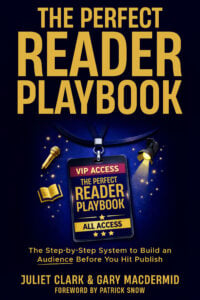
It also gives you a plan, a distribution plan and article or podcast. Whatever that content you’re producing a plan, through every stage that I talked about 1 through 5. What you get with this is a crystal-clear reader avatar, stage-specific messaging, a 90-day content roadmap, and platform strategy. Build earned and borrowed audience channels for long-term authority. You don’t get that weak spike. You can start all over with your marketing plan.
Mary just asked, “Can you do this with an existing book?” Absolutely. It’ll probably be the best thing you ever did for your business and your book. What you get as a part of this is you don’t get templates that are one-size-fits-all. You get one-on-one how to go through this and build this. One of the things I see a lot is, you guys don’t have robust marketing programs. We use GoHighLevel. It has everything you need in it to build. We try to put you into something. There are a lot of others. There is ClickFunnels. There’s some other ones out there.
For the most part, I see you guys are patching together systems to try to do something that you’re not quite sure you know what you do. We take a look at your lead magnets, how you’re building your email list and what’s your building and go through it step by step and start getting clarity on how that gets built. When we do this, you get a strategic coaching call, a platform assessment, real-time feedback and then we talk about how to remove those roadblocks that you already have.
You’re not just getting that report. It gives you a strategic partner in all this. You’re not just getting a bunch of worksheets and you go figure it out and implement it. What changes for you? It changes the launch day. When you’re working with power partners and you already have that audience and the plan, you have your momentum built already. It’s a celebration. It’s not like, “I’m going to die. This isn’t working,” type of situation.
You already have pre-sold readers. When I say pre-sold readers, those are pre-sold readers from your audience. Not ones that you went out and bought. Once you go out and buy, they’re not going to stick with you long-term. You want to get these people into those bigger things that you saw. Also, the speaking opportunities, you’re going to get a lot of those inbound. If you’re out there and you have your own content, let’s say you have a show. Now, you have something to offer for what we call a pod swap.
You can go out to other podcasts and say, “I’d love to swap. Would you like to be on mine? I can be on yours.” Now you’re in front of a like-minded audience. All of this is also long-term asset for you as well. Hugely, I’ve already told you about some of my clients who have already done this, but this is for you if you’re using your book to build a business because all of the assets that you’re building will help your business as well.
If you’re someone who wants to implement, not just learn because you are going to be actively implementing these plans. If you want a strategic partner, not a course, do a DIY course and try to figure it out, great. If you want a strategic partner that can guide you and reuse through some of the difficult parts. That’s what this will do for you. Also, if you’re willing to invest 6 to 12 months to get this up and get this done right. That is a huge part of this.

What happens next is I’m going to give you a URL. Schedule a session. Get your map and your reader mapped out. I’ll give you questions to answer. You answer them and then you receive your Playbook. We’ll then talk about those specific goals. You can do that. Go over to ChatWithJuliet.com. I will tell you in advance. I am not a hardcore seller. We’re going to have a lot of discussion. If you’re the right fit, great. If you’re not, that’s great too but at least you have a plan with it all. Do you guys have any questions? Mary Jo’s here. She’s already gotten a report. Mary Jo, would you like to comment on how comprehensive that report was?
Sure. It’s very comprehensive. It’s a lot to absorb but a lot of information to consider. A lot of different facets are there to look at and say, “Here’s where I can focus and here’s the various different articles I can consider writing and ways to hone in on that target audience that I want to focus on first with the books.” As the book comes out and who do I already want to be engaged with.
Mary Jo’s book will be coming out in January 2026. She’s right at that point where getting all this started will enhance who purchases her book in the long run with that as well. Thank you, Mary Jo. Any other questions?
Amazon’s Shift: Rewarding Consistent External Clicks Over Sales Spikes
I’m going to ask you a question. Can you repeat what you said when you shared about Amazon is no longer rewarding something or honoring something? I didn’t capture it. You said that there were rewarding external clicks, but what they used to reward was something else.
They weren’t rewarding the algorithm that someone goes and looks at your book. That’s where the external clicks come in. They’re looking at what’s coming in from the outside now. Here’s what they’re trying to do to you. They have a clear understanding that a lot of those bestseller campaigns are not coming from author platform building. They’re coming from purchased items. What they’re doing is they’re flipping the script here.
They are trying to get you to build and have a good experience as an author with book sales. That’s where they’ve switched now. They don’t want to see spikes in your sales because they’re acknowledging that a lot of those spikes are coming from paid outside sources. They’re looking at, are you consistently selling books? If you’re consistently selling books, are they coming from external purchases? Are they coming from content? They want to see it coming from content and know that you’re building a business.
A lot of this is not only the spikes from those bestseller campaigns, but with AI. You would be amazed. They’re limiting how many books you can publish a month because they’re seeing all of these AI-written books coming in. The people that are writing AI books are not building a platform. They are trying to honor the hard-working people who are writing their own book, getting it published and not cheating the system. That’s what they’re trying to do here.
Now, the good news with this is, you not cheating the system is also helping your business as well because you’re getting out there. You’re getting visibility. You’re not just another AI bump in the Amazon audience. There is a tremendous amount of benefit here. For the most part as a publisher, I probably get 80% to 90% of the people who come to me have not built a platform. They don’t have a lead magnet. Many of them don’t have a website. They don’t have robust social media. They haven’t done the things to do and I understand that a lot.
I hate social media. I’m the first to tell you I hate it, but there’s no reason why you can’t write it. If you have something like GoHighLevel, auto-post it. Dip in once a week and get away from social media as much as you can. I think it’s a time stack. There’s a lot of drama on there I don’t want to deal with. Building the platform and building a robust marketing system as well. You don’t have to go in every day and posting yourself is also a big help.
With the email audience, even though it’s very hard to build an email list, it is very rewarding. I have a fiction novel coming out on May 12th, 2026. It’s allowed me to go into some programs like BookFunnel and do book swaps. A book swap is, you go in and you find books that are like yours. If you have a good list, a newsletter or an article something that you can offer value, they will promote you in their newsletter to their audience. You do the same with theirs. It gives you an opportunity for quite a bit of cross-promotion.
There are a lot of programs out there. If you’re building that platform, you can utilize it and get other authors to promote you as well outside of your power partners. I have my first swap on May 18th, 2026. I’m promoting a mystery author and she’s promoting me. When you build this, you have a lot of leverage to go out and get other people to help you as well to sell those books.
First of all, Juliet, I want to say that is the first time somebody has sat down and explained 1 to 5 and for me to understand it. Maybe I’m just now getting it. I don’t know but I appreciate the time and the effort that you’ve put into this. Second, how often do you blog? Do you put it on all the social like Instagram, Facebook, LinkedIn, or whatever?
The things that the report will do for you is, it will identify where that target market is. That is one of the beauties of the report. For me, my mystery writing is secondary. It’s fun, but I have to focus on my nonfiction writing because it supports my business. I have a link to a newsletter and I also have a show, which you guys are all on. What I do with that show and I know you are talking to me about a show as well, is I have made that into a blog that goes on my Superbrand site.
I have that. The video goes over on my YouTube channel, and then we promote the shorts for it over on LinkedIn. LinkedIn is my primary place that I promote because it’s nonfiction. For you, I would say you’re probably on Facebook because that’s where older folks are. What you’re doing is Facebook them. That’s one of the things that identifies there. It gets me down to these are the articles you should write. It gets that in detail with it.
Leveraging AI For Content And The Importance Of Correct Distribution
One of the things that happens with content is people say, “I don’t have enough ideas or I’m running out of ideas.” Every single stage of this report will give you ten articles or show episodes or something to follow to write. If you’ve got five stages, you’ve got 50 articles right there that you’ve got ideas for in addition to whatever you come up with on your own. It is a helper with it. The main point is, where you distribute. Is it the right place?
I worked with an author in 2018 and she had a solo to CEO book platform. She insisted on being on Facebook. She knew Facebook. She used to do Facebook ads. It was awful. It failed because she belonged on LinkedIn, where those CEOs and those people were. As far as content once a week, get a piece out once a week.
For all of you who think, “That sounds so hard.” We have AI now. I literally can go in because I have a secondary blog on the Perfect Reader Playbook website. I literally go in. I will give it a topic. I let it write it and then I go back in and finesse in my own writing. It takes the time out of probably an hour that I would have sat there writing the blog or whatever it is. We have a lot of helpers out there that can help. I would never use AI to write a book. As far as platform building goes, there are a lot of things you can do to help with platform building.
Thank you.
Anybody else? Mary, did you have more questions?
Sure, but it’s probably part of your package.
Do you want to discuss the package?
One question I have for sure is, roughly, how much are we talking about for the package?
To run the reports and all of those things I mentioned there is $9.97. As I said, I’m not a hard seller so I don’t price this on things. I do the webinar thing where it’s this and you get a gazillion dollars and bonuses. This is a basic, so we start with the basics and build from there.
Thanks.
Again, if you want to talk about it, if you think it’s something that you might want to do, go to ChatWithJuliet.com and set up an appointment. We’ll discuss it if it’s right for you, what you have done, or what you haven’t. I’ll do a platform evaluation for you and it’s going to tell you where those holes are at. That’s it. Thank you, all.
Important Links
- ChatWithJuliet.com
- Perfect Reader Playbook
- Superbrand Publishing
- Superbrand Publishing on YouTube
- Author Promocast
- GoHighLevel
- ClickFunnels
- BookFunnel
Love the show? Subscribe, rate, review, and share!
Join the Promote, Profit, Publish Community today:
- superbrandpublishing.com
- Promote, Profit, Publish on YouTube
- Follow Juliet on LinkedIn
- Take the Quiz!