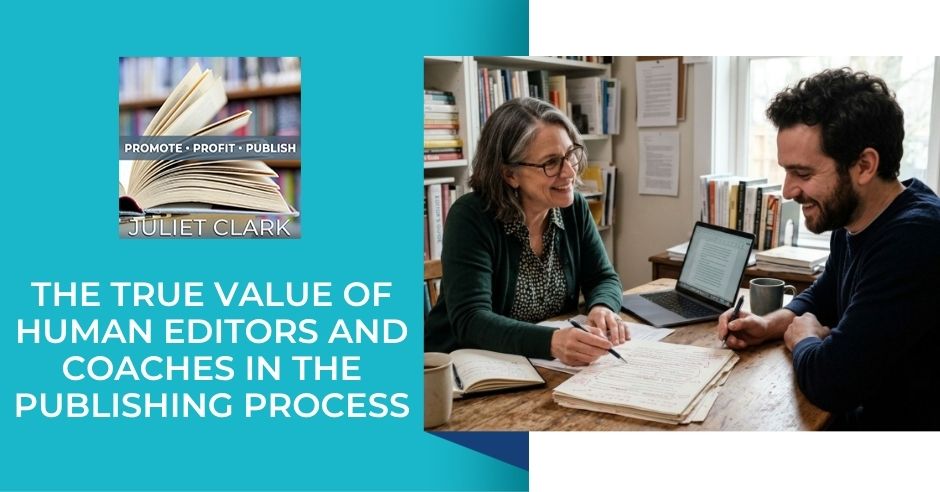
Writing a book on your own without professional guidance often leads to unforced errors, which is why hiring human book editors is essential to avoid the trap of AI writing tools. Host Juliet Clark connects with industry leaders Ally Berthiaume, Karen Strauss, and Patrick Snow to discuss how a professional coach shapes your message. You’ll discover why human connection is vital to uncovering the emotional core of your memoir or business book. The guests share practical steps to build an author platform long before your launch day so your book actually sells. They also break down the critical differences between memoirs, autobiographies, and legacy books. Stop wasting time on automated software and learn how to build an authoritative system that scales your business.
—
Watch the episode here
Listen to the podcast here
The True Value of Human Editors And Coaches In The Publishing Process
The Dangers Of Self Publishing In A Vacuum
Welcome to the show. Welcome to Power the Page. Many of you have been asking questions about writing books, and I am really excited that you will be able to get some answers here. The biggest problem I see out there right now is that people are writing their own books without help, and they are publishing their own books. They are following the instructions of AI, and believe me, the professionals on this call can open up page one and tell you to self-publish your book. This is not a great practice if you think you know what you are doing, but you really do not because people can tell.
All those self-published authors are in my calendar now saying, “I published a book. How do I sell it?” Somebody out there made a big promise when they taught them how to publish that book that they would sell millions of books, and they have not sold a darn thing. Lots of problems out there, and I am super excited to have you all here. I will give a little introduction to everybody before we get started. Ally Berthiaume, did I say it right? It has only taken me two years. You need a better name. Ally B., as she is known in the industry, is the founder of Write Place Right Time.
She is an award-winning author, memoir coach, and developmental editor, and the founder of Write Place Right Time. She holds an MFA in creative writing, nonfiction, and works with authors to shape meaningful truthtelling stories rooted in lived experience. She is also the author of Dear Universe, I Get It Now: Letters on the Art and Journey of Being Brave and Being Me, do not write that book until you read this one, which was an excellent book. I was one of the endorsers on it. She is the creator of immersive writing experiences. She bravely returns, and she writes bravely. Welcome Ally.
Karen Strauss, you guys have probably seen her on here plenty of times. She is the founder of Hybrid Global Publishing, and she has held various positions in the publishing industry over the last 35 years. She worked at Random House, Macmillan, Crown A, and Avon in sales, marketing, and publicity. She has worked with celebrities such as President Jimmy Carter. Excuse me. That was really improper of me not to add that. Jimmy Stewart, Martha Stewart, George F. Will, and Og Mandino.
In 2010, Karen founded Hybrid Global Publishing, a firm that works with entrepreneurs, speakers, and coaches to help them write, publish, distribute, and promote their books in order to generate unlimited leads. I know a lot of non-fiction authors use her. They need her because they are building businesses, and she is the one. Welcome Karen.
Lastly, here live from Hawaii at 5:00 AM. Thank you, Patrick Snow. Patrick is an international best-selling author, professional keynote speaker, publishing, speaking, and marketing coach. He first discovered his gift from speaking at age seventeen while giving a pregame speech to his high school football team. Since then, Patrick has electrified more than 3,500 audiences on four continents to achieve their individual and organizational destinies.
As a publishing coach, he has mentored more than 1,200 clients throughout the world and successfully helped them publish their book. Many of these have gone on to be speakers as well. Welcome Patrick. My first question. A lot of people out there are trying to write their own books without help. What is the value of hiring a coach versus trying to write with AI like so many people are trying to do? Who wants to take that first?
Why Amazon Rejects AI-Written Books
Where do I start? First of all, warnings about AI. You can pretty much tell when you’re writing with AI. Amazon does not like it. Barnes & Noble is starting to ban AI-written books. It is not a good look. First of all, AI is soulless. It also hallucinates, which means that if you’re looking, you’re writing non-fiction and you’re looking up statistics, you better do your research because it may or may not be giving you the correct information.
Secondly, it is soulless in the sense of the whole point of you writing a book, whether it’s non-fiction or fiction, your non-fiction and particularly a memoir is your own voice. Even in a business book, if you’ve got the seven-step signature program, it’s your methodology. It’s your voice, your unique story. Every book is about a story. AI really cannot help you with your own story. I will use it to organize things, perhaps, and help me with an arc. There is nothing like working with a professional developmental editor or a coach to help you create that arc because then the story is really yours.
It is. Ally, do you want to add to that?
You can't rely on AI to write your story. It's soulless, and readers instantly tell when there isn't a human heart behind the words. Share on XThe Human Element In Telling Vulnerable Stories
I would love to add to that because Karen already hit on a couple of things that I think are especially true from the memoir perspective, which is that AI can mimic empathy by potentially responding in a way that it has been trained to when a certain input has been put in there to have it look like a human response. It’s just predicting what it should say based on maybe what you said first. When it comes to working with a coach in the memoir space, a personal coach, not an AI coach, can actually look at the person on Zoom.
If they’re meeting in person, actually physically in person, and witness when an author is trying to back away from the things that they actually need to get down onto the page. When they’re feeling maybe unsafe trying to go into those places that need to actually be developed into a scene or need to be dealt with in more depth. A coach can actually hold the space and connect to the author and go, “Wait a minute. You’re holding us back as the reader. You’re putting your hand up and saying, ‘Do not come any closer.'”
A coach can actually look at the author and go, “Stop. Wait, pause. Let’s work through this material. What’s coming up for you? Now that you shared that, now I know exactly what we need to do here in this particular scene. If that’s triggering for you or you’re feeling like that’s not the thing that you want to share with your reader because that’s too much personal information. Now, let’s work through how we can craft an authentic narrative while still protecting the safety or the space that you need to keep some things sacred and to keep some things for yourself.”
That level of discernment would be very difficult for an AI bot that is trained to just give you a response to whatever you’re putting down into a prompt. The quality of the output is only as good as the input. You need a human, especially in the memoir space, to actually sit there with you in the heaviness of whatever you’ve experienced and how to turn that pain into art and into purpose and into a book that is going to actually be cared about by the readers that are going to be picking it up on the other side.
It is so interesting you said that because a very long time ago I was a beta reader on a book, and many of us knew this person, and we were like, where is this story? This was the pivotal piece of your growth, and she said, “I do not want to share it, and we forced her to share it, and it was the piece in the reviews that everybody raved about because she was so vulnerable in that piece.” AI just cannot do that for you. Patrick.
The Hundred Critical Decisions of Publishing
First off, thank you for having me, and I’m honored to be with such amazing, other talented folks here. What an amazing time to be here. I do not know where to start other than to say that I believe there are a hundred decisions that every author needs to make when writing and publishing a book. Unfortunately, most authors make about 15, 20, 30 decisions correctly, and they fail on about 80 of those decisions.
Things like testimonials, a world-class introduction that hooks the reader in, front-page inserts, back-page inserts, exercises, stories, promotion pages in the back of your book to promote what it is that you do as an author, speaker, coach. AI might get one of those hundred decisions correctly and fail on the other 99. That’s one reason that I do not like it. Another thing is you can spot an AI book from a mile away because they write in one-word sentences. Not only do AI one-word sentences, oftentimes they have one-word paragraphs.
Your 500-page book really should be 200 pages, but because there are so many one-word sentences and one-word paragraphs, the book is stretched out to twice as long as it should be. Em dash sentences just drive me crazy. One placed em dash sentence in a chapter or a page looks very good. When you see an em dash sentence, a continuation sentence like that, every other sentence, it just drives me crazy.
Ally hit the nail on the head. There’s just no storytelling. It’s all science, academics, theory, philosophy, pontificating. It teaches and preaches. There’s no humor. There’s no entertainment. There’s no inspiration. There’s no storytelling. Lastly, I would say every single AI book cover looks the same, and they’re all just bad. You can see that they’re just bad covers. Unfortunately or fortunately, the cover is one of the most important things in a book. AI does that very, very badly as well.
They definitely do. That is one of the things the people that we are restructuring, those self-published authors I mentioned, why isn’t my book selling, we redo every cover because they’re just not the quality they need. Now let us differentiate something on that, though. If your designer is using Canva or Adobe, and one of those designs, there may be AI used because AI is in all of those. That is not something you have to answer yes to on Amazon unless the entire, they’re looking for “Did you write the book with AI?” “Not necessarily.” “Is that cover AI?”
You guys are right. It just does not produce really great work. Here’s what it is good for. I write mystery novels. I can put it in and say, “Tell me where the discrepancies are in my story.” When you’re writing a 300 to 400-page fiction, sometimes the girl is sixteen, sometimes the girl has turned seventeen. It’s good at picking up those discrepancies in a really big manuscript, but other than that, I do not think it’s super helpful in that regard. Here’s a weird question. Ally writes memoirs, and I just got a lesson before this. I was trying to get the difference between a memoir and a legacy book, but there’s also a difference between an autobiography. Can you explain the differences among all those and whether everyone should write a memoir? My answer is no.
Memoir Versus Autobiography And Legacy Books
I am formally trained in terms of writing. I have a Master of Fine Arts in creative writing. We had to pick a lane. I picked non-fiction. From non-fiction, you had to pick another lane. I picked a memoir. Memoir is a creative non-fiction craft. It means that you are really writing a book that is autobiographical in nature because it’s based on the author’s lived experience, but you’re often employing a lot of fictional craft devices to tell that story. You’re using scene development, plot development, character development.

A really great memoir should actually read more like a novel even though it’s actually based on a true experience. The other thing about a memoir is that you’re not usually looking 100% at the author’s complete life story every single moment since they were born. You’re looking at a thematic or contained moment of that person’s life journey and examining a specific element of the experience. Maybe it’s somebody who had cancer for a period of time. Maybe it’s somebody who’s exploring a particular loss in their life. You’re looking at grief through a particular lens.
That might only be 6 or 7 years. Sometimes you might get a fuller author’s journey across many years, but the thread is the thing that they’re trying to examine the most. For my Dear Universe, I get it now. My memoir, that one spans a much longer time span, but I’m only sharing aspects of it that are based on the theme of the book, which is pursuing your life’s passion and calling. There’s a lens and a focus, and there’s meaning that’s made out of the lived experience. Autobiography is more historically based. It’s a fact. This happened, then this happened, and then this happened.
It’s a chronological retelling of a person’s life. Usually autobiographies that do well are people whom people care about. Politicians, celebrities, Nobel Peace Prize winners, people who have made things newsworthy and science-breaking and cutting-edge. We want to read about those people’s whole life stories because we find them extraordinary, or something that they’ve done is extraordinary, but they read more like “I was born on a Tuesday in 1954,” and you’re getting like the whole photo album from start to finish, but there’s not necessarily a true creative way of exploring that whole life work.
Legacy is you’re capturing maybe more journal or diary-like entries of a family member’s experience because you want to capture the memories of that one person before they go. You want the grandchildren to know the grandparent or the great-grandparent. You want to pass something down to your own kids that you feel more comfortable writing than you do, maybe verbalizing. They’re all based on an author or a person’s lived experience, but they have very different approaches in how they’re written. It’s very different approaches, I would say, in how you would market and sell them.
Should everyone write a memoir, which is your second question? No. I believe that when people say to you, “You should write a book. You’re so funny. You’re so great at telling a story.” You can be the best dinner party guest who can turn a story into something comedic and funny in the moment. That does not mean that you have an entire collection’s worth of material that actually lands well on the page and transforms those stories into a full narrative arc that has meaning and purpose that can carry the weight of an entire narrative.
The way that you verbalize a story is not necessarily the way that it can be told in writing. It’s a very different move, because of those things I mentioned. Character development, plot development. You have to really understand what I am trying to tell the reader that’s going to resonate with them because the reader ultimately does not actually care about you. They care about themselves.
Just like in any business model where we say what’s in it for them when you’re talking about how to market to people, your memoir has to eventually hit on something universal that the reader can relate to. If you’re just telling a bunch of fluff stories about your life that deliver really well over dinner or in a coffee shop, that does not necessarily have the hallmark of a really great memoir, which transcends from what it means to you to being meaningful to somebody else.
Just to recap, and I am going to go to Karen here next because Karen, I think, has actually worked on many of these. A legacy book would be, like I mentioned earlier, we did a journal for a woman who died of cancer. They went out to everybody at the service. They went out to all family members across the world. A memoir would be something like Elizabeth Smart being kidnapped. What did she make that into? She survived. She came back, and now she is an advocate. Autobiography. Karen, you can take it from here. It looks like you’ve worked on President Jimmy Carter, Martha Stewart, and George F. Will. Tell us a little bit about that because those are probably actually more the autobiography type books.
They are. Martha, when we were working together, was writing her cookbooks then, but I think Ally explained it perfectly that in autobiographies you really have had to do something special and really extraordinary. George put stories in his book, but a lot of it was some of it was like his columns as well, but he would add his own story. He had a Down syndrome child, for instance, and so he sprinkled it in. A lot of the memoirs that we’re doing are one in particular.
We did something called Nightmare Success, and this guy was somewhat known in the St. Louis audience because his family owned a whole bunch of funeral parlors, and so that family was known. His father got arrested and went to Leavenworth for ten years for embezzlement and all sorts of weird things, and then he takes over the business with his brother, and the brother and partners set him up. He is signing away things that are basically illegal, and he goes to jail for four years. The scenes that he described that are in the jail itself were worth the price of the book alone because we never get an insight into what it’s like behind the scenes.
This is an average, very good-looking guy with family and faith and all of that. He comes out, and he does something good because that was his mission. He got a purpose from all of that and created his own podcast called Nightmare Success and then interviews all of the previously incarcerated men who want to do good in the world, who need a job. He gets sponsors, and that’s how he starts monetizing his memoir. It’s a fabulous throughline thread, and I consider that almost the perfect memoir in that nobody outside of St. Louis really knew him.
The snippets of his story were amazing. They read like a novel, and then he goes out and does good in the world by helping other people who might have been in the same situation. I agree. A legacy book. We have done a number of legacy books, and that’s, frankly, for a lot of wealthy people. They want to leave stuff for their children, grandchildren, etc. They know the impact they made in the world. That may not be of interest to anybody else but the thread of the family so that they never forget that person.
Don't put your face on your book's front cover. Keep the front focused on your reader's pain, and save your headshot for the back flap. Share on XI will never forget a mentor of mine once said to a bunch of us, “Nobody cares about your story.” It’s like, “What?” He says, “Unless they can resonate with it, unless there’s something in it for them.” That’s what you need to think about if you’re writing non-fiction, if you’re writing a memoir, if you’re writing even non-fiction, anything else. What’s in it for the reader? Always keep that in the back of your mind.
I will give you an example of a legacy book. The one we did was for an Argentinian cattle baron who has a vast number of relatives in the United States. They were paying homage to the matriarch of the family, the grandma cattle baron. Patrick, how about you? Do you work a lot with memoirs?
Abraham Lincoln said, “The only way the dead can teach the yet unborn is through the written page.” I am a huge fan of this genre. About 7 to 10 years ago, I started getting lots and lots of autobiographies sent to me. Most of my clients want to write and publish a book so they can launch a speaking, coaching, consulting career. The problem is when you write an autobiography, there’s not a lot of speaking, coaching, consulting material in there. What we’ve done for years is we’ve taken these autobiographies and transformed them into a memoir with a message.
I love what Ally said. I love what Karen said. Brilliant. I agree with both of you guys. My twist on it is that 70% of every chapter is the memoir, which was the autobiography. Towards the last 30% of every chapter, it comes back to what Ally said. “What’s in it for me?” There we offer tips and strategies and questions and challenges and a call to action.
When you transform an autobiography into a memoir with a message, now the reader is walking away with hope, inspiration, virtual mentorship, guidance, direction as to how they can overcome their challenge, their trauma, their obstacles, their adversities. I love the autobiography, but it is very difficult to launch a speaking, coaching, consulting career in that genre. The memoir with a message makes it much easier to do speaking, coaching, and consulting because now you have some philosophy, some solutions that you’re sharing.
The legacy book. A lot of my clients are bucket listers. They just want to write and publish a book before they pass, as you mentioned, so their grandkids and great-grandkids can learn about that. I believe everyone should write a legacy book because tomorrows aren’t promised and they never have been. If you can just help one person in your family tree make their life a little bit easier because of some wisdom you’ve gained in your life, then that’s the whole purpose of a legacy book.
You guys probably do not know this, but I actually started my business in a senior center in Santa Clarita, California. These seniors were writing anthologies about growing up, and it was fascinating. No phones. They all hung out at the soda shop in the ’40s. You just look at it and go, “Wow.” No phone, no faxes. They were so joyful over little things that we just do not do anymore. It was really a treat to work with them. Here’s a good one, guys. What is the biggest mistake people make when trying to write their book without professional direction? Pat, do you want to go first? We will go back the way we just came.
The Biggest Cover Design Mistakes
The biggest mistake is they put their mug shot or their photo right on the front cover of their book because they see politicians and celebrities and movie stars and professional athletes doing that. If we are walking down the airport and we pass by a bookstore and we see a photo of some person that we do not know on that book cover, there’s no reason for us to pick up that book because we all have our own trauma and drama and our own challenges. The last thing that we need to do is pick up somebody else’s pain and learn about somebody that we do not know.
We do not have the bandwidth. I always tell people the front of the book is for the reader, and then the back flap is for the author. Do everyone a favor and keep your photo off the front of the book. I would say the second biggest mistake is teaching something. I call it the you and your, the I and me, and the you and your. Every time in the book you say “I and me,” you need to say you and your five times because you need to speak to the reader. Your book is a love letter to one reader at a time.
I am not a big fan of we. I am not a big fan of us because it’s hard to determine who the we and us categories are. Speak to one reader at a time by focusing on talking about them. Everybody writes their introduction like this. This is the second mistake, and I will be done. The second mistake is that everyone writes their introduction like this. “This happened to me. That happened to me. He cheated. She cheated. Dog ran away. The cat got run over by a car. Bankruptcy, foreclosure, divorce. I am a victim. I want you to read my book so you can learn all about my victimhood.”
My answer is no. Do not do that. The introduction needs to be about the reader, their pain, their struggles, their obstacles, their challenges. If you want to talk about your victimhood later in the book, save it for the end. That introduction needs to hook them in. The introduction needs to be about the pain and potential solutions for the reader.
That’s what Country Western songs are for, not books. Karen.
Writing raw pages isn't the same as writing a structured book. Without a clear strategy, you'll just end up with a bloated draft. Share on XI have two major ones. One is copy editing, people. Grammar, spelling, all of that, it’s amazing to me. First of all, a lot of self-publishing authors do not know the difference between different kinds of editing. What is a ghostwriter? What is a developmental editor? What’s a copy editor? What’s a line editor? What’s a structural editor? What is a proofreader? People get it wrong, and I understand that because publishing has a ridiculous amount of vocabulary for the size that it really is.
It’s almost like learning Greek when you do not grow up in the publishing industry. You do not necessarily know. I get that. The idea that people put out books, even if it’s just on Amazon, and a rookie mistake is not to let people criticize the book because you got a ton of grammatical mistakes. That is so fixable. If you do not work with a professional, it’s like, “My cousin and my sister and my aunt, they were so good at grammar.” They would proofread journals and all of that, and it’s like, “What?” Yes, that’s a key mistake. They do not spend the money on a very good copy editor.
That’s one. The second one for me is think about the end in mind, which means your launch, your marketing launch should be thought about. You should either, if you’re going to do social media, you’re going to get a beta reader team, you’re going to get people who are going to help you do this book launch in an Amazon bestseller campaign. All those things you need to think about six months in advance, and then you carve out a book launch. What’s going to happen three months in advance? What’s going to happen on launch day, where you want to be every day everywhere?
You want to be on podcasts, radio shows, you want to be speaking, you want to be a bestseller. What happens three months after? Are you monetizing your book, making courses? Are you still speaking? How are you selling your book? All of those things require planning. A lot of times people will think about marketing, “I’ve written my book. I’m done.” They do not think about it further, and then they go, “It’s sitting on Amazon, and it’s not selling.” It’s not selling because you’re putting it on Amazon with millions of other books. If you do not stand out, if you do not become visible, how are people supposed to find you?
How am I going to get on the first page of Amazon? Think about that while you’re writing the book, if not before, who your audience is. Who am I writing to or for? What’s my avatar? Who’s my ideal reader? Always keep that in mind. Keep what you want out of it. In other words, do I want to be a best-selling author? Do I want to sell 50,000 copies of my book? Do I want to be a speaker? Do I want to get more revenue for my business, or do I want to write ten novels?
Whatever it is, you need to keep in mind your expectations and what your goal is for the book so that you can work towards that. Always keep in mind your specific avatar, who is the right fruit. I call them your evangelical fans. Who are the ones that are going to really grab on to what you’re writing about? They’re the ones who are going to help you promote the book, and they’re the ones who are going to read it and help you, and then you go beyond that.
She uses a sports analogy about the editing. Those are unforced errors. Those are things that are completely fixable. Karen, do you get this? I get this so much. I’ll have somebody come in with a publishing contract, and they’ll be like, “Teach me everything there is to know about publishing.” My response is, “Teach me everything there is to know about building a bridge if you’re an engineer.”
There is so much knowledge we have. We cannot teach you just like you cannot teach me to be an engineer in six months’ worth of sessions. You could, but I do not think you’d want to drive over that bridge after I build it. I wouldn’t drive over it. You do have to understand that there’s a vast amount of vocabulary, knowledge, and things here that we just cannot teach you in a day. You have to learn by doing.
That’s why we want to work with professionals, in my opinion, to help us through that.
To help get through that. Ally, how about you? What are the biggest things you see?
Why Word Count Milestones Can Fail You
My answer is a little bit broader and would encompass the things that Karen and Patrick have both mentioned, which I think really comes down to a mindset and a strategy perspective. Most first-time authors do not have either the right mindset or a strategy. The biggest mistake is sitting down to the blank page and going, “I got this. I know my 25 years of experience. I know my 45-plus years of life. This will be easy. I’ll just sit down, and I’ll regurgitate all the things that I know about what I’ve been working on or the way that I work with people, my framework, my methodology, or everything that I’ve experienced and lived through, and I’ll just put it on the page, and voila, I have a book.”
There are two things that end up happening there. Either they never get it finished because they’re staring at the blank page, realizing there’s so much that they have that they could say they do not know where to begin, or they end up with these bloated, inflated, very long manuscripts that are actually terrible books because really what we just have is like a dumpster fire of everything that they’ve known and experienced. Writing pages and writing a book are not the same thing.

One of the things that I often feel frustrated by is this idea of sitting down and writing 2,000 words every single day, and when you add that all up, then you’ll have a first draft done by a certain day, like by a certain marker. You’ll have that many words done by a certain marker, but will you actually have the makings of a book by that particular day just because you’ve written 2,000 words every day? Two thousand words do not make them the right words. Fifty-five pages do not make them the right 55 pages.
If you sit down and you do not have an understanding of why you’re doing this, who you’re writing for, and what you’re trying to say, then you end up with the wrong book and then spend thousands of dollars on a developmental assessment to be told that everything is garbage and you need to go back to the beginning and start over. This is the most deflating thing when a lot of those people have worked very hard and put in a lot of time and energy to even get to that first draft. I’m putting that in air quotes.
This happens only for a developmental editor to go, “I do not know what you’re trying to say. I don’t know who this is for, and I’m curious. What do you want to do with it in the long run?” That just proves how much we do not know what we do not know when we’re working in a silo and we think, “My brain is full of all this material. This shouldn’t be hard.” It’s leaving a lot to end up being a mistake. By the time you get to Karen, Juliet, and Patrick, too many mistakes have already been made, and now they’re so far down the road.
It’s like, what do you do to try to fix and correct at that point when you’ve been on this long runway and the wrong trajectory because you did not start with just some basics. I’m not saying that your who, what, or why won’t necessarily shift or evolve as you get into the work. If you do not have those things answered partially for yourself, then you’re writing into a void and just putting all kinds of things down on the page that end up either not being relevant or not being interesting or not being for the reader.
Especially in memoir, if you’re just writing all the things that ever happened to you, what you’re ending up with is a manuscript that looks more like a diary or a verbal vomit to a therapist and not a whole lot of content that’s really meaningful to your reader. Lots of the problems start in the way that an author approaches the manuscript before they’ve even tapped in the professional.
We call that a vomit draft. It is not a pretty name for it, but that’s pretty much what it is. Next question. I do not want to go super negative here, but tell me a couple of things you’re seeing right now that really chafe your hide, but then turn around and tell me some things you’re seeing in the industry that are really positive. Let us wind it up that way because I do not want to be all negative with it. Who wants to go first? Look at that. Nobody even wants to go.
We’re all thinking of our answers.
The Power Of Memoirs In A Trust-Deficit World
I will go. Memoir gets a real easy pass and pushes out to the margins. A very easy way to say this is not easy to market. This is not easy to promote. It does not automatically connect with the business or the entrepreneurial vision. Why is it worth doing, or why is it not interesting? Memoir gets a little bit of a bad rap as not being worth doing. I feel like that’s a pretty sad and negative way to look at this particular genre. I’ve also been reading a little bit. Since memoir is not salable to the traditional presses, then let us just tweak that story to make it entirely prescriptive so that it’s saleable.
I feel like that’s taking the heart and the craft of this particular genre and stripping it of its meaning and its worth as human stories and humans connecting to other humans simply to make it salable to a traditional marketplace. There are still indie and hybrid publishers who are interested in these stories. There are still people who have beautiful writing skills, who can craft their personal story in a way that it resonates and connects with another reader.
Sometimes it’s about human interest and those universal human experiences that connect us and not about how we sell our story. That’s the wrong energy. I’m not saying that you shouldn’t try to sell the book. I’m saying the energy that you’re putting behind the sale needs to be different. Right now, in the age of AI content, in the age of a trust recession, in the age where we’re all trying to get to what’s real and what’s true, memoir has the ability to actually do that.
Memoir is what’s actually happened to someone, what they’ve experienced, the hardships, the adversity, the way that they’ve overcome it, the way that they’ve become resilient. There is a ton of merit in us telling our stories. Do I think that everybody should do it? No. I already answered that question. Do I think that they’re all done well? Also, no. There are lots of books in lots of genres that have been done poorly. That can happen in any genre.
A book can be written poorly and not follow the way that it should be written in order for it to be powerful and impactful, mission-driven, and transcendent to the reader. This idea of them not being worth doing is sad. It’s really taking away from the true merit of the genre, the true ability for the genre to connect to other people. When it comes to why a business owner or an entrepreneur would want to write a memoir when they could write the book about their framework or their methodology, right now people still want to buy from someone that they know and trust.
Your book shouldn't preach or lecture. It's a love letter to a single reader, and it needs authentic stories to build real trust. Share on XWhat better way to know and trust somebody than to understand what they’ve been through, maybe what’s impacted who they are, how they approach their work? To me, the memoir is the love letter to the client. It’s a love letter to the customer. It’s more about creative strategy around marketing and how to create that bridge between the memoir and what they’re trying to do than it is to just say, “Telling my story is not worth it because I’m not sure how I’m going to use it later.” I’m just going to go write this other thing that I have less heart about.
Karen, how about you?
For the most part, I was listening very intently to what Ally was saying. While I do not disagree intellectually, I believe that it’s really hard in this environment to make a connection with people who do not see you as just like me. I’ve been reading this article. I read this amazing article about a guy who was a Democrat, but he wore a MAGA hat for like two weeks, and the assumptions that people made about him because he was wearing a MAGA hat, and then he took off the MAGA hat and the assumptions that the MAGA people were making about the Democrats, etc.
I’m using politics as an example, but I feel a little frustrated and really sad that in this environment it’s so much harder to make that connection. What do we do? I’ve been struggling with that. Through books, through the art of writing, how can we maybe overcome that objection with people and really reach and resonate with people who may not be like us? To know, like, and trust somebody who is different than myself is so much harder than it was. I struggle with that question in mind.
It is. I’m just going to mention this because you brought up politics. I was listening to a show the other day, and Buck Sexton was the guest. He has a new book. I actually read the book. It’s fantastic. Here is a guy with millions and millions of followers. He took over the Rush Limbaugh Show, and he sat on air and told these guys that were interviewing, “Do you understand how hard it is to sell books?” Think about that for a minute. A guy who has millions of followers is saying how hard it is to sell books. How hard is it for people like us who do not have millions of followers? Pat.
The Myth Of The New York Times Bestseller
One of my favorite things is when a new client says, “Let us do this. I want to be a New York Times bestselling author. How do I become a New York Times bestselling author? What do I need to do? New York Times bestselling author or bust, that’s my goal.” My answer is, “Let’s focus on putting together a book outline first. Let’s come up with a theme and a target market.” “No, I want to be a New York Times bestselling author.” I’m like, “Once I had a New York Times bestselling author call me up and say they could not make their mortgage payment because they weren’t getting paid because the bookstores were slow pays because they were getting bamboozled by their publisher.”
I’m like, “Let’s just focus on getting the book done and then create a rest of your life book marketing strategy. If you execute a rest of your life book marketing strategy, you will be a bestseller. Maybe not a New York Times bestseller, but a bestseller.” That’s the negative when people have unrealistic expectations, and they have no following, no tribe, no social media presence, no brand, and they just want to make that happen.
On the flip side, the positive thing. I love that quote. It says, “Did you write the book or did the book write you?” What I love about what’s happening to all of our clients, and I’m sure all of you experienced this, it’s more about who you become as a result of writing the book than it is about writing the book. Once people write and publish the book, the book becomes their platform. It becomes a hook. It becomes a marketing tool. It becomes a physical website, a lead generation tool, and then they start giving that book away and their speaking, coaching, consulting revenue shoots through the roof.
Maybe they’re a chiropractor, and their patients double in size. They’re a dentist and their dental practice triples because they give their books away. That’s the positive side. You write and publish the book. Certainly, you want to sell books. You want to make an impact in the world. I do not know if there’s anything better to boost your confidence, to grow your business, to create a better brand than writing and publishing a book. That’s a very positive thing about doing this.
It is. You hit on my big pet peeve. Remember I mentioned all those people coming to me saying, “I published this book myself. How do I sell books?” 100% of them did not build an author platform. They did not take the time to do what they needed to do in advance. You can let that go. Those are also the same people when I say, “Give your book away for free, publish another one, build the audience with this one and your business.”
They do not want to do it. They just hold on to that, “I need to make money with this book.” The reality is, with $1 to $3 to $4 a book, you’re going to be lucky if you can buy a pizza if you haven’t built your platform. Pizza’s gotten really expensive. I think that’s like 30 books now. Thank you, you guys. This is fantastic. Really quickly, let’s go through where we can connect with all of you. If you have something you’d like to give away for free, tell them where they can find it to connect with you. Who wants to go first?
I’ll go. You can find me at HybridGlobalPublishing.com. I will give you the link, Juliet, but I’m giving away Karen’s million-dollar Rolodex, which I now need to add Ally and Patrick to. This is a reference for anything you ever wanted to know about publishing or resources, I should say. Website designers, editors, coaches, cover designers. All of the resources that I have, the people that I know that I can recommend for any of the services that you might need, business coaches, even, that you might need to get through your book and to help with marketing, production, and all those kinds of services.
Don't write your book in a vacuum. You need experienced coaches to help you navigate the hundred critical decisions of publishing. Share on XThat’s a fantastic gift. You guys, we do not have the URL right here, but we’ll put it down. Just look below. Ally.
LinkedIn is a great place to follow me. That’s my number one platform. That’s where I’m hanging out most of the time. Apart from that, the website for Write Place Right Time is TheWritePlaceRightTime.com.
Fantastic. Pat, how about you?
I’d be honored and thrilled to offer anyone a complimentary consultation. The best way to reach me is by text. My number is 206-310-1200. Text me your name and your time zone. Let me know that you heard about me from Juliet on the Super Brand Publishing podcast. If you put your email in there, I’m going to give you a 21 Mistakes to Avoid When Writing and Publishing Your Book as a free special report. My website is BecomingABestSellingAuthor.com.
That’s fantastic. Please do. In the United States, remember that Pat lives in Hawaii, and it’s 5:00 AM there. Do not text him in the middle of the night because he would love to have you as a client, but he does not want to lose sleep. How’s that? You guys, thank you so much for being here. I really appreciate you taking the time, and hopefully for people tuning in, you will get off that AI train. It’s going to get you in trouble with Amazon.
We have to answer those questions with every book as publishers that we upload now. We have to answer the AI question. Be honest, because I do not know about you guys. I should ask you. Are you seeing on Facebook and these groups that people, right and left, are getting kicked off of Amazon because they answered “No AI” and Amazon is saying “Yes, you used AI” and they cannot get their accounts back? Good reason right there not to use AI.
I just got a client’s book recently, and I loved that on the inside it has a whole AI acknowledgement about no part being used with AI as a part of the copyright page, and on the very top it says human-authored. I’m thinking we’re going to start seeing a lot more of that, especially in the wave of all these different lawsuits and things that are happening where authors’ rights have been swept away from them through their works, training bots and things like that. Anyway, it’s a topic for everybody to really be staying on top of right now.
It is, and you guys just brought this up. Tracy Hazzard and I are looking into there being a new platform where you can, we’re trying to be sponsors of it, you can register your book there, and it cannot be used for the purposes of AI training if your book is over there. One of the things I mentioned is that we can all, as professionals, open your book and see that it was not professionally published, the philanthropic lawsuit.
If you did not have an LCCN and a formal copyright, you did not get any money for that lawsuit. Now, my company, whether you are an Amazon publisher or whether you are a hybrid publisher, everybody gets registered for both. Tracy and I are looking into seeing if we can get a license to sell that other piece to protect all of our authors and their content. Something that’s going to be coming down the pipe in the future because so many people have been abused by this. All right, you guys, thank you.
Thanks, Juliet. I appreciate it.
Thank you, Juliet.
Important Links
- Ally Berthiaume on LinkedIn
- Write Place Right Time
- Patrick Snow
- Karen Strauss on LinkedIn
- Dear Universe, I Get It Now: Letters on the Art and Journey of Being Brave and Being Me
- Hybrid Global Publishing
- Nightmare Success
- Nightmare Success Podcast
- Tracy Hazzard
- Email Karen@HybridGlobalPublishing.com to get the million-dollar Rolodex
About Ally Berthiaume
 Ally Berthiaume is an award-winning author, memoir coach, and developmental editor, and the founder of The Write Place, Right Time. She holds an MFA in Creative Writing (Nonfiction) and works with writers to shape meaningful, truth-telling stories rooted in lived experience.
She is the author of Dear Universe, I Get It Now and Do Not Write a Book…Until You Read This One, and the creator of immersive writing experiences like She Bravely Returns and She Writes Bravely.
At the heart of her work is a belief that our stories have the power to bring us home to ourselves—and, when honored fully, can shape how we show up in the world.
About Karen Strauss
 Karen has held various positions in the Publishing industry for over 35 years. She worked at Random House, Macmillan, Crown and Avon in Sales, Marketing, and Publicity.
She has worked with celebrities such as President Jimmy Carter, Jimmy Stewart, Martha Stewart, George F. Will and Og Mandino. In 2010 Karen founded Hybrid Global Publishing, a firm that works with Entrepreneurs, Speakers, and coaches to help them write, publish, distribute, and promote their books in order to generate unlimited leads, get on more speaking stages, and grow their business by attracting more clients.
Karen has helped over 1000 business owners become successful published authors and has helped 700 authors reach #1 bestselling status.
About Patrick Snow
 Patrick Snow is an international best-selling author, professional keynote speaker, publishing, speaking and book marketing coach. He first discovered his gift for speaking at the age of 17 while giving the pre-game speeches to his high school football team. Since then, Patrick has electrified more than 3,500 audiences on four continents to achieve their individual and organizational destinies.
As a publishing coach, he has mentored more than 1,200 clients throughout the world to successfully publish their books. Many of these clients have also gone on to become speakers, coaches and consultants as well.
Love the show? Subscribe, rate, review, and share!
- superbrandpublishing.com
- Promote, Profit, Publish on YouTube
- Follow Juliet on LinkedIn
- Take the Quiz!