Stop gambling with your book budget! The key to successful and affordable publishing is knowing how to preempt the costly errors that plague new authors. Host Juliet Clark delivers a frank breakdown of the crucial steps you must complete before submitting your manuscript. She reveals the expensive reality of skipping a professional editor who stays through formatting, the strict rules on AI-generated content, and the non-negotiable requirement for high-resolution images with commercial licenses. Learn why securing a cover mock-up, a current professional headshot, and edited endorsements a full three months in advance are vital to a professional and timely launch, reminding authors that the book they submit is the book they get back, so get all your ducks in a row.
—
Watch the episode here
Listen to the podcast here
Avoid Costly Errors: What Every Author Needs Before Engaging A Publisher
AI’s Role In Publishing Preparedness
Welcome to the show. We have a really important topic. I hope you will pay close attention. Piggybacking on this, our February event on February 6th, 9:00 AM, Mountain Time, will be on copyrights and contracts in 2026. Before I get started with our topic, I want to talk a little bit about why that is so important. AI is changing the landscape.
What that means is there are companies popping up all over the place that are challenging copyrights. You need to get your book copyrighted so it does not get pirated. There is a lot of that going on right now. Unless you have that certificate, you have no standing in court. Also, things are going on. Images. These companies that are popping up are going after image copyrights, which means you’d better own the commercial version.

There are new items that the Copyright Office will not copyright for you. Show up for that. You can go over to BAMagTraining.com and sign up for that event. It is well worth coming to, especially if you have questions about copyrights, what you can do, and what you cannot do. You are going to start seeing some new stuff in the contracts that cover all of this because the platforms that we work with to upload your books are asking us questions.
We need to be able to answer those questions and make sure that we have our answers correct. Tune in for that. It’s very important. The topic I want to talk about today is publishing preparedness, because we are seeing with AI coming into Vogue that people are getting really sloppy with what they submit for publishing. There are ways that we can tell that you have used AI in your book writing.
I do not say that to say “Do not use it to write your book,” because it can be a great research tool. You can use it for a lot of things, but your book should not be wholly created by AI. That is actually one of the questions they ask us on the upload now is “Was this book written with AI?” There is a distinction here between your book being written by AI and research, and some of it being written by AI.
I know myself, I will engage AI for some rewrites if I do not like the way something came out the first time. That is the distinction. Is it a whole book, or are some areas rewritten? Even more important with that is that you engage a professional editor because that is what we are seeing so much of is people are using AI, and they are assuming that the AI is correct.
People often assume AI is correct, but it makes mistakes. Share on XMany times it is not. It makes errors. The biggest ones I see are the ones where it will have the wrong version of their. It probably didn’t make sense. There is no there there. You still need to engage a professional editor. We actually have you certified that now because we have gotten several books this year where an editor has not been engaged. What that creates is a situation where the formatter starts charging more money.
Essential Role Of Professional Editors
Of course, the publishers are going to pass that cost on to you. My company, personally, has three versions that you get on formatting. The assumption and the rule are that there are minor changes from version to version, maybe a comma missing, a little bit of grammar. If you have engaged a professional editor already, we should not even have those.
That professional editor is really important. Another thing when I hire an editor that I look for in my personal books now is an editor who will stay with me through the formatting process. What does that mean? It means that this person professionally edited your work, but as we submit it for formatting, they go through the formatted copies as well and make minor corrections if needed.
Now, why is this important? Psychologically, when we have written a book, we see things when we look that are not necessarily there. What I mean by that is if a word is supposed to be there, we will just go right on as if the word is there, because in our minds it is, but it may not be on that paper. That is one of the places where professional editing is necessary.
Not to mention that most of us are not professional writers. I know personally, I am not a great writer. I am a better storyteller than I am a writer, which means that I need that professional edit, and I need a deep edit. The editors hate me because I write like I speak. I would call that authentic. They do not see it that way. When you get ready to hire that publishing company, or you publish yourself, make sure that you have that fully edited manuscript to go with.
I am going to say I have seen some incredibly sloppy self-published books this year. If you are being self-published or by a company, or you are attempting it yourself, know what the heck you are doing because I have seen awful self-published books this year. That is the first thing. The second thing you should have ready.
Have your cover design ready before you engage that publisher. Why do I say that? Dealing with a cover is almost like a game of telephone. You tell me what you want, I translate that, and I tell the designer what I want or what you want. That can be incredibly misleading and lead to a lot of revisions. If you have the opportunity to engage your own graphic designer, and say, “Give me a front cover mock-up.” That is what you want, a front cover mock-up in the size that you think you will use.
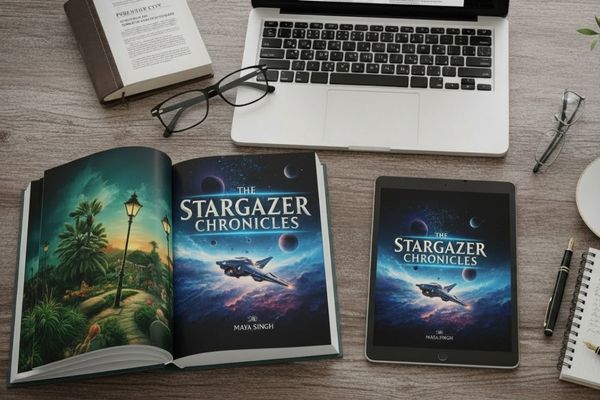
If you do not have the size, it can always be modified. If it’s possible, do it in the 6×9 or 6×6 or whatever it is that you envisioned for your book. I am going to tell you a cautionary tale of why I said this. Several years ago, the lovely Miss Gretchen Hydo came to me with her book, Break Free from Your Dirty Little Secrets. She said, “I want something a little racy.”
That title and racy translated to me as racy, but by the time it got to the designer, we literally got like a soft porn erotica book cover back. She chose a different track. That is what I mean by that game of telephone, because your version of racy and my version of racy, and that male cover designer’s vision of racy, we may not all agree on what is racy. It is important to have a mock-up, an idea of what you want on there.
Next item, have a current bio and headshot. I always encourage my authors to have a 100, 150, and 200-word bio because you can use them in different places. On the back cover of the book, we do not have a lot of room. It is usually a very short bio that is back there. If you choose to put a longer bio in the back page of the book, that would be great too. Maybe some contact information. You should have those three, especially if you are going to promote the book, because any podcast you are on, any media you engage with, they are going to want to see that.
Headshot. Please have something not only current, but professionally done. I have had 2 or 3 books this year where somebody tried to get away with the camera and a selfie. They never look good. The lighting is not good. You are not wearing professional makeup. Have something done that is professional, touched up, if you would like it touched up, but have it ready to go before you engage the publisher.
When I get a book, I have a tech business where people come to me with their tech business white papers. They actually give the books out at events. If they’re ready to go, they need those books. They have an event in mind. We had someone in September who had a book and a book event in Spain.
We have to have books out to Spain by December during the busiest season of the year. Of course, they had to have their headshots in order. They had to have their bios in order. Everything had to go very smoothly for us to get that book out in a timely manner. Be sure that the headshot is current. There is nothing worse than using a headshot that is 10 years old or 20 years old in some cases.
People meet you in person, and they are like, “Is that you? You have aged.” I actually had that happen in real estate. I ran across a very big agent. When she showed the house, I was shocked that she was like 75 years old, and this picture looked like she was in her fifties. Yeah, it was a little bit shocking. Updated and professional. Spend that money and get it done. You probably are going to need it for your website, whatever business you have. You are going to need a current one.
Spend that money and get your headshot professionally done. You're probably going to need it for whatever business you have. Share on XI am guilty of that right now. My last one was taken in 2020. I am about to turn 65. I need a new headshot that reflects a few wrinkles I have gained throughout the last five years. I already mentioned your front cover. Endorsements. If you can have endorsements on the back of your book, 1 or 2 of them, if there is room. A number of them are at the front of the book. When people open the book and see all of these great people have endorsed you, your book looks more professional.
Streamlining Writing, Endorsements, And Edits
Unfortunately, most people wait unless they have been working with a really good book developer. They wait until they get to me. These are so much harder than you think they are. Think about this for a minute. You are going to someone who is very busy, maybe prominent, so even busier, and you are going to get a yes or no from them. The problem is not the yes or no. Usually, it is getting them to sit down and write it.
I would plan for a good three months. Have an outline, have a sample chapter, have something that you can give them. The procedure that we quite often use is, if you do not come to us with the endorsements, we have you send them out right away and ask if they can have them within 30 days. If they do not step up within 30 days, then we create a series of 10 to 20 endorsements and say, “Is there one here that sounds like you that we can modify and use for you?” That gets the endorser going pretty quickly. Speaking of endorsements and forwards.
Remember what I said about that professional editor? Those should be edited as well. The back cover blurb. Why am I saying that? We just published a book last week. I am recording this in November, and the author came back to me and said, “You made a mistake on my forward.” I said, “Please show me the mistakes we made.” It turns out we did not make those mistakes. The person who wrote the forward had grammar that was less than stellar.
The author who read it did not catch the errors, and she gave them to us. Part of the publishing process, when you are in hybrid or self-publishing with us, is that we do not check your work. We check our work, but we do not check your work. That brings me to another part of professional editing. The book you give us is the book you will get back.

If you have not had a professional editor, and we just ran into this last night, the headers were not standardized. Some of them were capitalized, some of them were not capitalized. It all needs to be standard, and a good editor will catch all of that. All of that is super important. Attention to detail. When your publisher gives you back that first draft of the formatting, pay attention, go line by line item and turn around quickly.
We have literally had three books in a row where the author did not pay attention to the details, and we sent the book to market. All of a sudden, we had to revamp it. Now that revamping costs money because we have to send it back to the formatter, who is now going to charge us. We have to send it back to the ebook formatter, who is going to charge us.
In the case of one of them, he forgot an entire chapter. We had to go back to the cover formatter because now the spine did not fit. There are ramifications for all of this. Most self-publishing is pretty expensive, especially if you are going hybrid. The publisher more than likely is going to charge you for that. We actually have it in our contract. Once we send your book to market, if there are changes, you are going to pay for them.
Manuscript Tips To Cut Costs
That brings me back to that formatting with the professional, if you only get three rounds of revisions. The formatter will allow a few grammatical and spelling errors. Maybe there are spaces where there should not have been. You are not going to get to rewrite that book. They will charge you for charging me, which I am going to turn around and charge you for a whole new manuscript. You have to be careful if you are trying to keep costs down. The best way to do it is to engage those professionals. Just some things, the manuscript, when you hand it off, have it laid out the way you like it.
If you're trying to keep costs down, the best way to do it is engage those professionals. Share on XIf there is a font you like, go grab that font and tell the publisher up front. Ask them, “Can you use this font? Is this one you can use?” The publisher is usually happy to give you an opinion on the font as well. I know we recently got a book that had a very scrawly font, and we were like, “No. People cannot read this.” I know my own kids, stopped teaching cursive. One of my kids knows cursive, and the other does not. You have to be careful what font you use with them because we have got a whole two generations of kids now that have not used cursive.
It is our parents’ secret weapon against hiding stuff. Also, with the images, make sure your graphs and illustrations, charts, whatever you have to offer, make sure they are 300 DPI or better. Just this week, I am republishing a book for someone who said my publisher did a really poor job on this. When I looked at it, she suggested that perhaps she needed heavier paper. That was not the problem at all. The graphs, charts, and illustrations that she did were not 300 DPI or better.
I have now sent her to a graphic designer to have them done the right way so we get the right resolution. Images. Make sure that if you are pulling images from a deposit photo, a photo bucket, wherever you are pulling them from, that you have a commercial license. This is not like when you are pulling images for your landing pages, and some things on the internet that like I know I have a subscription at Deposit Photo. I rarely use that now, just because there are so many companies out there that are challenging the copyrights.
If you are making money, what I mean by that is your book is going to be a revenue stream, and you are using an image that has not been commercially paid for. Someone could come back and be a copyright violation on that. Be sure that you own the copyright or you have purchased the correct image on the platform, you got it.
I will be really honest, I rarely use Deposit Photo anymore because of the copyright violations. I have seen firsthand in working with Podetize that even my podcast images have been challenged several times. They own the licenses, so they have gotten involved. They have given the licenses to the people because they do it right, that is, these copyright-violating companies. Make sure that you do not end up violating a copyright in that way. Also, the images need to be 300 DPI as well. I mentioned getting a professional headshot.
Usually, the person who is a photographer, those will be 300 DPI. The ones you take with your phone, not so much. For the most part, I use AI to make my images now. I request 300 DPI, and I ask for them to be done a certain way so that we do not violate copyright. By the way, that is one of the things the Copyright Office is no longer copying AI illustrations, AI images.
None of that is being copyrighted now. They will not do it. For a lot of the marketing books, I use FAL.AI for my stuff. Those are the things that make sure you have the right licenses, make sure everything is in order before you send that book off to the publisher. With us, people work with us because they work on platform building. We will accept your project without that done, but we will not go to publishing without that done. That is very important.
“Publishing Guidance For Authors”
We want it, and we want to be able to converse with that editor. We want to be able to see what the problems are and minimize those extra costs for everyone we publish. That is it. Just be aware that the more organized you are in this process, the better your book is going to come out. There are so many people right now who just are not prepared for the publishing world.
The more organized you are in this process, the better your book is going to come out. Share on XBlurry Background Image Issue
As a publisher, I am here to guide you, but I need you to follow the rules so that we do not get in trouble with what we are doing. Quite often, when we upload, that is where we find out for the first time that our images are not high-res images, because it will actually come back and give us an error message to that effect. We can go through with the publishing. That impacts the quality of the book. We just ran into that with a book we published, where her images were background images, and they were not 300 DPI.
She was very disappointed when she got the first version. She said, “This looks a little blurry. We compromised on it.” I said, “This is the background.” The inspirational quote is the important part here. I do not think people will notice it. That was not a 300 DPI. Where did you get that? Another incident we had was that somebody was pulling images straight off the internet. I said, “You were violating someone’s copyright there.” They gave me a lot of pushback.
They said, “If it is in the public domain, we can take it.” That is not necessarily true. Make sure you have all your ducks in a row. Thank you for stopping by. As usual, if you have questions about this, reach out to me, Juliet, at SuperbrandPublishing.com. I can probably answer questions for you. Just know that your publishing contract and your publishing experience will be much smoother if you have all of your ducks in a row before you get started. See you next episode.
Important Links
Love the show? Subscribe, rate, review, and share!
- superbrandpublishing.com
- Promote, Profit, Publish on YouTube
- Follow Juliet on LinkedIn
- Take the Quiz!