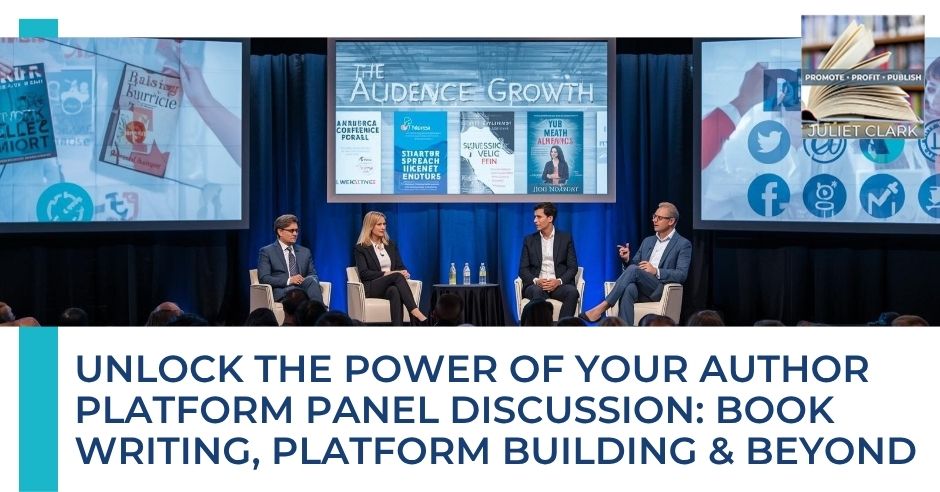
Everything has become algorithmic in today’s digital age – even your author platform. If you don’t know how to utilize the right tools, navigate the vast internet space, and adapt to ever-changing customer demands, you will be left behind. For the first panel discussion of 2026, Juliet Clark gathers Tracy Hazzard of Podetize, Adanna Moriarty of ProBookLaunch, and Gary MacDermid, the Cash Flow Engineer. Together, they discuss how to expertly use AI technology to build an enduring author brand and expand your platform without losing human authenticity or draining your creative juices. They also explain how to determine your ideal clients, pinpoint your biggest competitors, and maintain a reliable author website anyone can easily visit.
—
Watch the episode here
Listen to the podcast here
Unlock the Power of Your Author Platform Panel Discussion: Book Writing, Platform Building & Beyond
Welcome to the show. We have our first panel of 2026. We have a lot of amazing creators who have put together AI programs that’ll help you write your strength. I want to mention this before we get started. Come into this with an open mind, please, because I know so many of you guys don’t want to write your books. You don’t like AI. You feel like it takes the creative process away, but there are a lot of tasks that we’re going to talk about that are outside of writing the actual manuscript, where you can streamline so much of what you do.
With Gary and Adanna, it’s author platform building. There’s no reason why you have to slog through it when you have programs that help you get everything together. Let’s get started. We have plenty of time to get some questions with these guys. Let me introduce everybody. First of all, we have Tracy Hazzard, who is a seasoned media expert with over 2,600 interviews from articles in Authority Magazine, BuzzFeed, and her Inc. Magazine column, and from her multiple top-ranked video casts and shows like The Binge Factor and Feed Your Brand. Tracy brings a real diversity to all of this because podcasting and authorship can be one and the same if you do it right. She brings a lot to the table here.
Our next guest is Adanna Moriarty. She’s the co-founder and creative director for ProBookLaunch, an AI-powered book marketing assistant designed to help authors simplify their marketing, amplify their reach, and stay connected with readers long after launch. If you guys have ever seen what a launch looks like, it goes up in pre-sale. It hits a peak about a weekend, and then it drops like a thunder, like a boulder has hit your book. Her tool can help you avoid that as well.
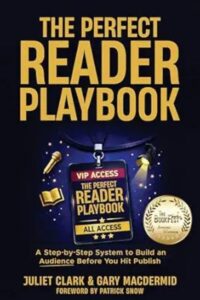
Our third guest is Gary MacDermid. He is a motivational speaker, private investor, and retired Naval officer known as the Cash Flow Engineer. He’s gone from humble beginnings to international success. He inspires audiences to take control of their goals and build lasting wealth. He is my partner on The Perfect Reader Playbook.
What Author Platform Means In 2026
A lot of this was his idea, which he created for his book. He’s been a client for about a year now. He does more for me than I do for him, but keep paying me, Gary. Let’s get started with this. The first thing I want to know is what the author platform means to you in 2026. It seems like it’s been shifting a lot. Adanna, Amazon changed every algorithm. It does mean different things. Do you want to take that first?
Thanks so much for having me. When we talk about an author platform, we should change the language to ecosystem. In this new digital world, we can’t do things as we did 5, 10, or 20 years ago. When we’re looking at this A10 change, which is what happened in July with Amazon, where they shook up the algorithm. One of the reasons they did that is because of AI.
It’s because they were getting so many garbage-written books out of AI that they wanted to make sure that they are elevating authors who are doing the work. When we talk about an ecosystem, it is social media, it is your website, it is newsletters, and it is driving traffic from outside into your Amazon sales funnel.
If you don’t have any of that, even if you buy ads for Amazon, they’re not going to put your book at the top like they would when they have outside stuff coming in to show them that there’s real interest in the book. That’s how I’m looking at 2026. It is building ecosystems for authors so they can elevate their book and show it because without that, your book can exist. If you don’t build and work for it, it doesn’t matter. Nobody’s ever going to know it’s out there.
It’s a lot of work. Tracy, you are combining podcast and authorship together. We’ve had so many conversations. It’s the same thing with that audience building. It’s very slow if you don’t build that audience first for your podcast. Can you address that a little bit? Author platform building is podcast platform building.
They’re the same, which is why we have so many authors and podcasters that overlap and cross both things. What I always say is that your platform is your owned media. We talk about owned, earned, and paid media. You’ve heard that all the time. If you don’t own that platform, then all the money, all the time, and all the energy you spent putting into it does you no good. That own platform includes what is being fed to AI about you out there.
That’s where we’re earning. There is not as much earned media as there used to be. There’s very little. Almost all of earned media and paid media have merged together. If you don’t pay, you’re not earning, with the exception of AI. You can earn AI through a lot of content. You can earn the positioning on ChatGPT. We’re one of the top recommended podcast hosting companies on ChatGPT and also on Google Gemini. It’s because we have way more content than anyone else.
Imagine if the fuel to your platform, the fuel to the audience growth you want, is your content. If you only put your book in it once, you don’t have enough tank to make it where you want to go. You’ve got to have a content production that feeds that all the time. The great news is that it doesn’t matter when you wrote that content. Juliet was talking about Inc. articles. I wrote over 400 articles for Inc. Magazine. I have repurposed them three times. I’m about to try it a fourth time and see what I can do with them again.
Since I started writing for them in 2018, I have used them again and again to fuel the platform to keep my website ranking, and to keep my social media flooded with interesting ideas and concepts. Everything’s aligned because I wrote that and because it was all aligned into a concept of my column at the time. If you’re producing your content in a particular message and direction that is drawing that and attracting that audience, your platform is going to build. There isn’t much else you have to do except keep that alignment going.
If you are producing your content in a particular message and direction that attracts your audience, you can build your platform. You just have to keep that alignment going. Share on XI loved what you said about the paid and the earned merging because when people come to us for book marketing, you’re basically buying things to play the algorithm. That’s all you’re doing. Everything has become algorithmic. It’s hard to have organic reach these days.
I hate to say this because I wanted my company, my platform, and the way that everything worked to be something that you could do organically. It is no longer possible because of the amount of money that’s being spent by the big guys. When you have that huge contrast, there’s no way. We’re always looking for fractional ways to be able to do that. We do that with Julia, our Author PromoCast, and some of the other things that we build in. You’ve got to have some things that are at least giving you a little bit of go along the way. You’ve got to fill up with gas. It’s getting expensive everywhere.
Gary, you came out as a brand-new author when we started working together. You had put together this amazing program. What prompted you to do that? Originally, you did it more for businesses versus the book because you were an investor, but what prompted you to put all that together? It is an amazing two-year book marketing plan that we’ve done with this.
It’s hard to say where the inspiration came from, but in my past, I retired from the Navy. I was in the nuclear power field. Whenever you get put into a certain role, they change every two years. Usually, being an engineer, whenever I have to take a new job or a task, I want to study it and then develop something so that it can be executed pretty efficiently in the future. When I ended up as an author, not necessarily by design, it was like, “What do I do?” That was where we had some early conversations, but then I wanted to systematize the whole platform creation to wrap my head around it.
That was a lot of what you see with wrapping my head around it. It was an experiment because AI has taken us to another level in terms of efficiency of time. It made sense to put this out there and see how it could apply to anybody who might be in the same shoes. It’s the same way that I became a speaker. How do I help somebody transitioning from the military, where you’re getting pulled every which way, and you don’t even know what you want to do as a person? How do you get a system around that?
That was the same five-step method that I came up with for myself on how to set a goal that you want to do and how to achieve it. It was a matter of, “I’m in this boat. I need to figure out how to keep it from sinking and how to get it to that paradise island that we all want to go to.” That was what I did with the AI behind The Perfect Reader Playbook, which was initially for business entrepreneurship, but repurposed when I needed it for the book.
How To Turn Your Books Into Podcasts
It works so well because it was set up for nonfiction businesses. Mostly, what we handle is nonfiction authors in that way. Tracy, what kind of podcasts lend themselves naturally to book adaptation? I know we’ve been doing it a little bit backwards. We’ve been taking book people and have them doing limited edition podcasts, but there are so many podcasts out there that could do this with books as well.
That’s the crux of everything that we have. A lot of my clients and a lot of podcasters have a ton of content. They’re not using it properly. They’re not installing it into their platform. When we look at the ecosystem of that content, we want to see it go from video to audio, blog, and social share. We want to see it go through that, but what do you do with it afterwards? Is that done? Social is a drop in the bucket. You drop it, and then maybe you’ll share it in Evergreen. You’ll share it again, but that’s about it.
What do you do with it after that? The idea of turning it into articles and then turning it into books is absolutely part of the model of keeping that information circulating. It’s because you don’t have to do the work the other way, where you had to create the content to promote the book. You’ve already got the content to promote the book because it is in the book. It makes the whole system flow.
If you’re thinking about you’ve written your book, and you start your podcast. Why not turn that next set of chapters into the next book, into the follow-up book, into the next things that you want to talk about, and into the support system for whatever your author book is? It’s ideal here. Both Juliet and I deal with a lot of what you would call non-fiction. A lot of business entrepreneurs, a lot of people promoting their businesses, their core skillsets, and their topics. From that side of things, this is how it works. Entertainment’s quite a bit different. When we look at that ecosystem, we want it to become a circle and not a line.
Consequences Of Not Building Author Platform In Advance
Adanna, your platform addresses so many mistakes that authors make. I’ll take this in the non-fiction. Let’s say you’re an engineer like Gary. You’ve written a book, but you know nothing about publishing. There’s so much misinformation out there. Can you talk about some of those common launch mistakes that people make that your system addresses?
It comes down to understanding marketing. If you’re indie and you’re self-publishing and trying to DIY something. You don’t have the budget to hire a publicist. How do you know what is good visibility? What is it going to look like? If you send out a press release, do you even know how to send out a press release? What we did with ProBookLaunch is we took our workflow and made it into something that’s accessible for the layperson if you can’t afford to hire a publicist. A lot of indie authors can’t. I don’t know how much you charge, but I know how much we charge. It’s not a cheap go, even for a three-month campaign.
The biggest thing I see is that we are not building our platform in advance. We are thinking that everything starts as we are approaching launch, maybe pre-sale. If you do that, you’re dead in the water when you launch because it takes years to build your platform. What should happen is you start building it the moment you conceptualize your book. I tell people this before they start writing, which sounds crazy. I know that sounds crazy, but it takes forever to build your social media.
As Tracy said, organic is almost impossible. Instagram did make a change in 2025, which did away with things like hashtags. It is becoming a little bit easier if you utilize your stories to create organic growth, but it’s hard. I have worked with clients for years to get their social media up enough that when they launch a book. They have some followers. That’s probably the biggest thing we see. You’re not starting early enough because they don’t understand that.
How does somebody who hasn’t worked in marketing have any idea what they should be doing in advance? We have a year-to-launch checklist that you can get on our website, which is nice because it’s a year out, six months out, three months out, a month out, and a week. It’s a list that you can go through to make sure that you’re doing the steps. Outside of that, I don’t know. It’s hard to be an indie author in this world. Everything changes all the time. Even sometimes, I’m like, “I don’t know what’s going on.”
It changes. It’s a quick thing. That’s probably the most common mistake that I see with indie authors. They are not starting to build their platform marketing in advance. You don’t have to be a used car salesman marketing. You have to start working that entire ecosystem, have a website, start your social media, and start trying to grow a newsletter because, weirdly, email newsletters are still the best way to sell anything there is. It has been like that since the internet came out in the ‘90s. It’s strange. Work on all those. Get on podcasts. Start your own podcasts. Start all of that stuff a year or two in advance. The older it is when your book launches, the better chance you have of selling books.
One of the things with the reader playbook is that we go through the science of marketing. There are layers to it that you start a year out. We have the same problem with our publishing company, Adanna. People come when the book is ready. By then, you don’t have a funnel set up. Most of them don’t have a website. Very few of the people who come to us have a lead magnet, a funnel, and a way to build that list in that audience. They’re not doing content. They’re not putting out any content at all consistently.
Identifying Your Ideal Clients And Biggest Competitors
Gary, I think this falls into it. One of the things that you did on the playbook is that you had a very broad category. You had goals. How many books are out there on goals? You took a broad topic, put it into the playbook, and niched it down. How would you talk to authors about doing that? There’s a lot of that. I get leadership books every week. I get somebody on my calendar as a leadership book. It’s saturated. How did you do that with that goals book in mind? How to get it down so it was niched well?
There are a couple of different ways that I would do it, whether it was for myself or if I were sharing it with other people who have businesses. In general terms, aligning the message to the target audience is the key. One of the mantras that is helpful to remember this is, “The riches are in the niches.” The better you’re able to dial down the audience to a specific niche, demographic, or target market, that is when you start having a little bit more success.
The better you can dial down the audience to a specific niche, demographic, or target market, you will start having a little bit more success. Share on XWith a business, you could look back and say, “What are my top clients? If I go back and look at how I am getting my revenue, what is the top revenue stream? What are the top five clients? Where are the top 5 or 10 clients coming from? How do I get more of those top 5 or 10 clients? What is the message that resonates with them?” It’s an exercise to understand that the riches are in the niches and that we can’t be everyone to all.
How do we look at what is most likely to get us to be successful? It’s not to say that you can’t have more than one niche, either. If somebody is very broad and doesn’t understand the concept, then it could be that you have to have two avatars. Ultimately, all of the science and everything that we put in The Perfect Reader Playbook is designed to bring that out so that we can take the message and align it to the ideal audience. No matter what stage this audience or this customer is on in the customer journey, you’re hitting them with the right messaging.
If they don’t even know that they have a problem, even though you have the solution, there’s no fit unless you’re communicating with that type of customer who is not aware that they even have a problem. Once they start going along that journey, and they realize they have a problem because you’ve nurtured them.
They now see, “Maybe I do have a problem. Maybe I should consider some solutions.” You’re hitting them with messaging that is in the solutions-oriented phase. Anywhere along that journey, we have identified what the pain points are of that ideal audience. We design messaging around the alignment between each stage in the customer journey.
Going back to what Adanna said on that, that you need to be a year or two out when you start this. Phase one of the reader playbook is the unaware phase. It’s twofold. 1) People don’t know that they have a problem. 2) They’re unaware of who you are. That’s why you spend so long in that first phase. You have two big hurdles to overcome to get yourself out there.
The other thing I want to mention about the playbook that I thought was brilliant, Gary, and it’s probably the part that people have the most problem with, is when we ask who your competitors are. We have 75% of the people there who own businesses who don’t know who their competitors are. If you have designed a business and don’t know what the messaging is for those other people. What their platform looks like, and what their brand looks like. You’re going to be a mess. You may be offering the wrong things, writing about the wrong things, and appearing as a copycat, versus an industry leader and rebel out there. That’s a big thing in the playbook that a lot of people don’t know about, too.
I want to mention something about that, Juliet. This was when we did our brand training. When we did that, one of the things was that it had a competitor section in it. This is one of the things I discovered as I was building that AI tool and thinking about how to tell people that you have the wrong competitors, which is what I have to tell my clients so often. My clients are like, “I’m a podcaster. I want to be Joe Rogan.”
I’m like, “You don’t have millions of dollars of marketing budget. You don’t have 100 people on your team. It is not going to happen. How do we get you to understand where your real stretch competitor is? We don’t want somebody who’s behind you. We don’t want somebody next to you. We want somebody out ahead of you. How do we find them for you?” We found that the best way was not to ask you, but to tell you who your competitors were.
What would happen is we would give you this list of nine. We would pick the nine based on bloggers, YouTubers, and podcasters, so that it would give you somebody who is prolific with content. It’s who’s talking the loudest in your niche. That’s your competitor. When they would look at that nine, and then they’d start to go explore, they’d be like, “I didn’t know this person, and they have the exact audience I want.”
That’s when it would start to resonate with them. The more we asked them who they wanted, the worse the results were. We are in our own way as business owners and as authors. We are always in our own way, where we think we know better than the listener. The listener is making those choices. The listener is choosing who to listen to, whose book to pick up, and what to read. They are making the choices. We have to tap into that, listen more to what the audience wants, and create that alignment that Gary talked about.

One of the things we ask in the reader playbook is, “What are the other programs and services you offer?” A lot of times, the book is a little all over the place and doesn’t connect with what they sell exactly. We’ve all seen those books where the end of every chapter is one big, “Connect with me. Go into my funnel.” It does need to be something that inspires them to take the next steps with you if you’re a nonfiction author on there.
All of us are doing something that is almost the same. It all does the same thing. It all brings the non-marketer into a place where they understand their voice, their messaging, and how to position themselves. It’s the different stages of the journey.
You’re seeing Juliet’s beautiful alignment here.
It’s great. It was an observation. It’s neat.
Using ChatGPT Without Taking Away Your Creative Juices
Adanna, we talked earlier about how people are going to ChatGPT. A lot of writers are worried about a couple of things, such as AI taking their creative juices away. I can see that because it is an outlet for a lot of people. They also think that when they’re using these AI programs, they’re taking jobs away from people. I don’t think that’s valid because this is just helping you. The even bigger thing is, any of these programs we have, you could go over to ChatGPT, and you could ask it questions.
The thing is, we all have experience in prompting. If you’re not asking things the right way, you’re not going to get the right answers. Tell me a little bit about when you put ProBookLaunch together. You’re addressing areas that authors have no experience in and allowing them to get the right answers, versus going to ChatGPT and saying, “What is metadata? Where should my book be?” You’re getting a generic answer.
If people even know to ask that. I want to address the first thing first because we have a responsibility always to address that pain point and the ethicalness of using AI. There are people out there who are using it nefariously. They’re going in. They’re stealing other people’s work. We talked on our show to a gentleman who was talking about how bestsellers were getting copycatted. Those books were selling better than the bestsellers because people were duped. That’s gross behavior. When we talk about AI, we should always talk about that.
To that end, I also don’t think that, at the moment, AI is stealing jobs away from me, you, or even cover designers. The people who are using that for their book couldn’t afford to go hire them anyway. That is important to say. It’s not that they’re choosing AI instead of hiring a professional in the industry. If they don’t use AI, they wouldn’t have access to help at all. They would be adrift. Those are my things.
What we did with ProBookLaunch was we took our workflow. I built our product, which is called LaunchMaster. It’s inside our greater ecosystem of ProBookLaunch. For my own daily workflow, I was doing the same thing every day. I was trying to figure out how to streamline my own process because there are things such as keywords, categories, and comp books. Finding all of those things can take weeks, sometimes months, to position a book that we would have inside for our clients. I was trying to find a way that I could have more free time.
I started playing with prompting. ChatGPT was new. I started playing with it. The more I played with it, the better results I started getting. At first, I’d have to take it. I’d spend hours and hours editing it, so it didn’t read like AI. I learned about custom GPTs. I was like, “I’m going to take all of this.” I had created a little prompt book to help people. I put that into ChatGPT. It was crazy. Our entire process takes six minutes inside ChatGPT, but it’s all of my work. It’s all of my research.
It’s making sure that it spits out good marketing copy. You can go in, ask it things or say, “Write me a press release.” If you don’t know what that is supposed to look like, you don’t have any idea if it’s going to give you anything good. You might think it is. You might read it and be like, “That’s good.” You send it out, and nothing gets picked up. You have to do some research and work on your end, even if you’re going to utilize AI for yourself. It is to make sure that you have an idea of what it’s spitting out is something you can use. Most of the time, it’s not. It reads like a romance novel.

For the cover design, maybe it is not the best tool to use AI for. We had someone who brought us a beautiful cover that she got from ChatGPT. We gave it to the designer. He said, “This is going to cost $9,000.” Why $9,000? It’s because there were 136 layers of what Adobe would have had to do to achieve that particular cover. The cover was beautiful.
Don’t get me wrong, but she wasn’t going to spend $9,000 to have it. You have to be careful when you create stuff over on ChatGPT because it’s probably not the right GPI to create a cover from. Somebody has to recreate that work. It did a great job, but it was going to be very expensive to recreate. It didn’t get rid of the job. It may have made that job much more complicated.
If people are going to be DIY in their book stuff, I just want to help them. That’s what I’m trying to do. I want to help them and help them at a more cost-effective rate because publicists can cost $10,000 for a three-month campaign. Most people don’t have that money.
Underused Strategies For Building An Enduring Author Brand
They don’t guarantee results. I have friends who paid $6,000 to get an article in some magazine, and they pitched ten magazines. Nobody picks it up. They’ve got a $6,000 article that has been pitched but hasn’t been picked up. I want to ask all of you guys. Each of you can answer. What do you think the most underused strategy for building an enduring author brand is? You can relate this to podcasts as well because they are the same when it comes to audience building.
Underused means that it must be working somewhere. There is somebody who’s using it, and it’s working. Do you see that? Do you understand that? That’s the difference between those that might be paying to have this stuff done and not understanding how it’s working and what it’s working. The most underused part of any kind of platform building, whether it’s for authors or for podcasters, is using the right paid models. Only because they’re expensive, we think they must work better. I can tell you that I’ve seen them, and they don’t.
Sometimes, the overpriced packages that big marketing firms were offering aren’t working underneath themselves anymore. Their little pieces and parts are starting to break with the algorithms that they’re built on. These upstart little small ones that are coming up are doing tremendous work and value, but they aren’t going to work forever. You do have to just say, “I’m going to try this.” We would never have used paid chart ranking for podcasts in 2021. Now, it is our number one tool. The two things that it does for us are crazy things that it gets you so that you get more Spotify and Apple followers.
That’s its actual goal, not to rank on the chart. It’s being marketed for the vanity of ranking on the charts. We always said, “That’s a vanity thing. Why do you even want to spend money to do it? If you’ve got money, spend it somewhere else that can do you more value.” It’s getting followers because the AI algorithm that the charts are built on is recommending to those listeners on Apple and Spotify these shows that are ranking in the charts. It’s not smart enough to know what a good show is and isn’t. It pushes you into that place.
The second thing that it does, and it’s this hidden thing, is it helps you dial in your niche. Gary was talking about the riches in the niches. Many of my clients think they know better because they get to choose their Apple category. They think they know better. If they’re going to do it like a book, where they’re going to dial into the tiniest niche, you can.
We had one. I know you know Kevin from the Sports Chasers show. We moved him from a niche of sports-football and sports-baseball. He had all of these categories. We moved him to news-sports. He’s killing it. He’s number three. It teaches you some of the things that you can’t do for a very low dollar amount. Some of these new tools and new ideas, we need to not be afraid to test out. That’s the underused part of everything.
I can attest to that because I asked them to set up a demo for my podcast book, people. Her husband, who runs it, called me. He’s like, “Would you like to pay for this? It’s because you are now at number seventeen. You’re beating out Amy Porterfield.” My ego went, “I’d like to pay for that.” It’s because I moved from probably the mid-60s in that niche right up into number seventeen. It does work. Adanna, what do you see that’s underused?
I feel like everything is underused. I don’t know if it’s so much underused, but not used right. Authors are shifting away from websites. That’s a mistake. They’re like, “I have social media.” Your website is the home of everything that you do. It’s not just for somebody who googles you, and your website comes up. It’s a place for you to put the books that you sell. It’s a place for you to put your events that you’re going to do, your book signings, your speakings, and your podcast appearances. It is a place for people to contact you, and not just readers. It is a potential place for agents and producers to contact you.
If you don’t have a website, are not launched yet, are hoping to get an agent or a producer to option your book, and don’t have one, they will never give you the time of day. That is one of the first things that agents do when you query them. If they like your query and the pages that you sent, the next thing they do is they go look for your website. If you don’t have one, they will throw your pages in the trash. That’s probably the place that I see that’s starting to become underutilized or not used right. It’s so important to have a good author website.
If an author does not have a website, no agent or producer will ever give them the time of day. Share on XOn genre, if you wrote a thriller, and your website looks like a business non-fiction book page. It’s not going to attract your readers because they’re going to be like, “That guy’s corporate.” It’s some thriller, dark and twisty, horror, or romance. You need to go out and look at other people in your genre. See what their websites are doing. See what information they have on them. Also, with their social media. All of that stuff is underutilized. We can’t just throw up a website and call it a day.
You pointed out something unique there, too, that authors don’t understand. That website, that email list, and those funnels are all things that you own. They’re your assets. When you’re talking about, “I don’t need it because of social media,” social media belongs to Mark Zuckerberg. I don’t know if it’s Microsoft or Reid Hoffman these days, but LinkedIn belongs to somebody else. You can be shut down and lose your audience in a minute. You’re either canceled, or an algorithm changes, and you’ve lost all visibility there. Developing those assets that you own that no one can take away is a big deal. That’s one of the reasons you need that.
Your social media should be the top of your funnel. You’re using social media to push people to your website. That’s it. You have them sign up for your newsletter, and you have a captive audience. They’re not in the sea of newsfeed and Instagram, Facebook, or TikTok, where they might see you. They scroll to the next. The goal is always to get them into a place where you have complete control over your audience. It’s why communities are becoming such a big thing. Fluent and circle communities are becoming such a big thing because, as you said, on social media, at any moment, your entire audience could disappear right now while we’re talking.
Tracy and I experienced that. We used to have a marketing show in 2020. Juliet was always getting blocked. We had to go over to Tracy’s feed because Facebook didn’t like the things I was saying. It wasn’t just seeing you’re off of it. They would harass me in very subtle ways like, “You can’t go live today.” You have to be careful. Gary, what do you think is the most underutilized marketing that authors experience?
As far as underutilized marketing or underutilized tools, with a lot of us talking about and using AI right now. I thought it was underutilized that a lot of people, especially entrepreneurs, did not already have their own AI clone or AI alter ego. One of the things in business is how you recreate yourself so that you’re not doing all the work. It was a little fascinating that we’ve progressed so much with AI, but a lot of folks don’t even have something to replace them. Now that you can build AI agents and a team of them, why not start with yourself?

That’s something that we have talked about with The Perfect Reader Playbook. It’s pretty easy to also add and clone yourself. Maybe you want to write copy, and you’re not even sure if it sounds like you. When you’re training an employee, there’s human error. When you have an ironclad brand standard or a style guide, the computer will follow that.
Sometimes, it’s too much, where you have to tweak it and then have it loosen back up. If you say, “Do not avoid overhype.” You become boring. There’s a little bit of science in how to dial it in. As far as something that’s underutilized, I would say that if I survey a lot of the audiences that I go to, less than half have their own assistant that exists to basically take as much off of their plate.
I’m laughing here because I gave my AI a problem. It said, “You should go out and run 8 miles. Get some sweat in so you can think about this.” I was like, “How did you know that?” He’s like, “It’s because you’ve asked me questions about your exercise routines.” I was like, “That’s creepy.”
My team calls my clone Tracy Too. They ask her questions all the time. I found the stupid little things like the daily little questions. They dropped dramatically since we put the clone into the chat. I did it to test and play with it, but my team is using it. We have 50 people. You’ve got a lot of people playing with it. They’re testing it. They’re like, “She gives better answers and faster than you do, Tracy.” The funny story is, my daughter had a job interview. I’m out driving my other daughter somewhere.
I’m in the car. She’s messaging me, “What do you wear to an interview?” I don’t answer because I’m driving. As soon as I get there, the second message pops up. She says, “If you don’t call me back, I’m about to ask ChatGPT.” I call her back. I say to her, “You should wear slacks.” She goes, “What are slacks?” I was like, “If we have to use a dictionary, then maybe you should use ChatGPT.” I had, “What are slacks? What’s a blouse?” Mom was no help at all. Sometimes, our clones are better at switching up language to our audience to get that alignment for how they understand what they should do.
Did she get the job?
Yes. She sends me back in classic young generation style here. It says, “#LinneaIsEmployed.”
I created a clone of myself and my workflow for our podcast because it was taking me 4 to 6 hours to do all the editing, write all the copy, the social media posts, and do the graphics. I can do everything in an hour while editing the sound by using the GPT that I built. It’s crazy.
That’s so good. That is exactly what we want to say. We want to see do-it-yourselfers. Even in the production side of things, it should not be taking as long as people spend on it. You should be spending more time on the content part of it. Am I talking about the right thing? Am I talking to the right person? Spend more time on that than you do on the output and production of it.
How To Take Advantage Of An AI Clone
I don’t know what you mean by a GPT clone. Can you talk about what that is and how you set it up? I’m not familiar with that terminology.
Who wants to take that?
There are a couple of different options. I’m trying to think of some of the different companies and names. They’re all at different prices. The Delphi is probably the most straightforward easy. It’s not the cheapest to do a voice clone, but to do a straight clone, it’s fairly inexpensive. It’ll be $100 a month or something like that. The most important thing that all of these have is that you have to have a lot of content to feed them. You need about 10,000 words minimum. Some of them need 10,000 minutes. It depends on how qualified you want to be for your clone.
I would go out and use one of those because if you’re going to do it yourself and code your own GPT, it’s much more complicated. Doing it that way, the Delphi is straightforward. They input your information, and then you make adjustments to how long-winded you want yourself. How fast do you want yourself to talk if you’re using the voice one? I talk fast, so I wanted mine faster. A lot of them have a back end where you can see what people are asking.
A good friend of Juliet’s and mine was dealing with a very sick friend and had been in the hospital a lot. She started calling up and talking to my AI to brainstorm things because she couldn’t meet with me on a weekly basis like we used to. She would do that. I was finding behind the scenes. I knew to touch base with her. I knew to check in with her because I could see what she was struggling with. The ones that have rich reporting tools are useful, especially in a book side.
If you wanted to use it as your author, people can ask you questions about your book or whatever. You start to find out what the most interesting thing is that you should talk about on your next podcast, video, or social post. It’s going to give you fodder and ideas. Make sure you get one that has a lot of reporting.
I have a couple of things here, such as HeyGen and ElevenLabs.
HeyGen is the one. It’s a lot less expensive. It’s fairly easy to set up. ElevenLabs is the voice behind a lot of them. Its version takes a lot longer to set up if you don’t have the tech skills. HeyGen and Delphi are my top two.
It also depends on what you need it for. I utilize custom GPTs inside ChatGPT. When I have been asking it to do something repetitively, I will create a custom GPT out of that. You can have it help you write itself to make a custom GPT so that you can streamline your workflow. It depends on what you are trying to do with them. There’s research in that to figure out, “What do I want out of cloning myself? Do I need it to be something that has a voice? Do I need it to spit out copy? Do I need it to do this or that or the other thing?” That will help you find one that works for you.
I use Perplexity. Perplexity has a new browser called Comet that does a lot of the work. There’s also a Perplexity Computer, which is brand new, that will integrate tasks between programs. I can have it do work in GoHighLevel. I had it set up a whole new royalty program, GoHighLevel and connecting with Gmail, and different things there. You can have it do tasks for you. For me, royalties are every month. Gary, what about you? Gary uses everything. I’ve got a whole notebook of things he mentioned.
The tools always change. What worked well for you for several years could all of a sudden not be as good. It’s with any time with any brand. It’s helpful to have collaboration like this. I have Delphi. I’m using a lot of the HeyGen with the ElevenLabs. That has been tremendous. I use that in several different companies. Also, there’s a lot more advanced stuff when you’re building agents.
There’s even AI that builds the agents. It gets crazy because there’s a lot of stuff that we had to do using tools like n8n or Make, which is a little bit better than Zapier. There’s even AI that can replace those tools. A lot of stuff is out there. The point is, there’s low-hanging fruit for anybody to at least start with getting your brand, style guide for yourself and your business. It makes everything that you have to do that much easier.
The one question I want to give, Juliet, before everyone is that all of us here have a lot of inherent knowledge that is built into every AI tool experience, things that work, and things that didn’t work. We have a lot of that under our belt already. When you think, “The AI is so easy. I’m going to go ask ChatGPT. I’ll just do this.” The reality is that you don’t have those key learnings. That’s an important part of when you decide to go use one. How is it learning? How is it growing? What mistakes is it going to make? Do you have to handle that? Are we already handling that for you?
That’s the difference between whether or not you want to straight use Gemini, ChatGPT, Perplexity, or a tool that’s built on those. That tool is likely built with a lot of inherent knowledge in it already. It’s taking you that extra leap. There’s so much that everyone here has learned about book launching, podcast launching, content creation, and social media that is built into it already into what we do, into the instructions that are given. Don’t underestimate the value of using a tool from an expert.
Do not underestimate the value of using a tool from an expert. Share on XYou might have something that you’re using for inside your business. When it comes to launching a book or launching a podcast, you’re not an industry insider. You’re not aware of the changes. It is sometimes better to use a tool that someone like one of us has developed because we do have that knowledge. As Adanna said, what’s going on out there changes all the time.
It changes all the time. As Tracy was saying about her daughter. Being able to have a touchstone of an expert inside the industry elevates your entire positioning. For what we do, if you utilize our system, it helps make sure that you’re not accidentally putting weak marketing out into the world because we tested it for a year on our clients before we released it to the public. We made sure that it was not giving out garbage copy. It’s not giving out garbage material. As we know, it’s easy inside AI to do that. I wanted to make sure that people were getting good marketing material.
Thank you, guys, for being here. Hopefully, you got something out of it. This will be over on our YouTube channel and show as well. You can go to @SuperbrandPublishing. Thank you to everybody who showed up.
Important Links
- Gary MacDermid
- Adanna Moriarty
- Tracy Hazzard
- The Binge Factor Podcast
- Feed Your Brand Podcast
- ProBookLaunch
- The Perfect Reader Playbook
- ChatGPT
- Google Gemini
- Sports Chasers
- Talking Book Publishing
- Delphi
- HeyGen
- ElevenLabs
- Perplexity
- Comet Browser
- Perplexity Computer
- n8n
- Make
- Zapier
- Superbrand Publishing on YouTube
About Gary MacDermid
 Gary MacDermid is a motivational speaker, private investor, and retired Naval Officer known as “The Cash Flow Engineer.” From humble beginnings to international success, he inspires audiences to take control of their goals and build lasting wealth. Featured on Amazon Prime Video’s Speak UP: Empower Your Ideas, Gary is the author of Set Your Own Goals or Someone Else Will, a blueprint for intentional living and financial freedom. Through his companies, USA Private Equities and ProGrowth Solutions, he teaches entrepreneurs how to create wealth through systems thinking and disciplined investing.
About Adanna Moriarty
 Adanna Moriarty is the co-founder and creative director of ProBookLaunch, an AI-powered book marketing assistant designed to help authors simplify their marketing, amplify their reach, and stay connected with their readers long after launch. She’s also the founder of The ABM Collective, a design studio for authors and artists building soulful, story-driven brands. Adanna bridges technology and creativity, showing how AI can enhance authentic storytelling rather than replace it.
About Tracy Hazzard
 Tracy Hazzard is a seasoned media expert with over 2600 interviews from articles in Authority Magazine, BuzzFeed, and her Inc. Magazine column; and from her multiple top-ranked videocasts and podcasts like The Binge Factor and Feed Your Brand – one of CIO’s Top 26 Entrepreneur Podcasts. Tracy brings diverse views from what works and what doesn’t work in marketing, branding and media from thought leaders and industry icons redefining success around the globe. Tracy’s unique gift to the podcasting, marketing, and branding world is being able to identify that unique binge-able factor – the thing that makes people come back again and again, listen actively, share as raving fans, and buy everything you have to sell.
Love the show? Subscribe, rate, review, and share!
- superbrandpublishing.com
- Promote, Profit, Publish on YouTube
- Follow Juliet on LinkedIn
- Take the Quiz!