
Are you still chasing that fleeting ‘Amazon Bestseller’ tag? If your book strategy relies on high-stress, expensive launch spikes followed by a sales crash, it’s time to adapt. Amazon has officially changed the game, moving away from short-term “launch fireworks” toward a long-term performance horizon. In this post, learn exactly what Amazon’s new algorithms are rewarding—from consistent, believable sales patterns and verified reader satisfaction to growing catalog engagement and building an unshakeable author platform. Stop focusing on launch week as a trophy and discover the critical steps for achieving sustainable book success on Amazon, today and into the future.
—
Watch the episode here
Listen to the podcast here
Sustainable Book Success On Amazon: Rethinking Launch Spikes And Bestseller Moments
We are continuing with the Amazon changes. If you’ve been listening over the past episodes, you’ve heard about the algorithm changes and how the Perfect Reader Playbook addresses those changes. Basically, in a nutshell, Amazon has gone to the long game, which is refreshing. Many people have gotten their moniker, “I’m an Amazon bestseller.” They can do it with very few books.
I was at an event in 2016. There was a guy on the stage talking about his publishing company. He was an international bestseller. I have a program that tells me how many books have been sold. I was sitting there. One of the ladies next to me said, “How many books does it take to be an international bestseller? How many do you have to sell?”
I pulled out my computer. I logged into the program that tells me, and it was three. It was three books that he sold that made him an international bestseller. He sold in one of the countries that had been there. He had, overall, sold only about ten books, even with that other country that was in there. It didn’t take much to cheat the system.
Amazon’s Performance Shift To The Long Game
I’m finally happy that Amazon is recognizing that. Our company has not sold a bestseller campaign in months because it no longer supports the overall goals of what people are trying to do. To be frank, Amazon probably realized that it doesn’t mean much to be an Amazon bestseller when you can become a bestseller by putting someone in an obscure category. That’s what most people do to get that accomplished.
The performance shift here is to get rid of these launch spikes and play the long performance game, which pushes authors into the place where they need it to be to begin with. What typically happens is there’s this launch spike. By the end of the first month, these people have already quit promoting their books.
Some of them will buy promotions here and there. They’ve gotten discouraged because someone out there told them that it’s easy to sell books. It’s not. Even when you have a good platform, sometimes, it’s difficult to sell books. The other thing that this does is, for years, authors were pretty much taught to stress over launch week.
People got obsessed with it. “How am I going to get people to buy this book? I want that Amazon bestseller.” They had all these goals that were around the launch. They would stack promos. They would blast their list. They’d run that bunch of ads. They’d grab the bestseller tag. They would hope it sticks. The game board changed there when Amazon changed the algorithms.
We’re going to talk about how the visibility and ranking is shaped and how your book behaves through all of these things that are required. Here’s the good news about this. I have been preaching for years about an author platform because that’s where I found my best success. When I came from traditional publishing, that was one of the criteria.
Reader Satisfaction And Believable Review Patterns
They were building it for you, but not in the same way. I’m excited about this. Amazon is tightening up the game. Let’s look at how this performance, how that long game is going to help you over time. Instead of evaluating your title only in real time, Amazon is looking at the longer performance horizon. The launch, believable sales patterns, and how do their AI is looking to beat those one-time frames.
Amazon is tightening the game. Instead of judging your title in real time, it’s now evaluating long-term performance. Share on XSales patterns, are you selling a little bit every week or did you spike and crash? Are you selling over time? I have a particular client who did a lot of events in January. She sold a lot of books. It’s spiked off. She has a once-a-quarter sales push. In Amazon’s pattern, they’re going to see that at the beginning of every quarter, she has an event. She sells a significant amount of books, not so much in between. Those are what they’re looking for. Those consistent, believable patterns. Not the one-time spike and then you don’t sell any books ever again.
They’re also looking for reader satisfaction. This is one area where people don’t do very well, the review process. They’re looking for believable reviews. I’m here to tell you there is a trend that I see growing that is only hurting the people that are using it. I mentioned it in the previous episodes. Back in probably 2010 to 2013, you could go over to Fiverr. You could buy reviews there. There was another platform that was doing it as well. Amazon caught on. They threatened to sue those platforms for fraud. They took those people off.
The other trend that happened during that time period is you’ll remember we had Hotmail. We had Gmail. We had all these different things going on. People were opening up fake Gmail, Hotmail, or whatever mail accounts and writing their own reviews. Here’s the one thing most people don’t know. Amazon is Big Brother.
They have spiders that go out. They caught these people doing these things. When it comes to the reader satisfaction piece, if you are engaging in any of those book clubs that are scams. They’ve been sending out emails. They’re very flattering. They catch people all the time because everybody wants to think their book is valuable and that people want it.
Those emails have been going out. People are consuming it. What they’re doing is they’re putting unverified reviews. They’re swarming them over on Amazon. Amazon’s AI is catching that. I talked to a group that I do a lot of business with. We discussed a client of mine that got caught up in that. We were afraid her account was going to get deleted.
The reason we thought that is because we saw the reviews on an account of theirs. The company that I was talking to. Their account, their reviews got frozen. That author had a tough time. It took them about nine months to get that account back in full. You don’t want that to happen. They’re looking for reviews, ratings and returns that are improving. Not degrading over time.
They’re favoring those books where the readers are saying they’re happy out of the launch. They want verified readers. They don’t want people that just saw somebody at an event buy the book. If you didn’t buy the book on Amazon, you probably shouldn’t be reviewing on Amazon because it’s not carrying much weight.
Catalog Behavior And Repeat Buyer Engagement
Again, the spikes, don’t buy into these book clubs. I have published ten books. I have a magazine. I’ve received these emails for pretty much every single book, plus particular issues in the magazine. That’s where I caught on to what they were doing. We did an experiment where we put our magazine issues over on Amazon. I was like, “Why would they find my magazine?”
That was the reason. They were just scraping Amazon somehow, getting emails, and reaching out to authors. Again, I’ll tell you that the emails are extremely flattering. They answer. They’re super nice. They don’t tell you that Amazon is going to shut them down at some point. That will happen, I guarantee it, because they are into reader satisfaction. This is not reader satisfaction. It’s faking reviews.
They’re also looking at catalog behavior, buyer behavior on this. What that means is, do they just buy one book from your series? This is especially for fiction authors. They never come back. I’m one of those people. I’m probably their ideal buyer if you’re a fiction writer. If I find one book that is good, I will go through and buy every book.
I have spent a whole summer on CJ Box and every book in his library. I’ve spent JA. Jance, every book in her library, every book by Janet Evanovich. If I find a good one, I will sit there and spend time in it. Relish in the series, in the characters, and all that. They’re looking for that buyer behavior as well. In fact, I’m on a Lisa Unger chair.
I would say that most people do buy books in that way. They have their favorite authors. I wait. I follow people on Amazon every time, and mostly Audible. Every time a Michael Connelly book comes back out, I’m notified. Every time, there are tons of authors that I follow there, Brad Thorn, Jack Carr. When their books come out, I’m notified, “The book is in pre-sale.” I’ve got that in my cart in pre-sale, buying it sometimes months before it even comes out.
They’re looking at that catalog behavior. They’re also looking at the behavior of, you’ve probably seen at the bottom, “People bought this book with this other book.” I have several authors that have books. They have journals or workbooks with them. You want to get to the point where you’re getting people to buy both of those.
The more you can reinforce that behavior with your readers that you’re bringing in externally, the more that’s going to come up on Amazon in that people bought this book too. I will do that sometimes as well with non-fiction books. I will go and get a Recommended. I want you to take all of this in and think of it every 90 to 180 days as a new report card for your book.
Amazon is constantly re-grading you based on how you’re doing, not just what happened on release day. This is important. You may see your book in the new releases. You’re not going to see your book pushed as much as in the regular catalog for particular categories. Why these launches? Why they did this and these launch fireworks aren’t going to last anymore.

You can still create a launch spark, a launch spike. The algorithm is going to treat it more like a short-term experiment rather than a permanent promotion. When you stack discounts, promos, and ads into that narrow window, Amazon will briefly boost you. They’re looking to see if that interest is real and sustainable, which in most people it isn’t. You’re going to see that most people, the sales fall off the cliff, like I’ve mentioned. Reviews are lukewarm or negative.
Good Long-Term Performance Metrics
There’s no repeat buying or follow-on activity. That’s where you have to get good at this to keep your ranking because your visibility normalizes or drops way below where you started. Launch Week is a trial. It’s not a trophy. That is a very good thing that they’re forcing authors to play the long game here. Here’s what good performance looks like for Amazon over time. You have a steady baseline of sales. A reliable trickle of sales most weeks, punctuated by some occasional, believable bumps.
I just mentioned that one of our authors does a beginning-of-the-quarter event. January, April, July, and October. Amazon’s going to see spikes over those time periods. She’s pushing her event. She’s pushing her book at the event as well. They’re looking for that. They’re looking for sales on a weekly or monthly basis.
What’s great is. I do have several authors. They don’t have big sales. They’ll sell between three and ten books every single month. That’s the kind of behavior. We want it on a bigger basis. Those authors always rank well in their categories just because they’ve kept that up over time. Some of those books have been out since 2020, 2021. They still, in 2026, have those consistent sales.
Another person who does a lot of entrepreneurial work that I would give kudos to is Nancy Mayer. Her book for entrepreneurs who want to start advisory boards, she sells books every single month. It’s not an overwhelming amount. Every single month, she has at least one sale and most months, more than one sale.
They’re also looking for stable and improving reviews. A review profile that is verified and is positive. Looking at these growing in count is always a good thing. They’re trying to minimize the ones that didn’t meet expectations. The reason they’re doing that is because if you notice with that launch spike, a lot of times, books will get positive reviews. They’re not verified reviews.
Amazon is looking for stable, improving reviews—a verified review profile with consistently positive feedback. Share on XThey’re people that have been told to go over, their friends or neighbors, their work people. They’ve gone over. They’ve written glowing reviews without buying the book. You want those verified reviews. The other thing you notice is those good reviews will drop off over time. If the book isn’t truly great, somebody’s going to buy it. They’re going to be disappointed.
I just saw on one of my clients that someone said, “Don’t buy this book. It’s a waste of time. It’s horrible.” It’s been out for two or three years. They said it was just generic advice. That happens. Luckily, we have enough good, verifiable reviews that will counteract that. What we can’t do, I will tell you, we are in the process. We have to go back in.
One of our people I mentioned bought one of those book clubs. They have a ton of unverified reviews. Luckily, they have more positive, verified. Still, we have to go in and counteract that somehow. We have to go back and get positive reviews. We’re going to build out some other things. We’re going to go do some things to boost sales because obviously, we have to overcome what just happened with the algorithms. Keep her account from getting shut down.
They’re looking for growing catalog engagement, your backlist. If you are an author who has several books like I do, I should be going back, going through, running promos, and getting my list. All those organic sources interested in those older books again. For my nonfiction books, that may not be as easy because they’re in different categories in book marketing.
Pitch slapped is not related. That’s more about a lead magnet that was efficient back in probably 2017 to 2021. Not a lot of people are using it. I may not want to go back and work on that on my backlist. What I could do is I have six fiction novels. I could go back and refresh those. I don’t spend a lot of time on those at this point in my career, but I could go back and do that. Maybe it’ll even inspire me to write another fiction novel because I haven’t written a mystery novel in years.
Criticality Of Consistent, Intentional Content Strategy
They’re looking for, again, the other thing is consistent conversion. They’re looking for a product page that keeps converting visitors, keeps buyers coming back even after the initial excitement phase. My advice on that is get your A1A plus content built out. Let them know that you’re in alignment. You have these things.

Remember, they’re looking for those for you to push through your external sources, which means that they’re looking for you to bring people. It’s that author platform you should have built in the beginning. They’re rewarding you for having one and not rewarding you, penalizing you for not ever building it. Let’s talk a little bit about how that content shapes all of this for long-term performance.
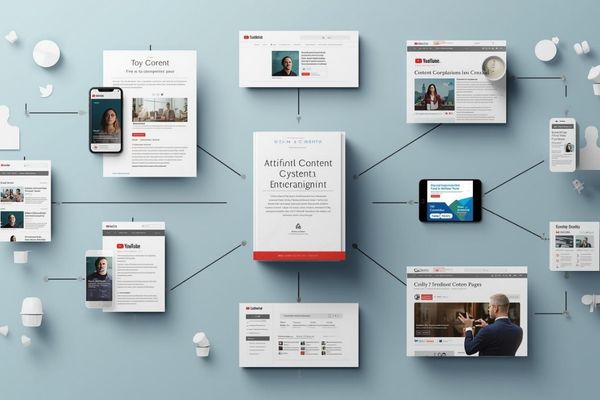
This is where your content strategy becomes critical. If you want to know more, go back to our last episode because we talk about it in depth. Good content doesn’t happen by accident. It’s fueled by consistent, intentional content that keeps sending the right readers back to your book over and over. This is why podcasters that have books are in such an amazing position.
If you’re like me, I have over 400 episodes. I can go back through those episodes and add my book link to every single one of them. That will be a way for people to connect to my show, get those people to go in, and read the books as well. Ways to juice this. Go back to your evergreen articles and episodes if you’re a podcaster, a blog poster, even your YouTube channel. Make sure that your book links are over there to continue to attract new buyers.
One of the things I love about Tracy Hazzard, Podetize, their system, I can run ads for my book in there. Unlike other podcasting systems where the ad only goes into the episode that I’ve just currently produced, theirs runs the ad all the way back through every episode. If you’re like most podcast listeners, if you find a good podcast, you’ll go back and listen to several so that those ads are reinforcing sending you over to Amazon through your book.
The other thing is making sure that your book is always in the show notes, making sure it’s always on blog posts, making sure that you put it in that evergreen portion of YouTube. There’s a portion in your YouTube Studio where you can put links in there. Those links automatically come up with every single episode or every single video that you put out there.
Looking at your backlist content and being relentless about it, going to those older blog posts where you may have put in one of your previous books. Keep that one in and add the new one in. Go back and put some of those older ones. I know we’re always trying to freshen our marketing. Making sure that some of those backlist books are in all of those newer pieces as well. Your backlist keeps getting refreshed there.
My experience with fiction novels was my first one didn’t sell much. I worked on my platform. My second one sold more. By my third one, people were going back and buying my first and second book. It’s good to make sure that with every current release, you have some of those back books in there. If you’re an author who has a big series, if you’re someone like that, let’s say I was just talking about JA. Jance.
She has several different series. She could send them back to the Google link that says, “JA. Jance books in order.” That’s where I go to find and then I start buying from there. I always want to keep it in order. I could go to Amazon, but Amazon doesn’t always have them in the right order there for a series. If you have a lot of books and you’re a fiction author, go back and attach that page so people can buy from that page.
Series-oriented content, I just covered that. You could do some additional behind-the-scenes post. You could do some character spotlights, especially if you’re fiction. I’m going to pick on JA. Jance again. You might want to go back to how she came to create the character of Ali Reynolds. Where did that come from? She had a whole series of her own books there.
Why did you kept the series going? Why did you choose this particular location? JA. Jance’s books, for the most part, take place in Arizona, the Ali Reynolds series. One of the other series in Arizona, one of them up in Washington. Why did you choose that area? For me, if you look at my old series, they relate around some of my childhood places I grew up. You could talk about that. I had to get into research history in those areas. Instead of burning all of your great stories and everything in your launch, rip them out over time. Keep some of them a secret. Keep people intrigued.
Long-Term Marketing Strategies: Six-To-Twelve Month Planning
The other thing, marketing strategies that will improve your performance over time. Plan 6 to 12 months around your book. Don’t just plan. I know a lot of my authors. I talk to them and they’re like, “I think I’ll post something.” We try hard for you guys to put a content calendar together. In this case, putting a content calendar together is going to benefit you in a big way.
Don’t just plan—work hard to put together a content calendar. Share on XWhen you have a campaign, put it out there for three, six months. Go to your Go High Level or whatever you use and put that campaign in. Have those social media posts there and just ready to go. Have that email list sending out emails weekly ready, to go talking about whatever you’re going to talk about this week. This doesn’t have to be an on-the-fly thing. You can plan it all out.
AI is fabulous. You can ask. I do this all the time. “Take this book and give me six months’ worth of social media posts, posting three times a week.” It’ll give you those posts. You can go find the graphics. You can go find the links. You can do whatever you want there. Like I said, scheduling those recurring mini campaigns, that’s basically what you’re doing.
If you have a backlist, I could spend one month putting out posts about Gypsy. I could spend another for Granny Highs. I could spend another 30-day mini campaign on Dead by Dawn. You can take those backlists and do mini campaigns around them as well. Build entry points to your catalog. Have something on your website that maybe has, “Here are all my books that I have.” Maybe it’s a book page where they can click and go in from your website. Those are the kinds of things, those external links that Amazon is looking for.
Monitor And Repair Friction
Monitor and repair friction. If reviews come and they’re telling you that there are problems with the books, fix it. Fix the problem in the book. I have three books where I didn’t know how bad my editor was until people started making editing comments. I could go back and fix that and say, “Revised.” Put something that “The editing has been fixed on this.”
I could let people know that. We all run into those bad people in the industry. That’s what happened to me. I released three books right in a row. They were all edited by the same person. The editing was not great. Go back and repair those things. If you go back to two episodes ago, I talked about the things you should do before you start engaging in this.
Go back and look. Is your cover current? Is your copy good? I talked to somebody that broke my heart. He’s like, “Why isn’t my book selling?” I pulled his book up. I have to tell you. The copy and the cover was bad. I could tell right off the bat that he’s self-published because things weren’t done very well. I wanted to do this because I want you to start rethinking your book success. Let go of those bestseller moments and move yourself into sustainable momentum. That’s what we’re trying to do. I love what this is doing for people though, because it’s making you rely on your platform.
Start rethinking your book success. Let go of bestseller moments and shift toward sustainable momentum. Share on XYou’re depending less on high stress and most of the time, expensive launch stunts. It also gives you that new piece of content, which is an asset for you, your company, and your book. You should have been doing that all along. Most people that come to me for their author and publishing their platform build didn’t start that until the book was written, which is far too late to start. You can start anytime, but far too late to sell books on a consistent basis and have a reader base in place.
Every single book release, if you’re an author that has more than one, strengthen it. This is an opportunity to strengthen the performance of your entire catalog, your backlist, and your current releases. When we refer to this, I want to remind you we have the Perfect Reader Playbook. We designed the Perfect Reader Playbook because we knew that this was happening.
This is your opportunity to strengthen your metadata, strengthen that Avatar. We have a free course you can take. We have a free webinar that you can go over. Find out more about how all of this layering works and what you should be producing. You can go over to the PerfectReaderPlaybookWebinar.com. It’s free. It’s about a half-hour long. It will go through what you need to improve and what the typical patterns are that Amazon is trying to create. See you next episode.
Important Links
- Perfect Reader Playbook
- Perfect Reader Playbook Webinar
- Promote, Profit, Publish on Apple Podcast
- Tracy Hazzard on LinkedIn
- Podetize
Love the show? Subscribe, rate, review, and share!
- superbrandpublishing.com
- Promote, Profit, Publish on YouTube
- Follow Juliet on LinkedIn
- Take the Quiz!