Books are now being written using AI, which raises a rather important question: can you secure book contracts and copyrights with this kind of content? Juliet Clark explains when AI-generated content is eligible for contracts and copyright without losing its authentic human touch. She breaks down how the current Copyright Law is implemented and how the most common book contracts are designed. Juliet also explores how to secure the right licenses to avoid legal headaches, how to keep your royalties, and the most common red flags to avoid in a book contract.
—
Watch the episode here
Listen to the podcast here
Book Contracts & Copyright In 2026: What Every Author Needs To Know
Welcome to the show. I’m your host, Juliet Clark. We have Johanna Maghuul, who’s going to add to this. I do want to say, if you’re someone who’s reading this and you want to see the slides, please go over to our YouTube channel at Superbrand Publishing. You can see it over there. This is an important topic because how many people are writing books with AI? You can tell that they’re writing books with AI because they are bad books.
I wanted to talk about that because there are a lot of changes going up on the copyright world. It is becoming increasingly difficult to get books through. One of the reasons is that so many people are writing. They are just delusioning the market with children’s books, AI graphics, AI words, AI everything. We can’t get them copywritten because the Copyright Office is on to all of us.
When To Copyright AI Contents (And When You Cannot)
Human authorship is the new gold standard with all of this. It was always the standard but we have to make it the gold standard because people are taking so many shortcuts. The US Copyright is fundamentally changing how they copyright. There are different things that you will have to do for different types of books. Fully-generated AI content can no longer be copyrighted at all. That makes a huge difference. They can usually tell when a book is created that way.
This Copyright Law also matters because we want to incentivize human creativity. The best books come from that human creativity and being able to build out and do this in your voice. Even though AI is getting better like I have my AI trained in my voice. I still wouldn’t use it to write a book because it’s trained for smaller ideas. What I mean by that is I have it trained for social media. I have it trained to write blogs. Even with blogs, I go in and I finesse some of the language in it.
The third part of this is the economic incentives. We’re all in the book business. We’re in the coaching business for many of us as well. Those economic incentives flow from creators, not the machines. I noticed that some people are starting to put together clone-generated courses. I’m even noticing that people are rejecting those as well because they want human interaction. If you all remember during COVID, we were all screaming for human interaction. I think it’s going to be exactly the same way with AI. We’re going to want that human interaction.
These are times when AI can be copyrighted. It’s important to know this such as expressive elements. If you write a book, you can get help with AI but it needs to be mostly your work. What I mean by that is when you write, you might go through and ask. Somebody told me they did this. When they went through their second draft of the book, they saw some areas where they used AI to help rewrite some areas. The significant part, the first draft, was their work. You can use it for those smaller things.
Sometimes, I’ll use it for different words. I had a lot of impact in my book that’s coming out in March. My editor came through and said, “I hate that word. Let’s jump on AI. Find some words that’ll replace that.” He felt like I had it too much in there. You can use it for little things like that. You also have to be able to prove to the Copyright Office that the creative input that you did was evident and substantial. That is very important as well because they’re going to be looking for that AI balance.
A lot of you guys probably don’t know this. When publishers upload a book, we are required to say, “Was this generated by AI?” The publishing side of this wants to know as well. I suspect if you have an AI-generated book, your algorithm is going to go downhill very quickly. They’re going to value that human input and creativity far more than they are with AI.
They also want to know that the author’s work is perceptible. The creative arrangements or modifications were very minimal on this. Every book is going to be a little bit different. You can expect if you are publishing a book that your publisher is going to ask you, “How much of this was done by you? How much with AI? How much did your editor use?” There are going to be a lot of considerations there.
Speaking of editors, that’s another thing we’re seeing a lot of. People assume when they write a book on AI that it’s all correct. It’s not. My AI makes pronoun errors all the time. The they, their, and they’re. It gets the wrong one in there all the time. Nothing drives me crazier than somebody that doesn’t use they’re correctly. That’s one of my pet peeves. My AI does not use it correctly sometimes. The prompt exemption came about because of the comic books. There’s a word for it and I can’t think that. Johanna, what are those comic books called? They’re called something else.
You’re talking about adult comic books. They call them graphic novels.
This came about because of the graphic novels. I’ll have a case study for you in a minute. When the copyright asks, “How was this created?” Giving them a prompt is not sufficient. The case study I’m going to show you is somebody used Midjourney and they just provided prompts. What happens with the copyright, many times I will submit a copyright. The Copyright Office will come back and ask questions. The biggest question that I get is, “Was this a work for hire or did the author build these illustrations?”
If you go out and you hire an illustrator and you pay them. It’s called a work-for-hire. You can claim that as your own work because you paid that person for them. If it was somebody who did it for you for free, the Copyright Office is going to ask you to attribute them in some way in the copyright so that nobody gets sued later when the illustrator comes back and says, “That book is 90% my work and I didn’t get paid a dime on it.” Giving them the prompt you used to get the graphic or having the book done is not going to be satisfactory for this.
You’re going to have to create, in accounting, we would call it an audit trail. You’re going to have to provide the same thing here for the Copyright Office on there. AI assistant does qualify when you’re getting a copyright done. If you use generative AI tools and you use them to manipulate some sort of original work. If you take an AI work but you significantly manipulate it into your own work. You have to be able to show that you did most of the work on this.
An AI assistant does qualify when getting a copyright done if you use generative tools. You just have to show you did most of the work on your book. Share on XAlso, hands-on involvement. This is what it is by the documentation. If you create images of some sort, create that audit trail. Video what you’re doing. Open it up in Canva. If you’re using Adobe, whatever illustration program you’re using, open your Zoom and show the audit trail of it, “I took it from this original that I drew and then I added this on for AI. I went back and adjusted it here.” Have an audit trail so you can prove to the Copyright Office that you truly did have the creative mind behind this. In the case of graphics or illustrations, you created them yourself as well.
I will say something. When you use AI graphics, I only use them for blogs. I use them for social media sometimes. I use a program called FAL.ai that does cheap graphics for you and cheap illustrations. It will take a photograph and make it into a movable like very short video. I don’t use that in books. The reason I don’t is because you need 300 DPI better in order for the print to come through on the book correctly. Especially for premium color products like a children’s book.
Most of the time, if you’re using AI for that, you’re not going to get the quality that you need for that to have a sharp image in the book. I’m going to tell you how we know this. Dorothy has a beautiful cookbook and I tried to do a few images with AI. We ended up going back to DepositPhotos and buying all of the images. It was a lot. It has 100 pages. We went back and bought them because we weren’t getting the quality we wanted from the AI. Dorothy may not even know that we had to go back. She knew we chose them, but she didn’t know we tried AI first.
The nice thing about FAL.ai, I put $20 in July 2025 and I’m just about to refill that. The graphics are $0.1 to $0.5 most of the time versus a DepositPhotos where they’re $1 a piece. You do have to learn how to prompt over there to do it. It can be trial and error. When I have problems, I’ll go to Perplexity. I will say, “This is what I’m looking for. Can you write me a prompt to get it?” If I’m having problems prompting over on FAL. I’ll take that prompt over to FAL and put it in. Usually, I get a good picture. I just need some additional help on it.
On the manuscripts and written content, almost probably everybody here has heard about Anthropic‘s use of copyrighted books to train AI. The court ruled that that was fair use. It’s fair use if you use the copyrighted works to train your AI only under certain conditions. This is probably more for fiction authors. It doesn’t qualify if you train your AI on someone else’s book and then come out with a book of your own that’s very similar.
I’m going to give you a great example here. I’m a huge Michael Connelly fan. I read everything he’s ever done and watched all those shows he produces. If I were to take and put Michael Connelly’s books into AI and then say, “Write me a story with my characters.” They came out looking like a Bosch novel. That would not be fair use of AI for that. I would love to make his kind of money. I would love to produce all those TV shows but it would literally be stealing his work. It would be evident that I trained my AI on his work. If you do use AI to train, be sure you stay away from that.
I’m going to caveat that a little. There is a great program out there. I probably should have had him on to talk a little bit about it. There’s a program out there called Plottr. A lot of nonfiction authors use it. It’s a great place to build your characters, your storylines, and your storyboards. That’s different than writing the book from AI. What you’re doing is sort of creating a storyboard like you would for an ad or a movie or whatever you’re pitching. That is a great use of AI because it will help you tweak your characters a little bit. I’ve played with that a little bit. I like it.
There’s another program and I don’t want to besmirch them. I had a fiction book idea for a long time. I went over and put my idea in it. It started writing and it took the story off in a completely different direction. It got a mind of its own and took a lot of the good elements out of my story. I just dropped it.
Can you mention what that product is so we know to veer away from it?
I will not. I don’t want to besmirch somebody’s product because you guys may find it and use it and think it’s fantastic. I didn’t think it was that fantastic. It was good about filling in details, building the background and the story. The show versus tell, which is probably one of my weakest points when I’m writing fiction. What it wasn’t good at is staying with my storyline. It wanted to take it in different directions that I didn’t want to go. That’s why I said you guys may find it great. I didn’t find it that great.
I try all of these things. I will say that is one of the reasons if you go out and talk to a lot of authors, they don’t like AI. They like the creative juices, the stories they put out themselves. That doesn’t mean that authors shouldn’t use AI because it’s fantastic for building your platform. Don’t write your book with it. Your original writing is protected. As I said earlier, you can use AI passages for revision, but not the whole book. You need to disclose if you’ve used it more than just a little, where you’ve used it, and how you’ve used it.
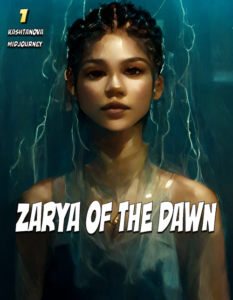
For example, if you used it to write chapter three, they’re not going to copyright chapter three. Full AI use is unprotected. Graphics and visual content is where I’m seeing so many problems. The case of Zarya of the Dawn case is probably one of the first ones that was challenged. This was a graphic novel and the creators used Midjourney AI, which is an excellent program, by the way, to create the characters. We used it for my son’s book to create the images of the characters.
What’s it called, Juliet? What’s the one that you’re talking about?
It’s called Midjourney AI. We didn’t have the illustrations done with it. He just wanted visual versions that he put on his wall with the descriptions of the character when he was writing. We described a character. Midjourney went in and created the hero. The blonde hair, good-looking, Robin Hood-type of guy with muscles. That was as far as we went with it. Apparently with this case, they did the whole thing in Midjourney. What happened in this case was that the author’s written text could be copyrighted. The images could not.
We’ve run into that several times with people that have brought us children’s books. One of the reasons they’re cracking down so hard is because a lot of authors decided that they could make a living and quit their day job if they just cranked out a children’s book a day on AI. All of these books started showing up on Amazon that were pretty much all AI-generated. I think that’s why the publishers started asking the questions as well.
This is a case where if you wanted to use a little bit of Midjourney to modify, you would open up Zoom. Show that journey that you did with the illustrations so that if the Copyright Office came back, you could prove how much was AI and how much was you on that. The same thing, show your creative decisions and how they shape the final output. How much was hands-on manipulation and refinement? How much was not? How much human authorship was there?
Again, a video or a revision history. I don’t know about Midjourney but if you’re using something like Adobe, there is always a revision history there. I bet it’s the same thing with Canva. In one of the books I got, she created the entire book with Canva AI. She used Canva but it didn’t count because she used the AI that’s now in Canva. You have to be careful with that as well. Make sure that you’re creating these things. Again, the work goes beyond prompting. You can’t just put a prompt here and say, “This is what I did.” They’re going to want to see that genesis of what you’ve put together.
The best practice is document your process and go beyond the prompting. Everybody knows what prompting is. It’s how you get to the image. Remember I talked about if I’m having problems with FAL.ai getting the image I want and I’ll go over to Perplexity. I’m prompting Perplexity to give me a better prompt, is what I’m doing. It’s the instruction that you give the AI.
Consider supplementary materials when you submit. If you’re going to a publisher, a self-publisher, or a hybrid publisher, and you’re bringing the book to them. Disclose that, “I have used AI. Here’s my journey.” You can submit this to the Copyright Office as well. I have a place where I can upload the manuscript. I can also make notes and upload additional information. That will make the copyright go faster. What happens at the Copyright Office is they look at it. If they have questions, they’ll write you. They’ll give you 30 days to respond. You could go back and forth. If you just do it all at once, you’re going to get that copyright a lot sooner there.
Entering A Traditional, Hybrid, And Self-Publishing Contract
Publishing contracts. This is where Johanna is going to help me a little bit. For those of you who don’t know Johanna, she is a book agent. I’m going to talk about hybrid and self. She can tell you a little bit about the actual traditional world and what to look for there. If you’re interested, she has a course that she’s going to share as well that you can go over and take for these contracts.
One of the things that I ran into too many times in 2025, more times that I can count was people who are republishing books because they were unhappy with their publisher. Some things that are important when you get that contract. Number one, have somebody go over it with you that can speak English, not publishing English.
What I mean by that is there are a lot of terms in the publishing world that don’t mean what you think they mean. You end up being disappointed. I try to speak plain English. I have seen contracts lately that don’t have any deliverables. That’s where I’m going to get into. What will the publisher do for you? What is included in their service?
If you look at my contract, and I think most of you have worked with me, I have what I call deliverables. I state, “We will do the formatting. We will do the cover design. We will do the uploads. We will do the copyright. We will file your LCCN.” I have everything laid out. Be sure that when you get the contracts, you have a list of deliverables there. Exactly what that person’s going to do.
I get from a publisher in Texas at least twice a year. I have to republish his books. When people give me their contract to look at, it is garbage. It doesn’t say what he’s going to do. By the time they’ve come to me, a lot of times their book is nine months to a year in. It hasn’t been published because he hasn’t done anything. He’s not meeting with them. Also, find out will your publisher meet with you on a regular basis and give you updates. I meet with my clients every week.
For book marketing, I get referrals from a couple of publishing companies. There’s one in particular that every single client complains about. I get a once-a-month meeting with this person. Most of the time, it’s an assistant that shows up or they cancel and I don’t get to meet with them at all. Make sure that you have someone that’ll meet with you regularly. Tell you what’s going on, explain the services, and explain how the publishing world works.
Find out what are your responsibilities as an author. In 2026, I have a program now that when you sign the contract you have to go through the course. It’s all about how you have to submit and what you have to sign off on. I don’t want books that aren’t professionally edited anymore because they’re not the best books. You have to sign off that it’s professionally edited. You have to sign off that those images are commercially purchased. Find out what your responsibilities are so that you thoroughly understand what you have to deliver and what your deadlines are.
Make sure that you have clarity on every single deliverable requirement before committing. Another thing that I want you guys to look for is what the contract say. Do they get commission or royalty wise, are they taking a piece of your royalty and are they wanting part of your other things associated with the book. I just got another contract. I haven’t seen one in about a year that says that they want a piece of your course. Don’t ever give anybody a piece of your course. That’s your IP. You’re the one teaching it.
Around 2023, the contract said that the publisher got 30% of any course that was delivered by the author. When I asked her, “How much do you make a year on your courses?” It was about $250,000. She determined that she did not want to give them $80,000 for doing nothing. Be sure that you look and you understand that area of the contract. Ask about design limits. Does the publisher create the cover? Are you locked into their cover? Can you bring existing artwork?
For the most part, we require you to bring existing artwork and I’m going to tell you why. We have a great book, Break Free From Your Dirty Little Secrets. It’s a self-help book. It’s an amazing read. When the author came to me, you have to understand it’s a game of telephone. She tells me what she wants and I communicate that to the designer. She said, “I want something a little bit racy that goes with Break Free From Your Dirty Little Secrets. I communicated that to the cover designer.
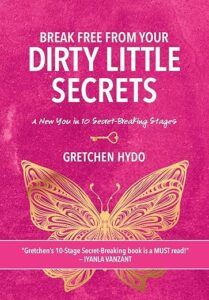
What we got back, I would classify as erotica. It was a woman in lingerie with a blindfold. That was not what we were aiming for. I prefer if you work with a designer on your own and bring us that front cover. Not required if you have something simple, but something like that. She went back and brought a beautiful cover with butterflies. Something that was befitting a self-help book and not soft porn. Something to ask about. Who’s going to write the back cover copy? Does the author have to write it or will the publisher help you? We help our people.
Do they need testimonials? Can they include endorsements? Carrie Cassell came from my favorite book producers, writing coaches, Pat Snow. She has endorsements in the front of her book. I worked with Pat Snow on my latest book that’s coming out on March 3rd, 2026. I have testimonials and endorsements in the front. Pat wrote my foreword for me. Ask if those things are necessary. If you don’t have them and the publisher would like them, get started on them right away because they’re harder to get than you think they are.
You’re asking someone to read your book. I have a methodology that I use with my people. If the person hasn’t written it for you within 30 days, we will give them a list of testimonials for it. We say, “Is there one here that meets your criteria that maybe we could finesse a little bit?” We do that because it is hard to write from scratch sometimes. The biggest thing on the design, the artwork, is make sure that you have permission to use the artwork there and buy a commercial license, if necessary.
This was so hard to believe. We had an entertainment attorney, who should have known better, who brought us a book that was about entertainers who were getting blocked in Israel from entertaining in Israel. She had a Hollywood squares-type cover with the celebrity images in the squares. When I asked her for the commercial license, she’s like, “I pulled these off the internet.” I’m like, “We can’t do that.” It would have been about $9,000 to produce that because she needed rights to nine different people and the commercial rights for those. They were celebrities who are about $1,000 a piece.
Be sure that you have the commercial licenses for that. The other reason that I say that is because there are companies that their sole focus is to go out and see if you have violated image copyrights and music copyrights. That’s why so many people are designing their music on AI so they don’t violate copyrights. Podetize had an author who was on one of their shows, who was originally with Simon and Schuster. All they did was mention the author in the bio that her previous book was with Simon and Schuster. Simon and Schuster sent someone out. She had 400 episodes taken down because of that one mistake. They worked feverishly with the other publisher to get that back up.
A lot of these bigger platforms like Spotify, Apple, if you violate a copyright, they will take everything you’re doing down. It is important to be able to prove you have those licenses. Lucky for us, in Podetize, somebody questioned one of my licenses. They have the graphics license, so we never got taken down. They always buy the licenses like they’re supposed to.
If you violate a copyright on bigger platforms like Spotify and Apple, they will take everything you're doing down. You can avoid it by proving you own the right licenses. Share on XWith fees and setup, understand what your publisher is going to charge you for. Is everything included in the contract? We have revision charges. I don’t get around to doing them very often. I did because we had an author who approved the entire book. Two weeks later, she said, “I never looked at it.” We had uploaded it, formatted, cover design, and had it converted to Kindle. I charged her. She admitted. She’s like, “I never read my contract. I didn’t know.” That’s not a good answer. Please read your contract. Understand what’s in there and how diligent you have to be about getting all this up.
For distribution, find out what your distribution is. Distribution is important. I have two books on the table that I’m republishing. They didn’t understand that it was an Amazon white label. They didn’t have a bookstore distribution. They walked into a bookstore and said, “Can you carry a couple of copies of this in the local Barnes and Noble?” They told them no because they were an Amazon-only published. Understand, do you have true worldwide distribution beyond Amazon?
What a lot of people don’t understand with Amazon is because Amazon makes a big deal about their quote worldwide distribution. Not everybody in the world is as high on Amazon as Americans are. I personally think I should go to Amazon anonymous. I have stuff on my doorstep every single day, pretty much. One of our clients is Jane Fonda’s personal trainer. She’s from Sweden. They don’t buy from Amazon EU. They buy from Storytel. We have another who’s big in Italy. They don’t buy from Amazon Italy. They have their own online bookstores that people buy from. Make sure that you have the right distribution.
Bookstores, libraries, and educational institutions. Is your book available for those? A lot of people think, “My book should be in the library. My book should be in educational bookstores.” I want you to understand that educational bookstores are easier. If you’re someone like Peter with a PhD, he’s going to have an easier time getting himself into Berkeley’s bookstore or Stanford’s bookstore than someone like me who got a regular old Bachelor of Science. People are going to take his expertise into consideration. He’s going to have an easier time.
When it comes to libraries, these are public institutions that run on budgets. If you are publishing your book in the middle of the year, chances are you’re not going to be able to get it into a library. They’ve already blown their budget for the year on new books. Everybody thinks bookstores are the gold standard. The truth is you can lose a lot of money getting your book in a bookstore. They’re basically taking those books on consignment and their return policies. You will get charged back more on a return than you will make from the royalty of selling that book.
The truth about bookstores too is unless you like a particular author when you walk into one, if your book is not on an end cap. The books on the end cap are usually Simon and Schuster, Random House, those big places, paying for it. People aren’t going to find your book. That’s why if you do go into your local Barnes and Noble, have them order three or four. Don’t go all out on it.
The bookstore signings. We had an author in 2025 who got burned big time. She had a book and she had a workbook. Barnes and Noble required 100 of each and 37 of each were returned. She got a bill for about $1,500 back from me because the books were returned. When I say returned, they’re not returned to you. They’re destroyed or liquidated but you still have to pay for them. Johanna, you want to take it and then I’ll get back to rights here?
All About Sub Rights, Loyalties, And Reserves
You covered a lot of interesting and important topics. I want to say something with the whole AI topic and publishing. I spoke with a publisher who echoed that same sentiment. That Amazon is cracking down on any books that are trying to get pushed through that have AI in them, which I’m happy to hear. It’s already a competitive enough environment, let alone to be competing with robots to write books. That’s huge.
Johanna, real quick, it’s not just Amazon. Ingram also. When you upload in Ingram, you have to designate as well.
It makes perfect sense. They’re all in the same boat. I won’t be able to cover everything but I’d like to touch on some of the topics that you already mentioned, which are important. One you mentioned was what we call sub rights. You want to be careful about giving away sub rights. That means, as you mentioned, if the book gets converted into a court. Let’s say it’s nonfiction. It could become a documentary. Others, it becomes an online game even.
What I encourage people to do, and to your point about getting someone to read that with you. At least read the contract yourself. I know that sounds fundamental. You’d be surprised what you can understand if you slow down and read through things. There’s probably a few words that they’re going to stumble over. Learn those words. like the word reserves. I have one of those crazy stories.
To your point about the bookstores and the signings, people don’t realize that 80% of book sales are online. There’s this myth that you need to be in bookstores. That’s nice to have but it’s not going to make or break the success of your book to be in bookstores. What happens is if you’re with a traditional publisher who can get you in bookstores, watch out for reserves. What that is, when they send your royalty statement, they can hold a percentage of your royalties for “reserves.”
Read your book contract yourself. You will be surprised by what you can understand if you slow down and read through it. Share on XThat means they’re expecting the bookstores, or even Amazon, to return a percentage of those books that they’ve shipped out to them or they’ve gotten orders for already. A publisher will do what’s called a print run where they will publish 2,000 or 5,000 or 10,000 copies of your book. They will work with Amazon and Simon and Schuster to make those sales. I’ve had clients who are shocked to find 1/3, 1/2 of their royalties, for significant royalties, to be either held or to have been basically charged back against the royalties for reserves.
I had a publishing company approach me about buying them. When I looked at their balance sheet, I asked where their reserves were. They did not have them in the balance sheet. I would not buy the company because I didn’t want to get stuck with that liability.
That’s something to be aware of. I would add a caveat to your statement, Juliet. You don’t want to give away the sub right willy-nilly. Depending on who the publisher is, sometimes it can make sense to do that. There’s one publisher that does a lot of great courses, for example. In other words, if your publisher is in the course business and that’s part of their business model. Clearly, you’re going to benefit. Let’s say Hay House. Hay House does a good job doing courses as an example. It’s situational. You want to evaluate that question based on who the publisher is and what they offer.
Also, international foreign rights, the translation rights. If it’s a big publisher, you’re probably going to save money by not going to another agent. For me, as an agent, let’s say, I’m going to charge you the industry standard 15% of your royalties. If I take your book to the UK, Europe, or South America, I’m going to have to partner with another agent. Together, we’re going to charge you 20% to 25%. That’s standard. If a publisher has strong relationships internationally themselves, it can make sense for you to give them the translation rights.
You want to just be mindful of the size of the publisher and if that’s their wheelhouse specialty. The other thing you can negotiate is the percentage of those sub rights. Normally, for documentary, film, international, they’ll do a 50/50 split. That’s a classic thing on a contract you’ll see. You can negotiate like, “If you guys are going to make a movie about this, I want 75%. If you’re going to do international rights, I think that’s going to be popular. I want this higher amount.”
Those are two different things. 1) Do you give them those rights? 2) What percentage of those rights do you give them. Those are two important topics that you’ve touched on. I would pay close attention to with a publisher. Maybe a third one I’ll address is, what else do they pay for? What else is included? A lot of publishers don’t do advances or do smaller advances. You do want to be very careful in understanding what you are getting for that money.
One thing that’s shifted a lot even with the bigger books in the bigger houses where there is an advance. Publishers will no longer commit to making a marketing budget commitment to you. A lot of my clients will be like, “What are they going to do for me? What’s the trajectory for marketing? How much are they going to spend? Are they going to get me into these bookstores? Will they pay for a speaker tour?”
The answer is normally no. More and more so, the answer is no. I’m a big fan of what Juliet does and what she offers. It’s becoming more and more logical to question whether a traditional publishing deal even makes sense. That’s coming from me as an agent saying that. That’s because ultimately publishers are looking for a business partner. They’re looking for somebody who’s going to put skin in the game beyond just writing the book.
That can show up and plan their book tour, can even put their own money into marketing the book and in PR. It’s important for you to get on shows. If it’s a non-fiction book, for example, talk about the book in the context of what’s going on in current events and so forth. All of those things are manageable. It’s about breaking it down into bite-sized thoughts is the way I like to put it.
Lastly, I like to think of a good book as something, and this might sound crazy, that you’re willing to commit a decade of your life to marketing. I don’t say that lightly. Think of some of the great books. My favorite book story, I’ll just tell quickly, is Wayne Dyer’s story, which not many people know about. Wayne Dyer wrote Your Erroneous Zones in a motel room in two weeks. He was a professor at Wayne State University.
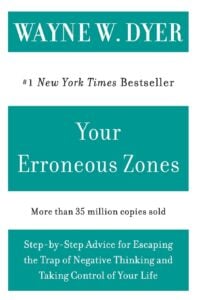
Once he felt the bigness of that book and he got a book deal, he quit his job. He had a station wagon. This is in the ‘80s or whatever. He loaded up his station wagon with 5,000 copies of his book that he bought from the publisher. He drove around the country to every Unity Church and booked himself to speak. I love that story.
It’s old school but there’s no reason it can’t be converted into something in present terms. With the support of someone like Juliet, all those things are possible. I love books and I love the passion of people who write books. Writing the book is the easy part. What you do with it after that is where the work starts. I’m going to leave that there.
That is very true. I think you covered the rights. Quick question, though. When I worked at Price Stern Sloan, we would give advances. The advances are against royalties. Back then, we just wrote them off. I suspect in this economic environment that you have to give it back, don’t you?
Honestly, I have not personally had an instance where we’ve had to give the advances back. There’s a two-prong answer to that. One is that advances have gotten a lot smaller. Even a couple decades ago, I have a colleague who co-wrote the book with Steve Wozniak. I don’t know the exact number but I know we were talking about it.
She was saying, “Back then, you write a book like that, you get the advance payment. You literally don’t expect any more money after that.” That’s a different model. I don’t know of any examples where the book has stayed with the publisher and they’ve asked for the advance back. Sometimes, if there’s a conflict between the author and the publisher, they might. That’s an advantage to not taking a big advance.
Another thing that is true is if you’ve taken a big advance and the book hasn’t done well. It sets you up poorly for the next book deal. I have a lot of clients that make their money in the future revenue, meaning they didn’t take an advance. They’re 2 or 3 years out still making some money off the royalties, which is awesome. I love that.
The last thing on publishing is Kindle and eBook distribution. Make sure when you work with your publisher that you have an author-led build out for the book launch. What I mean by that is you are in control of your book launch. A lot of times there are book launches. If a publisher has put your book launch into their Amazon White label, they’re taking 20% of it. You don’t have access to change the price of your book. You don’t have access to advertise and manage campaigns.
Make sure that you have control of your pre-launch strategy and the build out for it so that you can control and make money the way you want to. What I mean by that is I have a doctor who was a poor student in high school. He is a doctor and he has a book. When he goes out to schools to talk to students about it, he zooms that eBook down to $0.99. Those students are able to buy it on the spot because most high schoolers have $0.99 cents. He has control of that Amazon dashboard. He can go in and adjust the price, the ads, and all that on it.
Red Flags To Look Out For
The red flag not to purchase or walk away. Publishing companies that charge you for distribution and they have an On My Site Only policy. Publishing companies that try to sell you book markers and cards and non-functional websites. If they try to sell you a website that is not digitally optimized. Meaning you can’t do digital marketing on it. It’s not worth your time. A lot of them charge large hosting fees for them. They’re not any good.
Sheet production. Somebody told me last week that they went with a particular company and they couldn’t believe how cheap the book was. I was not one bit surprised. It looked like the cover was rolling and it was bad. If you get those, if you don’t have 100 % of your rights and you see major red flags, walk away on that.
Takeaways from the contracts, make sure you have manuscript delivery requirements, cover ship design and ownership, fees and revision charges, markup structures. Know what your publisher is taking. Personally, I don’t take any of the backend because you pay me to publish your book. I’m probably one of the only companies out there that doesn’t. I equate it to theft. Taxation is theft. Me taking part of your royalties for a self-published or a hybrid book is theft. You own your rights and royalties. You know your royalty calculations. You understand distribution and marketing and sales terms. Don’t sign a contract without understanding these areas.
I do want to get into a book club scam that’s out there. Many of you may be getting emails. They’re very flattering like, “Your book is amazing. Our book club wants it.” Don’t fall for this. They get your bank account. They steal your money. It’s not a fun thing. I pursued one of these. In November 2023, they wanted my magazine. I pursued it just to see where they were going with it and it validated. Any of these things you get an email for. If you’re not aware of who this marketing company is, either research them fully or you can always ask me. I recently had someone who thought she was going to be in the USA Today for $199, and I couldn’t find this company anywhere.
The other thing that’s a big scam that I don’t have on here that Johanna mentioned is be sure if you’re going to do foreign rights, you work with an agent or somebody that has a good reputation. That can be a big scam too. When companies reach out and say, “We’d love to have you publish. We’d love to do rights in Bulgaria.” They will steal your book.
Can I just make a comment on that, Juliet? There’s a lot of companies that it’s pay-to-play. They’ll translate your book for you, but they come across sounding like a publisher in another country.
A New Book And A Customized Marketing Report
Verify independently. Treat the upfront payment as suspect and then report fraud attempts on these. There are a lot of them out there. I have ten books. I got one for every single book plus the magazine. I know they’re prolifically hitting people up with this. I have Gary on here, my partner for the Perfect Reader Playbook.
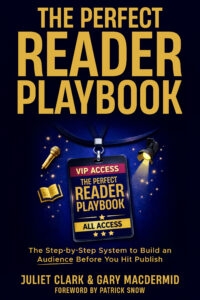
I wanted to share this with you guys. We have a book coming out on March 3rd, 2026. It is not only a book, but we have a customized marketing report that goes with it and a course that will help you as well. Coming from the publishing world and then going into the marketing world, I hear so many of you that are very disappointed with your author platforms and what you’re doing. What we have done is we have created a program that speaks to the science of marketing and how to build your non-fiction marketing. Not only for your book, but for your programs and services.
There are five points here of awareness that you should be doing with your marketing that works. We have the Unaware phase, the Problem Aware phase, Solution Aware phase, Product Aware phase, and then the Most Aware. That’s where they purchase. I see every single offer that comes to me. In fact, for the most part, I will say probably 95% of them. You guys are going out to sell a product. Nobody knows who you are. Nobody knows they have a problem. You can’t build awareness at that point. Nobody knows you’re the solution. There is a way to build this so you can sell these books. That’s what Gary and I did.
Gary designed the program. We ask you eight questions. You get a comprehensive marketing report with all five phases. The psychographics, the demographics, and what your pitch is when you speak to people. For those of you who have businesses, there’s a client attraction and client retention piece at the end of it. It’s about twenty pages. It is a substantial report and it should be your playbook. The programs go right along with the book that is coming out on March 3rd.
We have a couple of ways that you guys can go test it out. We have the first three modules we’re giving away for free at FindYourIdealAvatar.com. You can work through those first three modules. There are fifteen modules total if you buy the course. You can buy the course on its own and work it with the book. You can buy the report and the course. If you buy the report, I will do a session with you to go through what you’re doing.
One of the things that the report has that I’m so excited about is from the advertising world. You need to know what you’re buying hooks are and why people buy from you. I have not seen a marketing program out there that addresses that. As boring as it may sound, we’re getting into the deep work that could not only improve how many books you sell, but improve your content development. Have you understand those five phases of marketing, what the buying hooks are and what works best for you.
If you’re interested, go download the three modules first. If you want to talk to me more about it and have it run, go grab a spot on my calendar. It’s ChatWithJuliet.com and we’ll get you in. We have pricing that will probably change very soon. The report is $9.97. The full course in the report together is $24.97. We’ve already got people in it that heard about it from another call. They’re already telling us, “Why are you charging so little?” Gary and I are going to be rethinking that pricing as well. I know Johanna’s going to be out trying to sell it to some publishers too. If it’s something you’re interested in, get on board with us and do that. Johanna, tell us where to find your contract course.
You can find me at ClearLantern.media. We will put the course up there. I’d love to put this up there too, Juliet, for people. This is amazing. We will get that out to everyone from there.
Discussion Wrap-up And Closing Words
That’s it. Gary, do you want to say a few words? You were a part of this. I probably should let you say a few words, too. He’s a man of few words so I don’t know.
I was exploring the contracts. I’m looking forward to working with everyone here on the AI tools that we can do to help with our platforms, marketing, and anything else under the sun.
This guy’s a genius. He’s a nuclear engineer. I don’t know why he’s working with us on books. He is an AI genius. I will tell you that. He does have a book of his own. You have courses that are selling in the Philippines, don’t you, around your book?
I’ve been doing some workshops around the book to just help entrepreneurs because I’m a firm believer. My mom was from the Philippines. There’s this cultural aversion to taking risks. I wanted to help give back by sharing the belief that anyone can be an entrepreneur no matter where they came from. That was one of the reasons. I’ve looked at helping overseas and even to generate and create some of these tools that we’re using with AI. It enables a lot more people and empowers them to become entrepreneurs, lift their businesses, and grow to be profitable.
He knows all about sub rights because he was on an episode of an Amazon show as well about his book. That’s it. in the next episode, we’re going to have Tracy Hazzard. She’s going to be talking about branding your book. She has a new program called Brander that she will be sharing as well. If you’re going to be doing a podcast or a book, it’s super helpful in getting your profile done. Thank you.
Important Links
- Johanna Maghuul on LinkedIn
- Superbrand Publishing
- Midjourney
- FAL.ai
- DepositPhotos
- Perplexity
- Anthropic
- Plottr
- Break Free From Your Dirty Little Secrets: A New You in 10 Secret- Breaking Stages
- Podetize
- Hay House
- Your Erroneous Zones: Step-by-Step Advice for Escaping the Trap of Negative Thinking and Taking Control of Your Life
- Gary MacDermid
- Perfect Reader Playbook
- Find Your Ideal Avatar
- ChatWithJuliet.com
- Clear Lantern Media
- How to Read a Publishing Contract
Love the show? Subscribe, rate, review, and share!
Join the Promote, Profit, Publish Community today:
- superbrandpublishing.com
- Promote, Profit, Publish on YouTube
- Follow Juliet on LinkedIn
- Take the Quiz!