
If you want to achieve high book sales, simply publishing and putting it on sale is not enough. You must also be willing to do the hard work of creating a strong and impactful author platform. Juliet Clark discusses the seven essential pillars in creating your own author platform, which allows you to establish an audience and start getting more visibility. She breaks down practical ways to navigate the ever-changing online algorithms, social media trends, and content creation approaches. Juliet also emphasizes the importance of building your own author website, email list, press kit, and a wide network of fellow authors.
—
Watch the episode here
Listen to the podcast here
Seven Essential Pillars To Build Your Author Platform And Boost Book Sales
Book Innovation & Marketing Panel
In this episode, I’m going to do the talk that I did at Book Fest. Hopefully, you folks will get the gist of author platform building. Before I get started, I want to mention. We have two events coming up and I’m excited about it. The first is on December 5th. You can sign up for it and BAMagTraining.com. We’re going to have Shannon Procise, who is a fabulous community builder talking about how to build a community of readers and raving fans.
For you non-fiction authors, this is important because those book readers can become your raving fans for your actual programs, products and services. Our second one, I’m even more excited about. You can go over to BookInnovatorsSummit.com on December 16th. We are going to have a book innovation panel. For those of you who have been around the publishing industry, you probably know. We went through this book publishing revolution back in 2007 to probably 2010 or ’11, where everything changed.
Now, we’re going through a book marketing revolution and it is long overdue. I’m excited about this panel because as many of you know, we have the author promo cast, which is something new that we’ve done. Nobody else does it. Where your book goes through very large apps so people have an opportunity to buy it from App ads versus all of the other ad platforms out there.
We’re going to have Desireé Duffy from Black Château, one of the premiere book marketing companies out there, as well as Kathleen Kaiser. She’s going to be talking more about her ProBookLaunch, which is everything you could ever need to self-publish a book. It doesn’t have the formatting and the cover design, but it has a lot of the other elements that if you don’t know what you’re doing, are a huge help to getting booked visibility. Also Jared Kuritz, who is the Founder of Zoundy.
Zoundy is a new platform where you can record your own book. For those of you who’ve tried to do this on your own, you probably run into a lot of quality problems. You can not only record but you can market your audiobook over there. On December 16th, BookInnovatorsSummit.com. I’m going to be sharing this. If you want to see the slides, I’m going to be sharing slides. If you want to go over to YouTube and watch, great. You don’t necessarily need to, but our YouTube channel is Superbrand Publishing.
One of the reasons I wanted to do this is when we talk to people basically, we’ve been getting a lot of, “I want to be a best seller. The book is my only product.” There’s so much magical thinking that goes on in the book world that, “If I put it out there, people are going to come and consume it.” The truth is, you build your own audience.
As your own audience builds and it becomes a seller, that’s when you start getting more visibility from the sales over there. For most people, they’re not going to buy your book cold if they don’t know who you are. We’re going to go over the seven pillars of author platform building. This is how you’re going to increase your reach, authority, and book sales. Also, if you’re a non-fiction author, this is how you build your next step programs. Whether it’s programs, products, services or whatever that is. Let’s get into it.
What is an author platform? There’s a lot of discovery around this for new authors and they don’t always know. If they do know, they don’t know how to execute. Basically, it’s how you build a combination of tools, connections and strategies to reach readers and sell books. What you’re doing is you’re using your visibility, your influence and your ability to market to a target audience. A strong platform is going to give you direct access to potential readers.
Credibility And Publishing Power
You’re probably thinking, “I have Amazon.” What most people don’t know is when you buy a book over on Amazon, you have no idea who bought it. You can’t tender them as an audience. It also gives you credibility. If you’re a non-fiction author, it will give you credibility in whatever field that you’re an author in. If you’re a non-fiction author, it gives you credibility in that genre that you have good books and that you’re a serious author. It gives you marketing leverage with publishers. What do I mean by that?
If you are someone who is lucky enough to have a book taken on by the traditional publishers. There’s a big misconception out there about how I get a book publishing contract from a traditional publisher. The truth is that you have to show that you have a big audience that follows you. You have to remember that traditional publishers are businesses and their point with every book is to turn a product. With all of the new genres out there, new categories, new types of books, they’re not just looking at the same old mass market product anymore, which means you have to bring your own audience.
It also gives you a lot of independence and control over what you do with the book. For non-fiction authors, that’s mostly what we handle at Superbrand Publishing. I am very transparent with people right up front, what is your next step? At $1 to $3 per book in royalties that you’ll probably make, you are not going to make a living doing this. Your sweet spot is going to use that book as a nurture tool and bring those people into your programs, your high-ticket products and services. Very much the platform is necessary.
Now, the first pillar is to build an email list. This is not easy. I can’t even relate to you how hard this can be, but it is your most valuable asset because when you’re on social media you don’t own the platform. We’ll talk about that a little bit later. Your pages, your profiles, whatever you’re using can get shut down at any time. Mark Zuckerberg, Microsoft, any place you’re at, if that’s LinkedIn, they can shut you down for just about anything. Sometimes it’s a mistake, but it’s hard to get a hold of someone to put it back up.
This email list provides you with the direct connection to readers and regular updates, promotions and it builds loyalty. I know people out there who use their substantial email list for book launches. They have segmentation. They know exactly where their people read and these are fiction authors who are just crushing it because of the way they handle their list. Again, not an easy build. It may look easy, but you’d be surprised how hard it is to get people into that list.
This also gives you direct communication without algorithm interference. What do I mean by that? If you have a controversial topic, a lot of times these platforms will come in and the algorithm will not promote your book out to people. You’re not getting as many looks, finest people followers as you think you should be getting because the algorithm is interfering with who sees this. It also gives you higher conversion rates than social media.
If somebody tells you email marketing is dead. Don’t listen to them. All of these go through cycles. While you’re trying to build your list, it seems like nobody’s reading. There are things you can do to bring that list back to life, but then you may have to switch over to social media or whatever is hot at the time. This also builds long-term reader relationships. Everybody has such a short attention span on social media that this is very important.

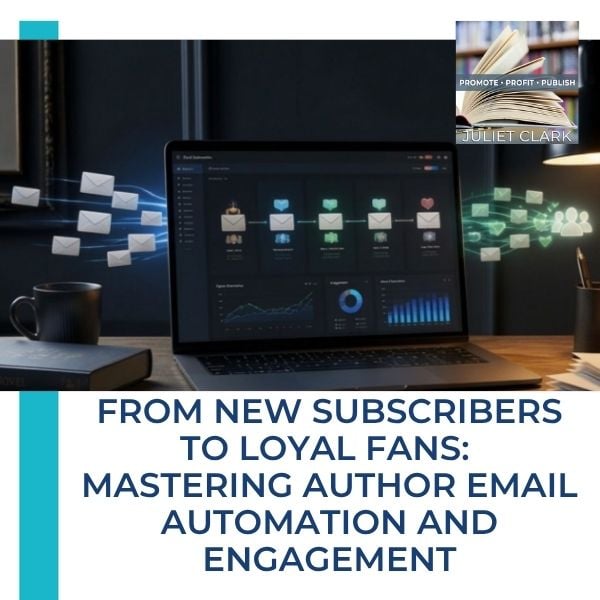
Now, I’m going to tell you guys something. I would say half the people who come to us to publish haven’t done this or haven’t taken this step. I’m working with four people now, where we had to build an email list. They don’t have a funnel. They don’t have what they need to build that list. If you’re thinking, “I’ll just have a newsletter,” and that’s the reason I put this. You cannot tell that this graphic is AI generated because the author update is not spelled right on it and AI tends to do that. Newsletters where you say, “Get my latest newsletter,” may not be what you want.
If you’re a fiction author, I would share videos. I would share all sorts of things like character development. Your email list is where you can generate interest in those characters. It’s not just the story, but it’s also the characters with fiction. If you’re a non-fiction author, this is where you build that list to drive into other products and services and where you deliver your valuable content. Your email list matters and that’s why it’s first because half of the people that come to us don’t have it.
Your next is your author website and your blog. If you’re someone who blogs, this is all a place where you can develop your content. This serves as a central hub for your author platform. This is where you tell your stories and showcase your work. If you’re a non-fiction author, this may be where your program gets landing pages or houses and you have your professional author bio. I would suggest if you’re going to do an author bio that you have a professional write it. This is also where you can put your book information. You can connect to all the different places your books are.
If you’re someone who has Amazon publishing, send them there. If you have hybrid publishing, send them to Barnes & Noble or to some of these other places where they can get your book. Have your email sign up form there. That’s where you have your opt-in where you take people from your website. That’s why it needs to be up in the upper third. I just reviewed a website. It’s down at the very bottom. Most of the time, you have three seconds when people get to that website. If that pop-up doesn’t occur and so someone doesn’t go all the way to the bottom of the page, you’ve lost them. They don’t know what to do next. It’s very important.
Author Media & Press Kit Tips
Have a blog or new section on there. A blog is preferable. Sometimes it’s a little bit difficult for fiction authors. For non-fiction authors, you should have a blog , vlog, a podcast or something that produces that content on a regular basis. When I say on a regular basis, I mean weakly. At the most, go every other week, but don’t go beyond that because people will lose sight of you. Have your contact information and most importantly, have a page for media where you press inquiries, your press kit resides.
I would contact someone and have your press kit done professionally as well. Have your speaker sheets and news articles about you. If you’ve been a podcast guest, which you should be, to promote your book. Have those shows linked to them. Not only will they provide backlinks for your host but it will show people that you’re credible and what you’re speaking looks like if they wanted to have you come and speak to their group. Also, how to inquire to get there.
This is one of those things that I can’t say enough about because most people wait until their book comes out. If you’re a non-fiction author, don’t wait until the book comes out. We have a gentleman on tour now. His book is not coming out until November, but he’s out there. He’s talking about holistic pet care and things to do like that. That’s important. That’s his platform. He’s an expert at it because he’s a veterinarian.
Be out there talking about what you do. Have that landing page and an opt-in where you can get people from that show over to your list. Be aware of these things and start in advance. One of the things about the email list and social media is we tell people, “There is a huge learning curve here, especially if you’re building funnels,” which you should be. It’s 12 to 18 months because you have to learn the tap. There’s so much to do in the house. It’s not something that you can say, “My books are done. It’s coming out in two months, and now I’m going to put all this together.” It doesn’t work that way.
Cultivate your social media presence. Again, start it early, 12 to 18 months out. If you’re someone who has a platform that should be on Facebook, build it over there. Instagram, build it there or Twitter. Most nonfiction authors belong on LinkedIn, because that’s where the money is at and that’s where the professionals are at. Build it early and test it. I want to put it out here that marketing is a test until it’s not. You have to get out and validate. What do people like? Look at the analytics. What are they consuming? What are they not consuming? You want to do more of what they’re consuming.
Another thing that every first time author makes a mistake of is choosing one or two platforms to focus on. Don’t focus on everything. You can’t be everything to everyone. You will drive yourself crazy with content that has to be created and done for every single platform on there. In social media, as I said, choose your platforms strategically. One or two platforms, where your target readers spend their time.
You cannot be everything to everyone. You will drive yourself crazy if you try to do that. Share on XConsistent content creation is so important. When I work with our authors on their social media, I tell them to start with three posts a week. When I tell them to go full five a week, a lot of times they get scared. Start with at least three posts a week. Create content once a week or every other week. We have probably our first author in a very long time who wants to do it every other week. I have a podcaster now who wants to come in and do podcasts once a month. That’s not going to do it. You need to at least have a schedule where it comes out every week or every other week again.
Engaged. Don’t forget to go back in, respond to comments, participate in conversations and build genuine connections. Your readers want to know you, so show up as you. I’ll tell you one of the big things I did when I started all of this. I hid behind a corporate. I didn’t want to be out there, but then I soon realized after working with the coach who said something sort of derogatory. I have to admit that I got mad and I started being the face of my business. That has served me well because people work with me because of my personality and I’m not for everybody.
Adapt And Act Quickly
If you’re not an action person, you’re probably not going to thrive in my programs or working with me because I move quickly on things and we build quickly. Go back and analyze and adjust. Refine your strategy. Only because you laid out a strategy, if you get two or three months in and you see that it’s not as effective as you’d hope. Jigger it up a little bit. One of the things that happens a lot is we’ll have an author bring us their funnel and they’ll say, “Somebody built this funnel from me. It’s awful. It’s not supposed to do what it’s doing. Can you build a new one?”
I show them that a lot of times it can be a color or something in the copy. If it’s a quiz, just a word that doesn’t hit right that people don’t know what to do. It could be that your call to action isn’t strong. When you build that funnel, have a professional do the first one so it’s good. You can always copy and revise later on there.
Number four, establish your authority and expertise. This is again, don’t wait until the book comes out to do all of this. Your authority matters and you’re demonstrating while you’re the right person for what these people want to learn or make better or up level. Share your professional background. Share your academic credentials if necessary. For something like what I do, it’s not necessary. If you’re a trainer and you have a PhD or a Master’s. It may be pertinent there so people know that you have the education and expertise behind it.
Your authority as an author matters to your target readers. Share with them your professional background and academic credentials if necessary. Share on XShowcase your expertise and knowledge. One of the things that we do is we have a different view of the publishing world and how you should build all of this. That comes from unique knowledge and looking at what works and what doesn’t work for people. I’m going to share with you. I have a client. We had to work on her book and she told me that she had taken all these classes on publishing. She was questioning our Amazon strategy. I had to sit her down and say, “That class means nothing now because in June and July of 2025 Amazon changed everything. Nothing is the same as it was before. That class was a waste of time.”
Your unique personal experience, story tell. How did you get here? Why did you get here? I have a client now who has a very specialized program that treats trauma. At first glance, there are a lot of people out there. I opened up the front of her book and read her story. What a journey of trauma. A lot of people think their childhood was bad. This woman had a bad childhood and she’s not the first. She told it in a way that helped you understand what she does now and that she has a compassionate understanding with the people she works with.
She also showcased previous publications she’s been in. It never hurts to go out on that show tour with your expertise. Go out and contact the company we use. It also has articles written for you. There are a lot of different ways where you can showcase your expertise and put it in your media kit when you develop your website.
Pillar five, leverage content creation. This is another one you, folks. I would say probably 30% of the people who come to us have a content strategy in place. Here we are two to three months from their book coming out and they didn’t have a content strategy coming up. If you’re a blogger, put that blog on your website. It improves your SEO. It showcases your writing style. It’s also shareable content. You can break that up into little clips, little memes, quotations and a lot of things but that builds over time. You don’t sub-blog and suddenly, you’re the biggest best blog out there. I love podcasting.
I love podcasting because it reaches the way the company that I work with does. It has a video version, an audio version and a written version. I hit all of the three learning modalities with what we do. It reaches that audio first through Spotify, Apple, and all the places it’s at. The company that I use takes the video content and puts it over on YouTube, so I have a very robust YouTube channel. The blog that’s written, it’s not a word per word of the interview. It’s an article about the interview. It’s over 6,000 words, which means that the search engines automatically index all of it.
Networking Through Content Creation
It’s also a networking opportunity. This is what people don’t realize, I get to meet a lot of cool people. I found a lot of my power partners that way. When I launch books, I can tap a power partner and say, “What do you think this is? Would you like to come on the show? Would you like to do a campaign together?” I have a lot of people I’ve met that sell my products and services as well, and then video content.
Videos everywhere. You must have a video. It gets the highest engagement rates. People get to see how you show up and it shows your authentic personality. It also works well on social platforms and you can repurpose. We take our long form podcasts like what you’re reading now or watching, and we chop it up into promotional teaser clips. We also have clips that are just tips. This needs to be done every single week so that you can build that audience and people get excited to follow you and get excited for your book.

Content Strategy And Scheduling
Content strategy, so plan themes. For many of you, we also have Breakthrough Author Magazine. There’s a theme to every month’s magazine. Develop content pillars that are aligned with what you’re publishing, what your programs are, what your audience interests are and test it as well. Create a schedule. This schedule ensures that you are consistently posting. I know so many people, when they come to us and we have to get them into a content and social media strategy. It’s because they just open up in the morning and they go, “What am I thinking now?” They post it.
They won’t even think about it for a few days and they’ll open it up on Friday, “These are my thoughts.” If you have a consistent strategy, I’ll share with you. Ours is always two months ahead. When you see a post, our LinkedIn newsletter and many of the other things we have online. Usually, it’s because we recorded and published it two months before. We have an ongoing schedule. Why do I do that? It’s because life happens.
In 2016, in the middle of everything, I was launching and doing, my mother passed away. Luckily, for me that was a wake-up call to, “I don’t have the bandwidth now to do this.” I gave up my first show, Ask Juliet and then I got back and into it probably several months later after I got over the shock and all the things I had to do but I lost content time. Now by being two months ahead, if life happens, I’ve got content out there. I just have to go catch it up when I’m ready and then repurpose.
I am probably one of the best repurposer on the planet and I’ve been complimented by many people on it. We repurposed the heck out of everything between video, blogs, social media post, and the magazine every month. I can take one piece and put it into probably 13 to 15 different ways that we can promote that piece and you can do it too. Once you get the hang of it, it’s super easy. It keeps you from having to reinvent the wheel every single time you put your content out there.
Building Connections For Success
Networking pillar six, an industry connection. This is important. Now, I don’t do it in the way that most people do. I’ve gotten tired of network groups that don’t go anywhere. I’ve seen to have found a lot of them that are tipped for Tat. I’ve invited three people to meet you. Where are my three people? I’m more of a believer in karma. If I put something out there, it comes to me, but I have to give to others in a way as well. You can build that networking connection with interviews and show appearances. Ask people if you can be a guest blogger. Book endorsements and blurbs and helping people out with what they’re doing.
Joint promotions. I’m not a big proponent of joint ventures. The reason for that is I’ve seen different levels. If you’re not good at funnels, promoting and having the right partners. It’s probably not going to be super effective. I used to coach for the Joint Venture Inner Circle. I’ve seen the inside of what that happens. I’m more in the vein of power partnerships and building those power partners. I probably have a dozen great partners that I promote for them and they promote for me. We don’t have competitive businesses, but we have complementary businesses.
I do a lot with Jackie Lapin. She’s a podcast booker. I do a lot with Tracy Hazzard. They have a podcast platform. I have many other partners who sell our marketing materials and I sell their book marketing, and then mentorship opportunities. Up until recently, I’ve been a mentor for a couple years for a big group out of Florida, where I come in and do training for them. In 2020, I did a year-long training. I was a monthly mentor for a group of VA.
If you can get yourself in those positions, then people understand what you do. It’s a great way to build relationships. Other networking opportunities for authors is writer’s conferences. If you’re writing, you might want to meet fellow writers. This might be a good way to meet agents, literary agents, editors and other people as well. Online communities are okay. I find that those online communities for authors are one big vomit of, “Buy my book.” I tend to stay away from them.
Also, local events. Go out and do readings. Join book clubs. Go to the literary festivals in your area. My son dragged me to a fan event in Salt Lake City. I couldn’t believe how many authors were there with fanfiction books, science fiction books and all sorts of genres. I never knew that was even a way to promote books and it was exciting. I bought a bunch of books just to look at what they were doing, and then professional organizations. I have a friend who keeps inviting me to a CEO event where I can network with other CEOs who all need books. That’s how he keeps positioning it to me.
Also, maybe you’re a psychologist. Be part of psychology industry events and things like that. There are a lot of opportunities. Again, don’t wait until after your book is done and then go out and tell everybody to buy it. Start early and develop those relationships. Those may be people who can help you promote, and then develop your personal brand. This is so important, and I’ll tell you. I probably have 10% of the people who come to me that have a personal brand developed, which is disappointing. It’s hard to put together a marketing strategy when you don’t have a brand strategy.
Know your core values. What are the visuals? I quite often share and I’m not going to pick on her again. There is someone who comes to me every year almost who has the wrong colors for what she does. What she does is something that she does engender trust. She has hot colors that don’t connotate the healing she does. You have to remember, and this is something I learned in advertising, audience perception. Your brand is not what you think it is. It’s what your audience thinks it is.
Your brand is not what you think. It is what your audience thinks it is. Share on XBuilding An Impactful Brand
You need to check in with that and see how people are responding to that brand. Do you have the right messaging? Do you have the right colors? Voice and tone. Are you speaking to the right people? When I work with my clients, we have a book that I use as the Bible if you don’t know who you’re speaking to. It gets into what categories of people and who you should stay away from because you don’t resonate with them as much. Your voice, your tone and the words you use, all of that matters and you may be using words that you don’t even understand are turning that audience off, and then messaging. What sets you apart from everybody else?
Clearly define your unique message, your voice and your values that set you apart from every other author out there. Consistently use it. I have to be the first to admit. Sometimes when I first started, I went off down the rabbit hole, and I didn’t always stay on message or brand. Until I got that together, nothing seemed to work right. It is very important. Your personal branding elements. Make sure you have professional author photos. I just ran into two in a row authors who sent me their headshots taken with an iPhone and you could tell. The resolution wasn’t good enough.
Go sit down and have those professional shots taken. Use a consistent color palette, which means you might have to work with a branding expert on what colors. There’s a color wheel out there and different colors mean different things. You may not know it, but now I have a Blue and Black. Blue is a trust color. I want you to trust me, so I’m using the right colors. Recognizable logo. Go have a logo made. It’s not that difficult, folks. Go over to Fiverr.com and have something made. Have cohesive social media templates.
If you look at when our episode comes out, the company I work with has templates made for us that look the same all the time, so people can visually say, “That’s Juliet Clark.” Your voice and message. Use your distinctive writing style and that brings me to AI. For those of you who are using AI, make sure that it’s trained to use your voice or at least go back and finesse it into your voice. I always use Sassy. I notice I don’t use ChatGPT anymore. I used to notice that ChatGPT would make it a bit too sassy because I have an older audience. There are words that I definitely don’t want to use that maybe a 25 to 45 age group would use.

Have a consistent tone across all platforms. Again, with the messaging. Have a clear promise to your breeders. This is so important especially for your non-fiction because you’re selling programs, products, and services. Have a promise to your reader. Your big juicy promise of what is going to be delivered here and then authentic storytelling. I’m going to tell you something. Back in the days when I was a real estate broker, I would see so many people out there and their message was, “I’ve sold 50 homes. I’m the bestselling agent,” but they didn’t have any storytelling about how this all works and why people should use it.
Author Prep: Build Early
It’s a very important aspect as well. The important part of this now that I’m giving you those seven pillars, is that you integrate them. You can’t pick and choose what you’re going to do. All of this works together for your book launch and moving forward. Especially if you’re going to be an author with multiple books. This is why I say get that 12-to-18-month plan and start even before you write this book because this is going to take time to build an integration. You might get your website up first and your content out there but now you have a social media strategy. You have to have that opt-in, that first funnel for your email list.
Before you do any of this, you might want that personal brand done and then get out there and build your authority. Drive traffic to that opt-in with talks you’re giving or show appearances or radio appearances. Whatever you’re doing. All this needs to be built so that it can grow while you’re writing that book. That’s it, folks. I hope this was informative for you and you’ll consider it because I don’t like to see books flop. I don’t like to see authors spend all this money on publishing.
I’m going to tell you one more thing out there. Consider a professional publisher. I just had a marketing client come to me and all she’s done is complain about her book. I opened her book and I looked at it. I pointed out just right off the bat the ten things that didn’t look professional. That may just be because I am a professional publisher that I could pick those up right away, but she was offended.
You can’t improve it if you won’t take direction. That first experience, get somebody who can help you that knows what they’re doing so that you have a very professional product that comes out the door. Remember, that book is a reflection of you. If that coverage doesn’t look good or you can open it up and see that it was very poorly self-published. All of that matters. I’ll see you next time.
Important Links
- Shannon Procise
- Jackie Lapin
- Tracy Hazzard
- BAMagTraining.com
- Book Innovators Summit
- Black Château
- ProBookLaunch
- Zoundy
- Superbrand Publishing
- Breakthrough Author Magazine
- JV Inner Circle
- Fiverr
- Sassy
Love the show? Subscribe, rate, review, and share!
- superbrandpublishing.com
- Promote, Profit, Publish on YouTube
- Follow Juliet on LinkedIn
- Take the Quiz!