Many writers have the most amazing concepts that rarely see the light of day. What is the right process for turning those brilliant ideas deep inside your head into reality? Award-winning children’s author Kristy Boyd Johnson breaks down everything you need to consider before starting your masterpiece, from determining your audience and genre to overcoming different kinds of book-killing habits. She also talks about the importance of putting the right amount of “sparkle” into your work, why putting jargons is a big mistake in writing, and how to find the right editor to help you out.
—
Watch the episode here
Listen to the podcast here
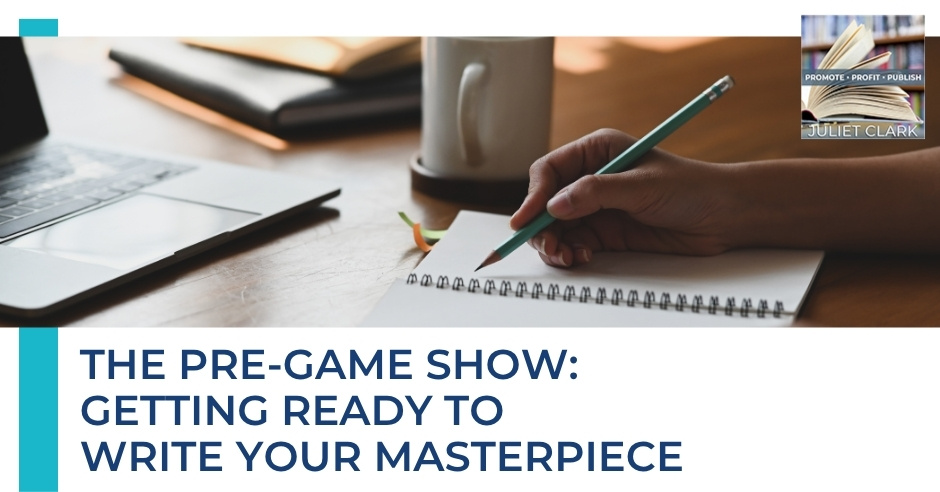
The Pre-Game Show: Getting Ready To Write Your Masterpiece
Ready to Write Your Book?
Welcome to our monthly training. For those of you who don’t want to read and you’d rather see the slides. Please go on over to our YouTube channel, Superbrand Publishing. At the end, stay till the end. We’re going to go over all of the events because we have more and it’s going to be free. All of our training is free.
Our guest is Kristy Boyd Johnson. She is an Award-Winning Children’s Author and has ghost written over 30 books for entrepreneurs over the years. She’s a sought-after developmental editor and transformational book coach. She’s launched Starseed Journey Retreats because she can’t imagine anything better than being in a beautiful location with beautiful people who want to connect with their deepest self through writing. Kris, take it away.
Thank you, Juliet. Welcome to the pregame show getting ready to write your masterpiece. I’ve had a lot of fun figuring out this presentation so we’re going to jump right in. We are going to learn the myth and truth around being ready to write your book. There’s a lot around that. The biggest boo-boos that nonfiction authors make when writing their books and a few that fiction do, too. We’re going to play, ask the editor. You’ll get a chance to play with me and ask me questions directly related to anything you’re working on.
Our whole goal is you write a book that even future entrepreneurs and horses can’t put down. One thing to realize is that publishing and everything comes later. You have to start with the book and the book starts with you and your content. If you don’t execute it in a way that your readers will resonate with, no matter what anything anyone does. It’s not going to hit the way you want it to, and everybody wants their book too hot. I’m not going to read my bio, but I am going to tell you my writing journey has been crazy.
I started in my twenties because I was teaching and I would tell the kids stories. They liked my stories and wanted me to tell them stories over reading books that were on the shelves. I stupidly decided I can write a children’s book and quickly found out that that is in fact the hardest thing to write above and beyond any other thing but the key is you stick with it. The key is to keep learning. You talk to people who know what they’re talking about. You keep reading. You keep working on it and you grow. You can’t help it. You can’t help but grow and become better at what you do.
Now, I have the ability. I have written nonfiction, fiction, children’s fiction and screenplays and I’ve done well but it’s also taken me 40 years. My goal is to shorten that time down for people and help them get their faster so they don’t have to go through all the struggle and torment of learning how to write without much guidance. Let’s start with what it takes to be ready. I have so many people saying to me, “I’m not ready to write my book yet, or I’m getting ready to write my book.” There’s some misconception about what readiness is.
Overcoming Writer’s Block Myths
One of them is, “The book will just come to me and I’ll just know. I’ll just write it down and it’ll be perfect.” Sorry, but it just doesn’t work that way. The idea can come to you. The focus can come to you. If it’s fiction, the plot or wonderful character can drop in and say, “Create a story.” It doesn’t drop in your head and then you write it down. That is a false thing to believe. Getting ready a lot of times is more about making the decision to write the book.
If you’ve made that decision then you already know that you’re going to write a book. You just have a block there that can be very easily cleared with a little guidance and or just a little strategy. I don’t have any time is a big one. It is a tough one. That’s a toughie, I admit. We all are busy. We all have families or kids or jobs or 6,000 other things that are pulling out us at all times. The myth here is that people think they have to sit down and write for eight hours a day. First of all, that’ll kill you. Second of all, it’s not realistic. It just isn’t going to happen.
What you have to shift into is that, “I don’t have eight hours a day, but I do have fifteen minutes. I could get up fifteen minutes early.” If you’re a morning person or after work, you can work a regular job. Maybe you spend fifteen minutes just on your thing and then it moves you forward. Baby steps do move you forward. If you can’t do a substantial, you might find along the way that you have a day where you have more time and then you start to get into the flow. If that happens, take advantage of it because it’s a wonderful feeling to get into that zone of, “I’m into it right here.”
I don’t know what to write. It is another big myth. That’s true. I’m going to put fiction aside for that one but for nonfiction writers, for people who are writing books, they’re writing an autobiography or a journey story or a book related to their business to help you move forward in your business and give you more substantial resources for your business. You do know what to write. It’s a matter of focusing on a topic.
If you’re thinking, “I don’t know what to write.” It’s always that you have two much going on and you’re spinning. It’s always that. It might feel like you’re completely blank but what’s happening is there’s just too much there and you’re trying to write something before you’ve done a little process of getting, and forgive me for saying this, getting ready. Which is just prepping to write your book.
Getting ready to write is more about deciding to write the book than actual writing itself. Share on XAll those little insidious monsters are forms of writer’s block. When I say insidious, I do mean sneaky little devils that get in your head and whisper in your ear that you can’t do something. When it comes to writing a book, the awareness of that leads you out of it. If you just become aware and go, “I see what’s happening here.” You can then take steps to move forward in the process of getting your book done. It’s all about awareness. Busting writer’s block is about your plan, your focus and one step at a time.
Vomit Drafts: Embrace Initial Mess
Don’t ever fall into the trap that your book has to be holding your head and then you have to write it down. That’s a form of writer’s block. It doesn’t happen that way. It just doesn’t. You have to be willing to suck at the beginning. I call the first draft of every book a vomit draft. Oftentimes, what happens at the beginning is you have to get everything that’s spinning in your head down on paper because if you don’t, you don’t have anywhere to go.
It stays spinning up in your head and doesn’t ever come out and get into a form that you can work with. You can only work with it when it’s on paper. We get it on paper and if it sucks, that’s great because you got a first draft and now you can do something with it. Think of that as a positive thing. It is a positive thing. Here are some of the truths and we’re going to play a game that I call ask the editor. I love it when people talk to me because if you talk to me and you ask me questions. I guarantee you there are people out there who are thinking the exact same thing you are. If you ask, you’re going to be helping everyone who’s reading. If anyone wants to play with me, I’m ready. Donna, did I see your hand? Go ahead.
Book Structure Guidelines
I have this concept for a book that had three sections and they’re each, for lack of a better word, needy. Would it be better to have a trilogy or three-part? I don’t know how you call it, or just one big book with three different sections?
Is it fiction or nonfiction?
I’m not sure how I’m going to spin it yet.
That’s a toughie because we have to know what it is.
It’s going to be about menopause. What do you suggest?
Probably nonfiction. Maybe fiction later. Word count is critical thing. At the beginning, I wouldn’t limit yourself. I would just go for putting down those sections. Putting everything you’re thinking should go in that section and then when you have a draft, you’re going to have a one manuscript where they’re all in there, section 1, section 2, and section 3, then check and see, where are we? Are we at 20,000 or 30,000 words per section? If you are, you probably want to split them into three books.
If you’re at 10,000 per section, you probably want to keep it combined so that you have a substantial book. Unless you want to just have teeny tiny little eBooks, which is a viable thing if you want to have little eBooks that focus very deeply on one thing at a time. That’s a future question but for now, I would say write needy sections down and keep this information in section one that you want, 2 and then 3 and go from there.
Thank you. That brings up another question, though. Say, I started with a small eBook. Could that then be turned into an expanded regular book?

Yes. You can always expand your ideas out into larger books, separate books, series of books, or workbooks. You can always do that and there’s reasons for doing all those things that can help you move forward in your business.
Kris, can I interject there? If you’re going to do that smaller book first, make it into a lead magnet to build your audience. That will help you with your book launch later as well because now your audience gathering.
You can use that small eBook as a lead magnet but you use the same information and expand the manuscript later into a larger more substantial book and sell them separately. That is a legitimate thing because you’re adding. Everything starts with the mind shift. We go from, “I want to write a book,” which is always putting it out into the future to, “I am writing a book,” which is putting you in the present. “I’m making a decision and I’m going to write this book,” which is not to say you’re going to have it done tomorrow. Everything is a process.
Targeted Books Boost Business
It is a process, but when you start the process, you starting movements forward. Your focus, especially in nonfiction. We got to shift the focus from, “I have so much information about my topic. Into, “I’ve narrowed my topic into this one book. I’m going to have this specific topic that I’m going to discuss.” At one time I worked with a chiropractor and he unloaded on me all this stuff he wanted to put in. He dealt with all these issues in people and I was overwhelmed by just the conversation. I explained to him, “You’re killing me here. It’s too much. It’s going to overwhelm your readers. Your book is going to be about 6,000 pages.”
I said, “What are the top three complaints that people come to you with?” When we narrowed it down to his top three and then his first book, he picked migraines. His first book was a small book all about migraines but he went deep into what causes them, what practical things you can do to help yourself now. He chose to publish them only for use in his office. He wrote seven with seven different top migraines, sciatica and a few others. He put them out and people could self-determined which one they wanted.
Someone coming in with sciatica would pick the sciatica book up. They didn’t have to Wade through a bunch of information that they didn’t need. People love that. Our attention spans are short now with texts, tweets, short messages and reels and everything. They want to get right to the point. That was a great marketing tool for him and he tripled his business within a year, because people were giving his books to their friends, and then they were coming into his office because he helped them. Narrowing down the topic, especially if you have a big topic as Donna said. It might end up being two books or three books.
The advantage to you as the author of doing that is that then you have three book titles under your name as author, not just one. That gives you even more credibility. It’s a big advantage. The last thing for Readiness is planning. If you say your book is universal, “Everybody’s going to read my book.” You are fooling yourself. That’s not going to happen. It’s just not going to happen. You have to know your audience. For example, like romance writers. That is a dominantly female audience. If you think all men are going to read your romance novel just because you wrote it, it’s not going to happen. They’re not.
People have their personal preferences about things, both fiction and nonfiction. It’s never universal. You have to know your audience. You have to know who you’re talking to and who you’re working with. In Donna’s case with a menopause book, we have a built-in audience. Any woman who’s in a phase of menopause, there’s an audience there. It’s not young women. Maybe it’s not older-older women. Maybe after 80 or something. It’s in that middle part, and it’s women. You get a clear audience there. Clearly defined.
Identifying Your Book’s Audience
For fun, give yourself a working title. Never feel like your title is a cut in stone thing until it’s going to the publisher. Play with the title and give it a working title so you know what you’re talking about when you’re talking about your book. It’s just a little fun tool. It also helps with writer’s block, just a little tip there. I have a little bit of that fiction in here but mostly it’s nonfiction. These are the things that typically people who do will kill your book. Book killer number one is what we were just talking about, it’s my book for everyone.
Even Stephen King hates it. Not everybody likes horror or romance. Genres are very specific things. Everybody knows what Sci-Fi nerds are. That’s a specific genre that they’re not probably going to read other stuff unless they’re readers and they read everything. For nonfiction writers, again, everyone is not interested in your topic but the people who are interested in your topic, if you deliver which is what we’re talking about in this section. You’re going to get fans and fans tell their friends about you. We want that.
When you’re making your decision, decide who you want to reach and then write as if you’re talking to them. If I were writing a children’s book, I would not speak the way I would speak to an adult. It’s not going to happen. You have to speak in kid line language and it also depends on their age. If you’re talking to men, it’s going to be different than if you’re talking to women. It’s different. You have to have that in your head.
Understanding Client Needs
I do know that Juliet is very good at helping you identify an audience if you’re struggling with that. Who are your readers? Ask yourself. Is it men or women predominantly? It might be a little of both but usually, there’s a predominant to one. Your general age group are like in the Middle Ages? Are they over 60? Are they twenty something just starting out? Are they kids? Who are you talking to? This is a big one for nonfiction books. Are you talking to professionals in your same area of expertise? Are you a train the trainer writer? If you are, you’re going to have a whole different language system than if you’re talking to people who are not in your area.
If you think that everyone will read your book, you are fooling yourself. That will never happen. Share on XI was a teacher and I was a research teacher meaning I worked with kids with learning differences. The trainer, the resource trainer, she was this top and knew everything. She asked me to help her write a book and she had three distinct audiences she could talk to. She could talk to resource teachers who would know what she was talking about and regular classroom teachers who wouldn’t know a lot of what she was talking about, but needed to try to understand if they had kids in their classroom that needed extra attention. She could talk to parents who wouldn’t have a grasp on it. She had to choose a clearly defined audience for her books because otherwise, it would fail.
Her language made a difference. You have to ask yourself what they want. What do they want? Do they want a solution to a problem? Do they want advice? Do they want a way to invest that’s going to make the money? It depends on your topic and what your audience is. You probably already know because you’ve probably already worked with clients who are telling you what they want. That’s a big clue. That helps you. What’s stopping them from getting what they want? Are they in their own way? Is there something they don’t understand? Is there a new way of doing something that you know how to do that you can teach them?
You have to work that through in your planning. Best of all, how are you solving that problem so that they can get what they are looking for? You do that and they will love you forever. You’ll have a person who loves you forever. In fiction, it’s heavily genre specific. If you’re a fiction writer, you have to know who’s reading that genre like science fiction nerds. If you’re writing science fiction, you got to go for the nerds. If you’re writing mystery or romance, it is very genre specific.
This is something I learned from Juliet. A pro tip, start talking to your audience via social media and in-person while you’re writing. I’m writing this book and I’d get that one liner. I’m writing a book that’s going to help women in menopause feel better. People are going to be like, “What?” If they’re your audience. This is just a little to keep in mind. It is not an upcoming book. It is a forthcoming book. Saying upcoming is like movies. Forthcoming is for books. That’s just my grammar teacher coming out. I apologize.
The book killer number two, cramming everything into a book. Please don’t do that. It’s overwhelming. It kills your book. Readers don’t like it. They’ll stop reading. They’ll be like, “Why am I waiting through all this? I don’t want to read this. I want to know what I want to know and what page is it on.” It just will kill you. It’s better to split your book. At the very least, split into sections that are very clearly defined or again, you can write smaller books that are very clearly focused. People love that because they like to get to the point.
They want to know what they can do now and they want to know you. Don’t be afraid to put your journey story in there. How you’ve got to from where they are now to where they’re struggling to, where you are now where you know something that can help them. Don’t be afraid to put that in there. People like that. It makes them connect with you on an emotional level. We like that. We want to just give them what they want and they read the book from cover to cover. They go, “Who is this person?” They look you up in your bio and find you on social media or at your website or something like that.
Avoid Jargon When Writing
This is a good thing. This is what we want. If it’s fiction, they are very specific, which I’m not going to go into. There are very specific ways to keep a plot moving. If it bogs down, it’s going nowhere. Bogging down is boring. You’re just spinning. Don’t do that. If you’re doing that, then there are specific things you can do in fiction to prevent that but I’m not going to go into that. For book killer number three, industry jargon. I’m going to go back to my teacher’s example. Every industry has a jargon. Every single one. Finance people have a jargon. Doctors have a jargon. Teachers have a jargon. Other people in your industry know the jargon but lay people do not. You must avoid jargon. It makes people feel dumb.
If you make a reader feel dumb or they can’t understand what you’re saying, you will lose them instantly. They will just drop your book and move on to the next person. Whatever industry you’re in, if you are an industry professional or train the trainer kind of person and you are writing, that’s your audience then don’t worry about it. Forget what I just said, but if you are working with lay people, you have to use real language like human language. The way we talk to each other.
Simplifying Communication for Readers
My teacher ended up picking parents as her audience. The book she wrote was amazing because it was about helping parents recognize signs of dyslexia in their children early so they could get remediation early. It worked well because she spoke their language. She didn’t talk down to them. She spoke to them directly. Never talked down to people. It doesn’t work. No matter who you’re talking to, always simplify. If you get complicated, that is different than going deep.
Going deep is an exploration of a topic with very real examples and solutions, but simplifying is about the languaging and the way you present it and the Logical steps you take to present it so that it makes sense to the reader. It’s clicking in as they’re going through your book. You want that because then they’re going to keep reading. They’re going to think, “This person knows what they’re talking about.” That’s what we want.
The only exception for jargon is if you put a term in that they do need to know to understand what you’re talking about. You have to put it up front and define it upfront. I also recommend if you have to do that, it depends on your topic. If you have to do those multiple times, I always recommend that you put a glossary of terms in the back of the book so they can refer back if the reader needs to. It helps them to know they can look in the back and go, “What was that again?” They look and they go, “Oh, yes,” and then they keep reading. Any questions, folks?

I’m just so glad you mentioned jargon because so many times, I’ve been turned off by reading something. It seemed like the person wasn’t conveying information to me. It was more of a conceited, “Look at me. Look at these words I can throw around.” It was an instant turn off. Whatever I could have gotten or received was out the window. Thank you for acknowledging that.
It’s a real thing. I always tell my authors, writing the book is about you. The book itself is about your reader. You have to keep your focus on them. It’s all about them. That leads right into book killer number four, which is failing to deliver on your big promise. Your big promise is your solution to the problem that your audience has. You must make sure you deliver. If you are focusing on one small thing in your general area of expertise, deliver on that one small thing.
It’s better to do that than to generalize and go nowhere. It’s much better. If you give them something real that they can implement now that they can then see, “That worked.” They’re going to come back to you. They just will. Think about your own reaction. If someone is like, “Blow and smoke.” They’re just an idiot, but if they go, “You can do this.” You try it and it works. They’re going to come back to you. It depends. I know Andy’s a wellness person and he gives very specific things you can do that will change your health situation very quickly. That’s very practical and people like it.
If you are building a business, this is good news because when you deliver, people find you and they tell everyone about you. “I read this book and it changed my life. You have to read this book.” They do it all the time. You want to make sure you deliver. Failure to deliver is the number one kiss of death. It’s all about the reader. They’re looking for something they need now. They’re not worried about you as a writer. They are worried about their solution so you have to give it to them. Think about it when you’re planning your book. Keep in mind this number one thing. What transformation am I giving my readers in this chapter? In the next chapter, how does that lead to the next chapter? Think of it that way, because that’s how you move them forward through their process.
If you’re writing fiction, you want to be careful about making up a language. This connects back to jargon. You don’t give them a transformation but jargon they do, especially Sci-Fi nerds. They do like to make made up languages like cling on, which is apparently a whole big thing. If you are doing fiction just make sure it’s consistent so that a word doesn’t mean something here and then it means something different here. They don’t like that. Readers are savvy and they pick up on that. They pick up on those kinds of boo-boos.
Add Sparkles to Your Story
Now, we’re going to get into sparkles. One of my biggest advice to you is when you write your first draft, focus on your main information first. Get your main information in there, the stuff that you know and the stuff that you’re teaching. It’s easier to do that and then go back and add the sparkles. What I call sparkles are the things that give your book flavor. They make it interesting. You can put in stories from your clients or other people in your profession. You can put in real life examples or personal journey tidbits. There are occasions where your personal journey is very significant. If you put in a little tidbit about yourself, it adds flavor to the story.
Mind-blowing facts are great in certain things. How many of us have ever thought, “That person started this thing and made them dollars in a year. How did they do that?” They wanted to know more or any mind-blowing facts. Cool tips are great. Cool tips are things that you, as the expert, can give them as a tip that helps them focus in and move forward. It gives your book flavor and you want to sprinkle those throughout the whole thing. It gives them a space to connect with you as the author, especially if you’re telling them some personal tidbits.
Breathing Room for Readers
It also adds depth and dimension to your message. It’s like social proof that’s not shoved down their throat. It’s, “These clients all had this happen.” That’s a good thing. When you give someone or when you’re teaching something, readers need a break from it from time to time. They won’t always put the book down, but if there’s a story or an example. We’ve all seen them in books where there’s a box and there’s a real-life history of something. You can pause and you can read that and think about it outside the scope of the content. It’s a breathing room.
It gives the reader something to mull over without just going, “I’m proving my point to you.” You don’t want to do that. Don’t shove it down their throats. You never know. I’ve had the experience and I’m sure you all have too, where I’ve gone back and read those. These are different from testimonials. I’m talking about their stories like, “This client worked with me and this is what their journey was or something like that or this case study that I did.” It makes you go, “I see how they process through that,” and then that gives a lot of validity to you as an author. That’s nonfiction. Fiction is completely different. It’s more don’ts than dos.
If you’re in fiction, don’t go into a lot of backstories. Please do not use flashbacks unless what you’re doing. Have you guys noticed how many flashbacks there are now? Everything is a flashback. It is terrible because they don’t know what they’re doing. They don’t do it in a way that works. You have to do it in a way that works. You want to create characters with a limping and eyepatch.
Not necessarily a literal limping and eyepatch, but something that makes them very distinctive. Not all the characters, but the main character protagonist and the main villain antagonist. You want to make sure they’re very memorable. Think about Captain Hook. How many of you guys see the pirate with the hook in your head? Memorable characters.
Do not cram everything into a book. Overwhelm will kill your book and readers will not like it. Share on XWhen I used to write fiction, we all have iPhones. I used to go down to this outdoor mall in Calabasas, California. If I saw something interesting, I would film it so I could go back later. If I saw somebody doing something that was unusual or patterned that made that person interesting. I would write from the video, which is a little harder than it seems because that show versus tell. Be a people watcher.
That is an excellent tip and I’ve done that, too. Only I didn’t film it. I just jotted down notes but a mall or an airport. When you’re sitting there waiting for a plane is a great resource for characters. Even plots because sometimes you can see something going down and you’re like, “What’s going on over there?” You can make a story, but that’s fiction. Also, never solve a story problem by adding more characters. That just bogs the story down again. Moving on to book killer number five, our final one is failure to edit. Now you guys are probably all like, “You’re an editor.”
Yes, I’m an editor for a reason because your friend who reads is not an editor unless they are an editor. Your friend who reads isn’t going to know the big stuff that it takes to make a book, especially a nonfiction book for your business marketable and beyond publishable into marketable and help you get there. If you’re struggling, these are my tips. I’m a developmental editor. If you’re struggling to even get a first draft down, someone like me will help you construct your book. We help you take your ideas, focus them in and create a construction or a framework where your book makes sense and works for you.
That is something that can help you and it will help you avoid a lot of costly mistakes. If everybody’s had the experience of reading a bad book and thinking, “How did this get published?” It’s a real thing. You don’t want that to be your book. If you do have a first draft and you’re still like, “Where do I go from here?” You can use a developmental editor or you can use a different editor that takes something that you already have. It’s still developing. That’s what’s called development just for the names of things you might hear. It’s all about making your manuscript into a book that will help you benefit you.
My big tip is, if someone is just blowing smoke and saying, “Everybody’s going to want to read your book. You’re going to make millions.” Don’t work with them. They’re just taking your money and they’re not doing anything for you. You want someone who’s going to tell you honestly, “This is working. This is not working. This is why it’s not working. This is how we can fix it.” That is what moves you forward and lose the ego. Remember, your book is all about your reader.
Align Publishing Goals with Audience
As a publisher, I will tell you and I complain to Kris about this all the time. When I get books from developers, there are these huge expectations that have been set that are not in alignment with the publishing business. I spend a lot of time tempering those expectations so there’s not a disappointment at the end. She’s absolutely right.
If you get an editor that’s telling you, “Your book is the best thing since sliced bread.” Pull back and think about, did I test it with my audience? Am I building an audience around it? Is the audience telling me that? That audience should be built in advance. Don’t listen to those expectations of the editor as much as you listen to the validity of what the audience is telling you.
The editor needs to be on that page with you. if the editor is not hearing that, pull back. Find someone who’s hearing what you’re saying and understanding what you’re doing. Honestly, money is well spent if it’s someone who will help you get there. My other thing is, editing and proofing are both called editing but they’re very different. Proofing is last. Proofing is the last step before it goes to the publisher.
I never send a book to Juliet until I’ve sent it to my proofreader for proofing or working with an author. I’m an eagle eye but I stopped seeing the boo-boos because I’ve done too much. I’ve been in the book too much. Proofreaders are the ones that find all those last typos, the punctuation, spelling, doubled words, and missing words. Silly things like that, the boo-boos that just distract the reader. You don’t want those. You want your book to be as good as compulsively be.
A proofer has to be someone who’s never seen the book manuscript before because then they’re fresh. That’s why I can’t proofread a book I’ve developed because I can’t see the mistakes anymore and neither can the author. That’s a pro tip for you guys and that goes for fiction or nonfiction. Last chance to play ask the editor. Any questions or comments?
Importance of Thorough Book Formatting
I’d like to make a comment about the editor. As a publisher, what Kris just said to you about looking at your book over and over. When you get into book formatting, this is not a one shot deal your book is formatted and it’s done. That’s where you need to go through and approve for the formatter, that manuscript. If you approve that manuscript and there are still mistakes and it goes to market. It’s going to cost you when you come back and say, “Could you please correct it?” We have someone who’s in that and it just costs her $1,600 because we have to redo everything.
What I always suggest is if you can hire an editor who will stay with you through formatting, what that does is that gives that formatted version a second look. Sometimes, it’s even a third look because you’re looking at it over and over. You’re making sure that everything is correct. If you engage an editor, I would suggest ask, “Do you stay with me and do you look at the formatted versions?” If they say no, you probably don’t have the right editor because a committed editor will agree to that process and price accordingly.

Yes, that is true. I do that. That’s one of my practices. I also help with back cover copy and titles. We like to play with titles because a good title can be a good hook.
It seems like authors tend to go with titles that are too long. That’s another hint as well. Does anybody else have questions?
Donna?
Interactive Health Book Proposal
I always have questions. Do you ladies remember, Dear Abby? She had a column and I’m pretty sure she’s had books. Do you think that would be a popular style type book with sharing information that way like being asked the question and giving me answer that way or would you get to outdated too quickly?
It would be outdated too quickly. Donna, the book that I just heard you articulate should have some short evaluations after the end of the chapter. If you’re healing that menopause, make them dig into it. Not just read it but dig into it, what’s going on with me? I would work with a few questions at the end of the chapter where they had to write down like, what are your symptoms, how are you feeling, what is going on with this. Someone on the call like Andy Nam could probably help you with that because he’s a naturopath. He helps people with different stages in health in their lives. He may have a little bit of insight on what question you should ask. Is that okay, Andy that I said that?
He’s a functional nutritionist, though.
Nutrition is a big part of menopause.
That is a brilliant example of a sparkle. Those kinds of things, questions like that the reader digs into what they’re going through at the end of the chapter and has a space to go through that. That’s a sparkle that can’t be beat. They love it. They love that. That’s a great recommendation. Juliet knows what she’s talking about. Talk to Juliet. She knows this stuff inside and out. That’s all I have, folks. I am going to invite you. I’m doing a couple of writing and I’m calling them play shops because I believe in play, not work.
I have one fiction and one nonfiction coming up in August 2025. They’re at Barefoot Writers Club if you want to join and I have a special promotion. If you put in the code Juliet at checkout, you’ll get a little bit over 50% off as my gift for reading. I’d love to have you join me. I’ll have more coming up every month as well. If you haven’t read this episode until October, just go to the website. It’ll be there.
SaaS Content Game Changer
That’s great, Kristy. She gave me an excellent opportunity. I hadn’t planned on doing this but I will. We have a new product that we developed with two fantastic AI programmers that is called the Superbrand Audience Accelerator. Before you write that book, I’d love to have you answer these eight questions and have a marketing plan for it because you’re going to have to build that platform. For the people on the call, it’s $497. Andy Nam wrote it and tested it. What did you think, Andy? Did you get some useful information from it?
A lot of useful information. I’m going to set up a time for you to follow up on mine as you did with Mina’s. Mina’s took in a lot of the tips and it helped build a mind map of what needs to be done to market her products. Thank you so much for that. You folks should check it out. It was cool.
We’re in test mode but we’ve accelerated that. If you reach out to me, Juliet@SuperbrandPublishing.com and the report is $497. I’m going to tell you guys, it is amazing. It tells you the content, where your audience is and what you should produce for them. It gives you every phase of marketing from nobody knows you’re alive all the way up to everybody knows who you are and how you should proceed in every phase.
The book is not about the author. It is about the readers. Share on XOne thing writers do is they don’t build their platform and don’t have an audience. They go right into, “Everybody should know who I am. Everybody needs this information.” This pre create like for someone like Donna. It targeted, what do I put out there to test my book? What is the content that I put out there? If you guys reach out to me, I’ll get you the questions, an invoice, and you get a session so I can go over it with you and explain how you use that report.
I got to tell you. It’s been super valuable. We’ve done it for concussion testing. We probably did it for 60 people. Kristy is getting hers together for the test now, too. It is a game-changer for authors where your content starts. Sorry to make a plug like that, but she opened the door for it. We were so confident after our test results, that we took it off of AI and made it into a SAAS program. We’re probably going to find investors for it as well and go bigger with it because we can create bigger content with it as well.Kristy, thank you. Andy, thank you.
SEO Changes & Effective Funnels
I do want to mention you now that you’re in my list, all of you. We have two more events. We always have free author events. I know a couple people on this call are new to me. We have an event on Wednesday, July 23rd, Alignment, the missing link between your book and your marketing. Amber Burdett is going to be hosting that and that is helpful. I don’t know where you can sign up for that. A big boo-boo on my part.
If you’re interested in it, reach out to me at that same address I gave you and we’ll get that for you. Also, we have our GoHighLevel monthly. I know Dorothy uses it and Kristy is starting to use it as well. It’s a game changer for authors. It’s an all-in-one. Everything’s connected. You don’t have five different platforms that you’re trying to serve up your author platform from. It’s building effective and efficient funnels and you can register for that at GHLTraining.com. It’s free training.
Lastly, the next training, where you can sign up at BAMagTraining.com search is changing again. How to stay visible? Google’s making a lot of changes on how you do SEO again and Iris Goldfeder is amazing at all this. That is on August 1st, same time and same channel. Do you guys have any questions about any of those events? Real quick. Sign up and show up. Donna does. I could tell I’m going to love her.
On the 23rd, do you have a time for that?
That one’s at 11:00 AM, MST. Amber is a newer mother, so we have it a little later with the understanding that she probably never sleeps on that. If you’re in New Jersey, it’s 1:00 PM, Eastern. The GoHighLevel is at 9:00 AM on Mountain Time, so 11:00, Eastern Time on July 17th and we have that monthly. If you’re GoHighLevel user or interested in using it, it’s a great training.
Thank you.
You’re welcome. Guys, thank you so much. Again, reach out to me and shoot me an email if you want to get that audience analyzer report. It is super helpful.
Thank you, Juliet.
Important Links
- Kristy Boyd Johnson on LinkedIn
- Kristy Boyd Johnson on Instagram
- GHLTraining.com
- BAMagTraining.com
- Barefoot Writers Club
- Superbrand Audience Accelerator
About Kristy Boyd Johnson
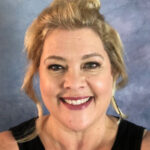 Kristy Boyd Johnson is an award-winning children’s author, and has ghostwritten over 30 books for entrepreneurs over the years. She is a sought-after developmental editor and transformational book coach. She recently launched Starseed Journey Retreats because she can’t imagine anything better than being a beautiful location with beautiful people who want to reconnect with their deepest selves through writing.
Love the show? Subscribe, rate, review, and share!
- superbrandpublishing.com
- Promote, Profit, Publish on YouTube
- Follow Juliet on LinkedIn
- Take the Quiz!